My Story of Sexual Abuse by Daniel Pinchbeck Shows Parallels With His Friend Russell Brand
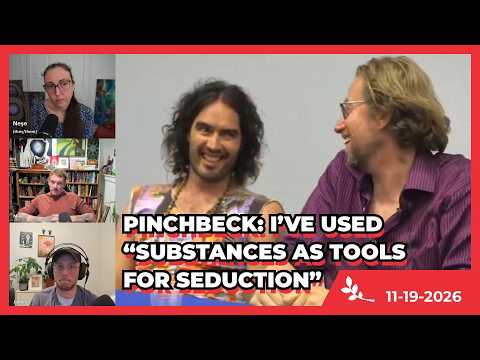
Neşe, Mike, and James discuss the parellels between Russell Brand — who was recently convicted of rape — and Daniel Pinchbeck, who has positioned himself as an authority on Brand. The crew examines Neşe's own experience with Pinchbeck, his previous admissions of sexual misconduct, and recent interviews he has given about Brand. This conversation extends our earlier discussion of Reggie Watts, which emphasized the extent of similar dynamics across the psychedelic industry.
Footnotes:
We Refuse to Endorse Daniel Pinchbeck as a Credible Voice in the Psychedelic Movement (Psymposia): https://www.psymposia.com/we-refuse-to-endorse-daniel-pinchbeck-as-a-credible-voice-in-the-psychedelic-movement/
Pinchbeck's admissions of sexual misconduct: https://imgur.com/a/daniel-pinchbeck-admission-ThGtPUb?ref=psymposia.com
Abusing Power: Taking Predatory Daniel Pinchbeck At His Word (Psymposia): https://www.psymposia.com/abusing-power-taking-predatory-daniel-pinchbeck-at-his-word/
Writer blames ‘predatory’ ways on women (Page Six): https://pagesix.com/2017/10/23/writer-blames-predatory-ways-on-women/
"He Was Predatory, Very Self-Aware" — Russell Brand's Former Friend Speaks Out (Banter with Ben Cohen): https://www.youtube.com/watch?v=JXEplsPLHdg
"It's Not Just Reggie Watts" (Psymposia): https://youtu.be/FGiQnXUsw0s
Transcript
This transcript was generated automatically from YouTube's captions, then cleaned up by removing filler words, repeated words and background sounds. It will always still contain errors.
[00:00] Daniel Pinchback has recently started trying to center himself as somewhat of an authority on the Russell Brand case. My guest today is author and cultural commentator Daniel Pinchback, who knew Russell Brand personally for over a decade and has written two fascinating essays examining his life, psychology, and the British entertainment culture that made him a star. Maybe we could share a bit of his own disclosures from his 2017 Facebook message where he shared or admitted to a lot of the behaviors he'd been involved in. Yeah. So he says, "What I have done are many unaware and disrespectful behaviors. Specifically, pushing for sex without listening to why she was hesitant, seeking sexual contact with volunteers in an organization that I helped to start, the use of substances as tools of seduction, being incredibly insensitive and tonedeaf to women's wants and needs, making unwanted advances, focusing on much younger women.
[00:51] I acted selfishly in many ways over and over." Russell Brown seems that he understands his own predatory instincts incredibly well because he writes about them. But is that a kind of, you know, he's hidden in plain sight. There's a plausible deniability. He's like, "Look, I've admitted all this stuff. I've admitted how bad I was and what a rogue I was." Yeah. I mean, earlier comedy years, he actually did say some several times jokingly that he raped somebody and even killed them. It's like a It's like an apex predator strategy in a way to get that all out on the table. Yeah. He had he created all these different defense mechanisms and maybe one of the main ones was being so open. Is he using ironically the same t tactics that he's explaining that's exactly the case. Everything they were just talking about with brand he does and has done.
[01:39] Hello and welcome to the Psymposia podcast. My name is James. I am joined today by Mike and Neşe. We wanted to come together and have a conversation. As we know, Russell Bran was recently sentenced to 10 years and 6 months in jail for his counts of sexual assault and rape. And we were we've been talking a lot about these kind of known sex pests. We had our Reggie Watts episode recently talking about how, you know, we know that this isn't going to be the only person. There are more people out there like this. and kind of poking his head out to prove us right on that I guess would be Daniel Pinchback.
[02:26] Who has recently started trying to center himself as somewhat of an authority on the Russell Brand case. He has been friendly with Brand in the past and is coming out as a bit of a I don't know would you say like an apologist to an extent or like I don't know it kind of seems like there's some handwaving away of some of it. He's not an apologist. He at this point he's talking about Russell Brand as this like demon figure. And what you know the interpretation that I have is that it's kind of the scapegoat thing because Daniel Pitchbck has personally admitted to sexual assault in many different ways. And then he's looking at Russell Brand as this like person that is has done it worse. He's a worse predator.
[03:12] And so it kind of like scapegoats and maybe absolves in Pinchbeck's mind himself of this sort of like worse, you know, like a responsibility. Yeah. So I mean, he's basically been chiming in on his substack on a series where he's describing how Brand is kind of serving this archetypal role and in the kind of evolution of consciousness. And so he's he is emphasizing this isn't good, but he's also like casting it as this like myth mythological story that is has social and societal significance. Okay. So, in the series that Pinchbeck is writing about Russell Brand called Russell Brand Goes to Hell, he just he says, and I quote, "I also intend to explore the occult ambiance I sense around Bran's trajectory without reaching a definitive conclusion on this point.
[04:05] My intuition is that Brand ultimately performed a service for the Arammanic SLS satanic forces. I'm going to offer the hypothesis later in this series that brand was a sophisticated instrument tasked with a particular occult role to bring people with counterculture hippie sensibilities into the maja Trump world to confuse and befuddle them as a way of assisting in the engineering of the ongoing technofascist takeover as a transitional figure. He was then given up as an oult sacrifice. As reality revolt notes, he was convicted symbolically on Guy Fox day. So what is Pinchback is is Pinchback like buying into some sort of actual magic like a cult reality like there's this like Satan Satan is actually employing Russell Brand to do this tech technofascist takeover.
[04:57] Yeah. Well, I mean there's a video that he did four days ago from the time we're recording where he's being interviewed about Russell Brand that I watched. We have a few clips from him to share today. And in that conversation, he's talking about the fact that through his own experiences, he's like sure that there is this like that there are demonic forces and this kind of like a cult level of reality that are operating through the physical material kind of realm. And so this is like part of that broader worldview that he has. But suffice to say, [laughter] this is not the move, I think, for someone who is like himself very much complicit with the type of predation that Russell Brand was recently convicted for. And maybe we could, you know, for viewers who are newer to this, and we do also have like an 5 years ago, we had a video on this we can link to in the show notes, but for now, maybe we could share a bit of his own disclosures from his 2017 Facebook message where he
[05:57] Shared or admitted to a lot of the behaviors he'd been involved in. And that actually made it to the mainstream media. There was a page six article that talked about his admissions titled writer blames predatory ways on women. And he did have this kind of like Freudian rationalization where he was blaming his grand his grandmother his mother for his predatory ways. But then if we want to take a look at the beginning of his Facebook post, you'll see it's quite concerning. Yeah. So he says, "This post is painful and scary to write. In the past, I have been sexually fixated, creepy, predatory. I acted in ways that were hurtful and upsetting to women. I feel very guilty about my past behavior.
[06:43] I want to make amends. I feel the way I can best do that is to speak honestly about what I did and why I believe I did it. To do this, I also have to explore my personal history. To be clear about lines I never crossed. I never had non-consensual sex, sex with a minor, sex with someone unconscious, or lied about my intentions to get someone into bed. What I have done are many unaware and disrespectful behaviors. Specifically, pushing for sex without listening to why she was hesitant. Seeking sexual contact with volunteers in an organization that I helped to start the use of substances as tools of seduction. Being incredibly insensitive and tonedeaf to women's wants and needs, making unwanted advances, focusing on much younger women. I acted selfishly in many ways over and over.
[07:28] I hate the word unaware in that. Like, what the [expletive] are you unaware of when it comes to things like seeking sexual contact with volunteers in an organization I helped to start and he's obviously aware if he's admitting it now, right? Pushing for sex without listening to why she was hesitant. Okay. Well, that implies that she was telling you, so you were aware. Like that's what does unaware mean in this sentence? Like I hate that word so much. Yeah. I mean, he's absolutely describing drug facilitated sexual assault, rape, you know, descriptions that are even though he's saying he didn't cross that line into rape. I mean, he very much did. He's describing things that do qualify as rape.
[08:16] So that's he's a predator in his own words. And this behavior was systematic and over the course of very many years. He's also contradicting himself. The first thing he says is, "I never had non-consensual sex." And then he goes on to say several different ways why it's impossible for consent. Absolutely. No. And it kind of follows the same like Andrew Callahan apology behavior of like, "Oh, I didn't realize that that was a problem at the time." And it's like, "Buddy, like they were trying to get out of your car and you were locking them in." like you knew that's not something you don't know is bad. Like you know that's bad. [laughter] And in the longer post he admits that he had a lot of hatred towards women and resentment towards women and was kind of acting out of that impulse of and you know kind of enjoying the power that he had.
[09:08] So yeah, none of this was a whoopsie type of situation and it was so like it was such an open secret. He was like a Weinstein-esque figure that people in the psychedelic field. So many people knew someone or you know had had heard about something happening that it was when it finally came out it was not a surprise to people. It was something very systematic and over over the course of many years. Do we want to do the other passage from that too? Yeah. Okay. I can read this part. Yeah. So then he goes on to say is this the same is this the Facebook post? Yeah. So then he goes on to say, "One negative element for me I now understand was the ongoing use of some of the mindexpanding chemicals I wrote about in my first book.
[09:53] Because I was compared to Liry and McKenna, people assumed I was a maestro of mind expansion, and I assumed it as well. In actual fact, I now see that the continued use of certain chemicals had a negative impact on my personality over time. They made me more impulsive and self-centered. My situation was made more complicated as women would now seek me out for personal or professional reasons, sometimes for sexual contact or for mind expansion or a combination of these. It was often hard for me to tell. And as someone who was constantly robotically craving new erotic contacts, I often assumed if a woman sought me out, it was because she wanted to connect sexually. So I think Oh, go ahead. You go. I don't know. It's so ridiculous, right? I mean the fact that he's like are he's victim blaming as if there's like this like these women were seeking me out like how do you know that you know you barely are aware of the like crimes that you committed you know to say all this self-important kind of like I was compared to Liry and McKenna it's like you know who said that besides yourself you said you know I don't know it's not like he
[10:55] He's putting on this guru persona and acting as if you know these it wasn't his fault because these women came to him you But they he even said for professional reasons like insane. Yeah. And also the fact that he talks about like he kind of blames the drugs too like this you know the effects of taking that many psychedelics made you know had this effect on his ego and like ironically that's the sort of thing that Simosia has been talking about and concerned about expressing concerns about for very many years. He's like proving our point about that but you can't just blame the drugs. Like you do have agency and control there. Yeah. I mean it's like it's an excuse for the lack of accountability.
[11:40] Another one, you know, I mean he's piling on these excuses. Yeah. And those excuses do relate directly to what happened with me and Daniel Pinchek. So I have alluded to the fact I've mentioned the fact that I was sexually assaulted by Pinchek for, you know, many years. It was maybe around the five year ago time mark when we first were writing about this that I was like more public about it, but I have never actually shared what happened. And since he's like renewedly trying to become a thought leader around this and is still behaving in pretty problematic ways, even if he's not doing the outright abuse anymore, which I don't know, but nonetheless, I don't think he's a trustworthy figure. I thought that it would be good to give more of those details, especially because he has been denying what happened with me.
[12:31] So just to kind of jump into it, I when I started in the field in 2010, I first went to the Horizon Psychedelics Conference in New York City was my first foray into the psych the so-called psychedelic community. And at that conference, I looked down at one of the tables that, you know, there were organizations that were tableabling there, and I saw these really cool stickers that were for the Evolver movement, evolver.net. And they also there was also Reality Sandwich, which was the magazine kind of associated with the Evolver social movement. And it was kind of like a Evolver was Daniel Pinchback's project that he launched. And the idea was to have, you know, little hubs in different cities around the country and maybe internationally that would be able to allow people to meet and talk about topics like psychedelics with like-minded interested people.
[13:29] And Reality Sandwich was the magazine kind of component of that which was a way for developing and sharing ideas and you know in the more in that direction of topics. So, you know, psychedelics, plant medicine, consciousness, that sort of thing. And so, I was really intrigued by especially the magazine. As someone who works in, you know, language and storytelling, I thought it'd be cool to get involved and plug in by helping out with the magazine there. So, I reached out to Ken Jordan, who is no longer with us. He's passed away a few years ago. And I worked very closely with him for a few years. I was a grad student in Philly at University of Pennsylvania and I would take the bus up to New York City and help with events and also just I had a this weekend psychedelics column in reality sandwich which was like the first kind of column that was like a paying attention to how the news was being reported on psychedelics.
[14:26] So there's been a few more of those over the years but no one was doing that before that kind of this weekend psychedelics column. And very early on, I was invited up to help with the Iwasa monologues, I think it was called, which was an event similar to how later on Psymposia before our version of Psymposia was doing like a psychedelic storytelling series, but this was Iawaska specific where people would come on stage. there was like they rented out a theater and talk about like their Iawaska experiences and it was really well attended and a lot of people were excited to have events like this especially back then in 2010 where it was like the mainstream hadn't caught on yet about psychedelic interest. So I remember distinctly being introduced by Ken Jordan to Daniel Pinchbach and in that interaction I was specifically introduced to him as the new intern at his company.
[15:23] That was like the premise of me being introduced and I was very aruck as like you know someone new to the community who was you know just getting involved in graduate school. Like of course I knew Daniel Pinchbach. he was like such a big presence and you know his books were widely read and known about. So, I was really excited to meet him. And then after the event happened, we he invited a bunch of people out to like a bar nearby and I ended up drinking alcohol in large part honestly because I'm neurode divergent and very anxious and I was like with this person who was super famous and like you know just didn't want to be stressed out.
[16:12] And then after that, he ended up taking like inviting a bunch of us back to hang out at his apartment. And I'm pretty sure it was all women at that point or, you know, fem presenting. And the next thing I knew, I was sitting on a couch in between like he was in between me and another woman. And he was like started making out with the person on his right, and I was sitting on his left. and he reached his hand into my like inner thigh and start started stroking it as he was making out with the woman on his right. I was very like quite drunk at that point and didn't really like respond, but that wasn't like what I wanted and I didn't initiate anything.
[17:03] And then the next thing I remember the woman on his other side like kind of pulled him away and then they went off to have sex in like the bedroom and I blacked out and passed out on the couch and I didn't live in New York City. I was only there to help I was a volunteer intern at that event. And then I woke up kind of like in the early like it was still dark outside. I don't know what time it was and I ended up just like and it kind of dissociated stumbled my way to like find my bus and like go back to Philly and he never like checked up on me which I thought you know it's wasn't like did you get he knew I didn't live in New York City there was no followup [laughter] at all and it really impacted me like this was one of my first interactions with anyone in the field and to have that kind of like thing happen and then no concern at all for if I was okay, you know, afterwards like
[18:06] The head of the company that I was working for. That was really dark to me and it impacted kind of like my view like of my place in the field and like made me kind of like insecure about a lot of things. Like I just I didn't really feel safe in a way that I had been cuz I didn't know that this was the sort of thing happens a lot. And I remember after that going to see him, well, not to go to see him, but I would go to I would see him at events like in New York City when I was doing stuff with Reality Sandwich, that sort of thing. And the way that he walked into his space, and a lot of people have described this besides me, it was like a predator entering the room. Like I would remember the way that he would like scan he would come with an entourage of like young women and he would like scan the room for kind of like who his next mark was.
[18:58] Like it was that kind of like I'm here to find my next prey kind of a situation. Very concerning like dynamics. And there were just so many people who were so excited to meet him but not in a way that they were trying to like sleep with him. they were just like wow like this is someone who is saying that they have like you know good ideas for how we can make the world a better place and really excited about that. So it that's because even though that situation I described is not the worst thing like that he's ever done, it still is completely unacceptable and shows how much like that this is, you know, when he mentioned volunteers like I'm sure it was plural volunteers, plural interns at his company that he did this to.
[19:46] And it was part of a sex act for him. Like he went off and had sex. like it was not just this like casual pat on the shoulder kind of a thing, but maybe we could take a look at his quickly his like he wrote first about us around the FDA hearing. For some of our new listeners who might be unaware, in 2024, Psymposia expressed some concern during a public comment for an FDA hearing on the legalization of MDMA assisted therapy, specifically through MAPS therapy protocol. Daniel Pinchbach had some words to say about that and expressed some discontent roughly a week later with a Substag post of his own. if we wanted to go ahead and cover some key highlights from there and learn kind of how evil we are real quick.
[20:39] Yeah. So, he the highlights are good for a scan, but I'm going to read the whole thing because a little bit of the context is is useful here. So, Daniel Pekk says, "These were among the main reasons the independent panel voted against Los. Another problem is a group of dedicated, one might say fanatic apostates within the so-called psychedelic community, a hard to define term, who have dedicated themselves to derailing maps and attacking others in the psychedelic world. These mean-spirited ideological purists use a veneer of moral righteousness as a cover for a bizarre yet familiar form of power tripping and cloutchasing. Instead of building anything of value themselves, they waste their intellect and their lives by attacking and seeking to harm the work of others. This self- cannibalizing is something common to progressive or radical movements oriented toward healing, environmental, and social justice.
[21:30] A few individuals hyped up on anger and moral fervor are able to commandeer the media, potentially ruining what others have spent many years working to build. [laughter] Yeah. No. And we do have more, but I do want to say like this is another example of our animes making us seem powerful as hell. [laughter] Like this is insane. At the time it was five people. It's f and it's like I mean to say that there you know Psymposia is a dedicated fanatic group of apostates from the psychedelic community dedicating themselves and their lives and wasting their intellect for this like moral, you know, zealatry or whatever. And this guy's like sexually abusing people and you're saying like, you know, don't, you know, like psychotics are dangerous when you're going to use them for this kind of thing.
[22:20] You know, it's just it's such a cope and it's he how much more time is he spending, you know, and all the enemies spending like whining about this and being afraid and trying to call an attack and all these things when all that Psymposia is really doing is like warning of danger. Well, yeah. And I just I should emphasize the fact that I mean our concerns were related to abuse occurring during and in the surrounding of the trial and my work in this area. The reason why I am now a global expert on this precise issue was launched by Daniel Pinchbeck because I was sexually assaulted by him as soon as I joined the field.
[23:05] That led me on a trajectory that was very much not what I wanted to be doing. But I experienced firsthand how much this is happening in the field and how the powerful people in the field beyond the them are all siding with the predators and care so much more about rehabilitating predators than about the work that people like me could have been doing. You know, because I feel like if he actually was reformed, he would not be talking about me like that. He would not he would be trying to lift my work up and support my work if he was. And so it is a complete contradiction with what he claims to have accomplished with his own change in perspective. Yeah. Was it You're sure it wasn't a veneer of moral righteousness as a cover for power tripping and clout chasing because of all the power and clout that we've all [laughter] that is just a wild diet tribe to go on for no reason.
[24:05] And it's we we've talked about this since the FDA decision because since the FDA decision, we've been painted as like the people that cancelled MDMA's legalization. And we've been saying since then, it's like it's not just us. Like, you know, the reason we keep being like quoted as having like 10 or 15 members is because there were that many other people there that were opposed to it. And just by sheer virtue of being like opposed to that one FDA act, they're now undisclosed Psymposia agents. And it's just so much power that they give us for no reason. Yeah. And to be clear, we're not anti MDMA or anti- psychedelics.
[24:52] You don't need to bundle psychedelics in a stack with rape. Like, you just don't need to. And then the fact that people cannot make that distinction is such a red flag about where these people are coming from. Yeah, absolutely. And then there was one other thing that another he chimed in again later and actually I should probably give some backstory. So there was so this was there was an attempt to get us at Psymposia, me and Brian Normand who is not here tonight to talk to Rick Dolin around South by Southwest and see if we if you know essentially if he could cure out our concerns in order to make the field safer. That conversation didn't end up bearing any positive fruit, but we made an attempt to point out the ways that they were creating loopholes that were heightening the risk of boundary violations and assaults happening.
[25:46] And in that leadup to that conversation happening, the people the person who was trying to organize it was being contacted by Be Labachi of Takuna who was saying, "I found out for the first time. Don't listen to Neşe. Neşe is a liar. Neşe lied about being sexually assaulted by Daniel Pinchbeck when all that he did was touch Neşe's leg or something like that. And I when I heard that, I was shocked because I didn't that was the first time that I ever heard that he remembered or knew what I was talking about. I was like, "Wow, he knows exactly what night that was." So and then after that happened I was very kind of takenback by and also taken back by the fact that Beia who was who is centered as this voice of you know of intersectional ethics and a voice for victims and in the field was just taking his word for that and using
[26:46] That as a reason why I shouldn't be listened to about concerns and about abuse in the MDMA clinical trials. But then after that conversation, I found out that he had actually written about this on his Substack in order to discount me. So maybe we can take a look at that quote. Let me go ahead and get that up here. This is from a bitter pill to swallow. So I actually thought this was a separate article. The reason I didn't see it when I first posted I posted a response to the first part that we shared on Instagram when it came out. I didn't see the later part about me because it was behind a payw wall. So, it wasn't until the next year after this happened at South by Southwest that I actually found out that he did describe the incident in that article.
[27:36] So, yeah, we're just going to go ahead and read this one section about us. But the worst is the Psymposia crew who have appointed themselves the moral enforcers of psychedelia. I've been subject to their attacks as have many of my friends. Sadly, one of them, Neşe Devenot, misspelling your name, has repeatedly made false claims that se that I sexually assaulted her misgendering. I once long ago put my hand on her knee at a party which was inappropriate, but it certainly did not constitute sexual assault. Generally, Devenot and their allies have made the pursuit of misconduct and abuse in the field of psychedelic psychotherapy one of their main attack points, bringing up the same few cases again, again, and again at every opportunity.
[28:22] Because journalism will innately seek out the most sensationalist angle of the story, such nattering nabs of negativism get featured over and over. Devon put together a citizen petition to extend the public comments on the MDMA hearing. When this was approved, them and their co-conspirators worked to stack the extended hearing with fellow critics and naysayers. During their comments in the hearing, they neglected to mention they had professional conflicts of interest due to their work with Psymposia. It it's absurd to say that we have a conflict of interest as if like we have some monetary stake in this when literally the only reason we came forward was because we're aware that this abuse problem in psychedelics is a huge problem and they were moving things forward in a way that was going to increase the risk of that happening to other people.
[29:15] And I know about the that what that does from seeing, you know, people like Daniel Pinchbeck and the effect that they have on the field. But he's also I mean he's admitting it here that he put his hand on your knee. Obviously he's like not telling the full truth, which you know, as Normie mentioned in the chat earlier, like if all of those things that he did admit earlier are as like far from the truth as talking about putting his hand on your knee, like what did he actually do? How far has he actually gone? And like the way you described, you know, how he put his hand on you and in what context and during the situation that it was like an intern and volunteer power dynamics, I mean every single possible thing that you can think of and you know substance you know were involved but you know it certainly did not constitute sexual assault.
[30:06] It's like what do you think that is? What do you think that means Daniel? And also like do you think having to like say that expressly is a good thing and like bodess well for what you did or like I feel like there shouldn't be a situation where you have to be like what I did wasn't technically sexual assault like that is automatically you're in the wrong. I feel like Yeah. And just to say that in the same article that he was talking about us in that way of like, you know, as these evil forces that just wanted to wreck things and like, oh, stupid borderline people, you know, it it's all just like rape culture through and through. And that's part of why I have for a long time wanted to share all of this because I feel like the way that he admits it and then the way he's treating me proves that he can't be trusted that he should not be someone who is chiming for you know chiming in with a take on on abuse dynamics and be any kind of authority figure.
[31:02] Yeah. I mean, I think that it's very difficult to take him seriously, obviously with my lens, like my personal kind of sense of discernment for these types of language. The way he's talking about the demons and the way he's talking about, you know, he's like completely over he's exaggerating about all these things that, you know, Psymposia is and does, but then he's talking about in the same breath as like Russell Brand. He's talking about Russell Brand as this like Christian and like, you know, right-wing person that is making it harder for men to speak out about their mistakes and whatever and acting like that's so crazy when he's also talking about how leaked demons from the [expletive] underworld are, you know, being created by people like us, you know, that are like mean-spirited and all these things.
[31:52] It's just it's so many contradictions and so just unserious. Yeah. And maybe we could just end with looking at the there's like two clips from him talking about the Russell Brand situation just to kind of show why all that this doesn't make any sense. So Russell Brand's extraordinary rise and spectacular fall raises some deeply uncomfortable questions about celebrity charisma and the culture that enables powerful men to behave appallingly. My guest today is author and cultural commentator Daniel Pitchbck, who knew Russell Brand personally for over a decade and has written two fascin fascinating essays examining his life, psychology in the British entertainment culture that made him a star. I want to understand who Russell Brown really was, whether there were warning signs of his predatory behavior, and why so many people, including those who consider themselves progressives and enlightened, were willing to overlook them.
[32:47] You know, maybe we should just blast through because there's one more clip. seems that he understands his own predatory instincts incredibly well because he writes about them. But is that a kind of, you know, he's hidden in plain sight that he's almost telling he almost he very comes very close to telling the truth but not quite. He pulls back just at the you know so there's a plausible deniability. He's like look I've admitted all this stuff. I've admitted how bad I was and what a rogue I was and how badly I treated women but I never ever raped anybody. I never forced anybody when they said no. You know, well, in his earlier comedy, Yeah. I mean, in earlier comedy years, he actually did say some several times jokingly that he raped somebody and even killed them. Just got to pause right there. That laugh is disgusting.
[33:34] Very disturbing to me. Absolutely. And then there's another weird laugh that's coming up to you after. No, that's not the only one. You know, I mean, he made that joke a few times, you know. Yeah. So I think it was like a it was a strategy to it's like a it's like an apex predator strategy in a way to get that all out on the table and then you know have people laugh at it you know so it's like I was also looking at different ways that humor functions you know and like how humor kind of anestizes sometimes in a way you know so or humor you know so so yeah he had he created all these different defense mechanisms and maybe one of the main ones was being so open so you're like oh like, you know, I we know everything about him. You know, it's so funny that he's so over the top and what a hoardy bastard.
[34:20] I mean, it's also kind of archetypal like he's like, you know, pan or priapis or something, you know. Is he using ironically the same t tactics that he's explaining? That's exactly the case. Yes. I mean very I mean he's doing that and it's like he everything he has they were just talking about with brand he does and has done. So it's like, you know, he's like disclosed like the knee thing and, you know, disclosed a bunch of other stuff of like, oh, I never cross a line and yet, you know, oh, look, he's so trustworthy. He did all of the same things, which like even to try to steal man what's going on there. The only way that that could even vaguely be okay is if then there was a full unpacking of how he participated in those dynamics.
[35:05] But let's show the final quick clip because this is it just goes to emphasize how dark all of this is. Frankly, the fact that it really is not he's like hiding behind it like as if he is the one to point this out, people won't look too closely at him. What are your behaviors having, you know, listen, I'm not perfect. I've made mistakes. I've made mistakes in the sexual area, you know, like that that I've had to confess to and so on. But I mean I think you know I can't at this point say that there was much of value in you know what he was putting forth as spirituality. That's all he Yeah. Yeah. 18 second clip and a lot of it was well his footing on it the whole time. It's the self-inccrimination thing once again where he just was talking about how Brand was using a tactic of like openness and you know admission and whatever and then he literally just immediately admits that he has done these sexual things.
[35:58] You know it's like Mhm. It's very very strange. Yeah. Okay. Did we want to do the final video that we wanted to end on? Yeah. Just to show you know back with breaking conventions another psychedelic conference where you know I remember the last time I was there and I like a lot about breaking convention. I met my husband there actually have a lot of positive memories but also the last time I was there there was like a kind of an overview of the past years of conferences that they a movie that they played like the short film at the beginning and they like chose to specifically include Daniel Pinchbeck and Russell Brand talking you know in that clip and I know a lot of the women especially who were there were like very uncomfortable with that like to choose to specifically feature them was after everything that's become public, you know, even then was kind of a sign of the whole fields constantly siding with these kind of powerful figures.
[36:53] What I'm saying is when I use my spirious one direction example is that the resources exist in human beings. Like when the woman up there said Ica is communicating through us, we too are divine goddess consciousness. It's in us all. We are it already. All we have to do is create the avenues for its expression through narrative. One of the things we must have is absolute optimism. Absolute optimism in the victory. Victory entirely inevitable. [applause] We'll pause it right there. That's a good pause. Yeah. I mean, just to hear Brand at this moment in time say victory is inevitable. I mean, it just goes to show that, you know, these were performers, but they weren't, you know, there wasn't much of substance there.
[37:41] And actually, maybe we could just as a final last thing, the Mark Zuckerberg clip because I feel like it shows like how vapid his like contributions were. It's like not even worth like it's not like this huge opportunity cost to it's like we need these thinkers in the field because they're like we can't Yeah. we can't just like give billionaires drugs and expect that's going to fix things, you know? And so I think that quote is a good just kind of shows that he was always like wasn't offering much of substance intellectually. Somebody like Facebook could have had a vote button 5 years ago. They still could. I've been pitching each other. You know I is there do you think there's pressure from above not to let the internet become a powerful voice of the people faster?
[38:28] I wonder you know it's possible. I mean it's also like look you know Zuckerberg is 30 years old and the guy was 20 and he was super smart. He figured this thing out. The thing blew up. You know, there you he spent most of his, you know, a lot of his life behind a computer. I mean, you know, he's just figuring stuff out also. And, you know, he might be one 5day DMT trip away from discovering these one. [applause] These keep having really good ending points here. But just, you know, we at Psymposia have been like emphasizing the fact that, you know, assault is a problem, but also that we can't just expect to fix the world by giving billionaires psychedelics and thinking that they're just going to magically become empathetic and want to do, you know, things that's good for the common person.
[39:15] So the fact that like Psymposia has been correct for so long in ways that these like thought leaders have been very wrong just goes to show that like we're not even making compromising on our values for any good reason. It's not like we have to have this kind of like big brain take in the field or like you know there's some great loss. It's we shouldn't be making these kinds of you know justifications for keeping people around when they are showing that they are refusing to change and that they are refusing to actually look at their own drive for power. That this is not a figure who has been re rehabilitated who has gained great insight into his past behavior. He's someone who, as he stated, it was kind of like a tell, you know, he had to confess because there were so many people speaking up.
[40:07] It wasn't even something that he was like one day had a change of heart. It was an inev inevitability. So, so I just think I just wanted to put this on the record and just, you know, especially at this moment when he's trying to grift into this leadership role around Russell Brand just so that people are more aware that this is not a trustworthy figure. Yeah. Well, it's not just Russell Brand. It's not just Reggie Watts. It's not just Daniel Pinchbeck. Keep your eyes on the horizon. They're everywhere. But we're building a better field on the Psymposia side. So, we don't have to give up on [laughter] psychedelic interests. We can cultivate community that is not, you know, differential to all of these rapist figures and have a much better time while we're doing it.
[40:52] There should be no room for sex pests. And no, that's my take on it. Well, thanks so much you guys for being here with me. I didn't, you know, I didn't want to just talk into a camera about I really appreciate all of your support and the Syosia team more broadly. Just Yeah, it's been great to have you guys to talk to about all this. Appreciate you, too. Thank you for your, as James said earlier, bravery and resilience and willingness to do this time and again. And thanks to all of our listeners. Make sure to check out our new website and sign up for membership on there. Is that how we're saying it? Yeah, you can subscribe. Yeah, subscribe on tiers, you know, get perks like you would have in Patreon, but we actually own it. We don't get a cut taken from big tech.
[41:40] It's all your money straight to us to support us in a more real way. I love that. Whatever.