#12 – Capitalism can’t save us from coronavirus. Neither can psychedelics.

March 26, 2020

In the midst of increasing global engagement with the fallout of the novel coronavirus, we examine some responses to the pandemic within the “psychedelic community.”

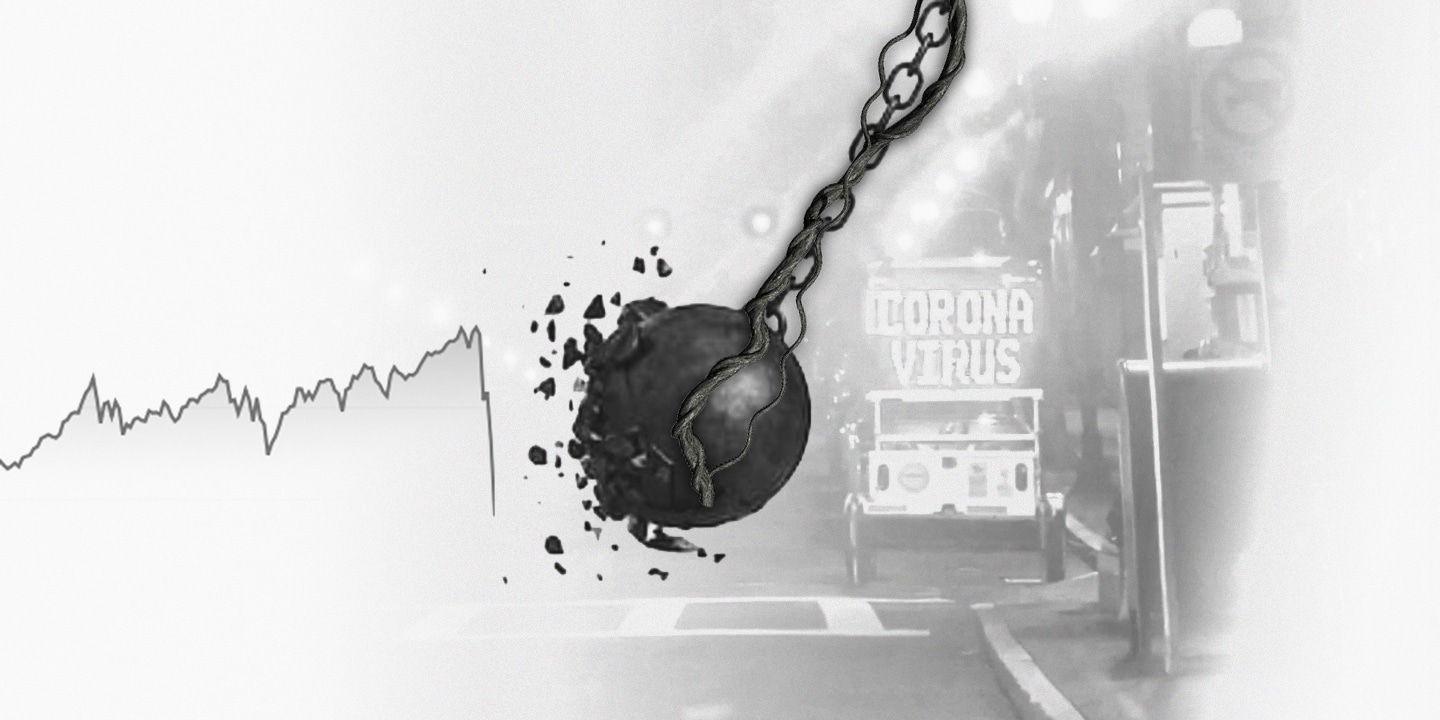
Recognizing that the US has a longstanding history of privatizing profits while socializing costs, we also discuss the normalization of a “capitalist animism”—treating social phenomena like markets or financial capital as living entities—that fixates on “economic health” at the expense of public health.

As this unprecedented situation continues to unfold, we explore some considerations for this sudden period of social isolation within a broader culture of social alienation.

Co-hosts: Brian Normand, Neşe Devenot, David Nickles, Brian Pace. Editor: Matt Payne.

Watch

Episode links

Big Pharma Prepares To Profit From The Coronavirus

Coronavirus: What Has It Revealed? 

How did we end up with health insurance being tied to our jobs?

The For-Profit Pharmaceutical Industry Is Leaving Us Exposed to Pandemics Like Coronavirus


Some more background….

We’ve spoken at length in past episodes about capitalist dynamics in relation to the medicalization of psychedelics and the emergence of big psychedelic pharma, but today we’re going to take some time to explore these dynamics in the context of the emerging pandemic of the COVID-19 infection caused by the novel coronavirus. This pandemic is offering a, perhaps, unprecedented historical moment within late capitalism, where the narratives of dominant culture are revealing themselves to be little more than myths uttered by the rich and powerful, in order to maintain their grip on power. As the mask slips in the face of this deadly pandemic, it’s worth looking at past responses to global health crises in order to see what insight they have to offer.

In 1938, President Franklin Roosevelt founded the National Foundation for Infantile Paralysis to combat polio. In the week prior to President Roosevelt’s birthday, stage, screen and radio star Eddie Cantor inspired a nationwide fundraising campaign for the foundation. Lapel pins were sold for 10 cents, numerous special features were produced by the movie and radio industries, private businesses held public events and donated a portion of their proceeds to the foundation, and thousands of people mailed letters, each containing a dime, to the white house. Cantor’s campaign, named the “March of Dimes” raised over $85,000 for polio research in its first wave, and the foundation went on to spend $233 million on polio patient care from 1938 through 1955, thanks largely to what the New York Times referred to as Cantor’s “genius…in generating large numbers of relatively small contributions for a cause.”

In 1952, working for the National Foundation for Infantile Paralysis, Jonas Salk developed his vaccine for Polio, which was announced as safe on April 12, 1955. When asked by television personality Ed Murrow, “Who owns this patent,” Salk replied, “Well, the people I would say. There is no patent. Could you patent the sun?” Salk recognized that his research and eventual breakthrough had been made possible by the contributions of countless individuals who cared for the health and safety of their fellow human beings. Who acted not out of a desire for personal enrichment, but from an inherent understanding of solidarity and mutual aid. 

According to some calculations, Salk would have made about $7 billion if he had patented the polio vaccine. Laying aside questions of whether or not such a patent would have been legally defensible, we should laud the moral stance that Salk asserted. Namely, acknowledging the collective human effort of research and funding while refusing to put a predatory price tag on treatments to ameliorate human suffering. 


Plus Three goes deep into the world of drugs, from local decriminalization and emerging psychedelic corporations, to leftist politics and mass incarceration. Each week we attempt to make sense of the complex connections between drugs, science, capitalism, policy, and culture.

Psymposia is a 501(c)(3) non-profit media organization. We depend on contributions from our readers and listeners, never ads. If you like the show please donate or support us on Patreon. Patreon supporters get bonus videos and more.

Join Our Newsletter

Independent reporting. Critical analysis. In your inbox.

Previous episodes


#21 – American Trip: Ido Hartogsohn

Dr. Ido Hartoghson joins the show to talk about the ideas in his new book, American Trip: Set, Setting, and the Psychedelic Experience in the Twentieth Century  Acknowledging psychedelics as non-specific amplifiers of consciousness, we discuss different historical (and present) paradigms of use in order to interrogate the role of psychedelics within our culture. As we find ourselves staring down a number of existential questions, we must ask ourselves, "What do we hope to achieve through our personal and cultural exposure to psychedelics?”

#20 – The LSD Silo Bust (Everything You Wanted to Know and a Few Things You Didn’t)

In response to the unexpected early release of William Leonard Pickard from prison, we discuss some of the characters and stories surrounding the case. Having served twenty years of a double life sentence for conspiracy to manufacture, distribute, and dispense LSD— charges which he disputes— Pickard has never spoken publicly about the specifics of his case, and some of the drug-media coverage of this story has evidenced glaring omissions. Using court documents, lesser-known first-person accounts, and excerpts from Pickard's book, The Rose of Paracelsus: On Secrets & Sacraments, we call attention to some of the murkier aspects of this story in an attempt to paint a fuller picture of what is, perhaps, the most notorious psychedelic story of the 21st century.

#19 – MDMA, PTSD, ACAB

In this episode, we explore the implications of MAPS’ main political strategy: demonstrating affinity for and utility to the police, the military, the far right, and individuals who have repeatedly upheld violent white supremacism. Unpacking a recent article by David Nickles, we examine the “ends justifies the means” logic that has become pervasive in psychedelic research.

#18 – Seizing the Doors of Perception

In this episode, we unpack some of the characters and dynamics of the psychedelic “arm” of the Intellectual Dark Web. We use Neşe Devenot’s recently released video on Jamie Wheal, Lucian Tarnowski, and other affiliates of the Rebel Wisdom media platform to explore questions of power, class, and ahistorical theories of social change. Just how much sense do these self-labelled "sensemakers" make?

#17 – Psychedelic Capitalists Part 2: Pandemic Profiteers and Non-Cooperative Actors

Brian, Dave, and Russell continue their conversation about neoliberals in psychedelia, including companies using the coronavirus pandemic to promote psychedelics for mental health. They also deconstruct non-profit vs. for-profit rhetoric and propose more pragmatic frameworks for examining the implications (and material realities) of psychedelic corporations and their operating structures, such as cooperative vs. non-cooperative.

#16 – Psychedelic Capitalists Part 1: Psilocybin and Gold and Lithium, oh my!

Brian and Dave are joined by Psymposia writer Russell Hausfeld to discuss capitalist logic in psychedelia, the principles of open science, and the increasing eagerness of extractive industry players (including gold and lithium mining outfits and traders) looking to capitalize on psychedelics.

#15 – Psychedelics, Sex, Power, Silence

In this episode, Lily Kay Ross joins us to discuss Olivia Goldhill’s story, “Psychedelic therapy has a sexual abuse problem.” Ross recently completed her doctorate studying social responses to sexual violence. She brings both her personal experience with sexual violence and poor community responses in psychedelic spaces and her academic insights to bear on the myriad of questions highlighted by Goldhill’s reporting.

#14 – Douglas Rushkoff on the Parallels Between Psychedelic and Digital Mainstreaming

Plus Three is joined by author and host of the Team Human podcast, Douglas Rushkoff, to discuss some of the parallel trajectories between psychedelic and digital mainstreaming. Will COVID-19 be to psychedelics as 9/11 was to surveillance capitalism? September 11th became the excuse to implement a surveillance state and surrender digital technologies to corporations. Will we see psychedelic medicines become the go-to recovery option for COVID-related mental health fallout? We also explore what a true psychedelic renaissance might look like.

#13 – Dear Psychedelic Researchers

On the one hand, psychedelics hold promise for personal healing and transformative individual change, and when psychedelics are eventually accepted by mainstream medicine, they will likely impact mental health outcomes for the better. But the broken systems highlighted by the coronavirus pandemic offer insight into why mental health has reached epidemic proportions in the first place.

#11 + Alan Piper: Strange Nazis

Alan Piper is a maverick historian of ideas with a penchant for unique, deep dives into rich veins of psychedelia. Piper’s 2015 monograph, Strange Drugs Make for Bedfellows: Ernst Jünger, Albert Hofmann, and the Politics of Psychedelics was foundational for the critique explored in Brian Pace’s controversial Lucy in the Sky with Nazis: Psychedelics and the Right Wing. In this interview, Pace interviews Piper about Hofmann tripping buddy and Wehrmacht Captain Jünger, LSD and ideology— clarifying concepts and dispelling myths.

Previous episodes


#21 – American Trip: Ido Hartogsohn

Dr. Ido Hartoghson joins the show to talk about the ideas in his new book, American Trip: Set, Setting, and the Psychedelic Experience in the Twentieth Century  Acknowledging psychedelics as non-specific amplifiers of consciousness, we discuss different historical (and present) paradigms of use in order to interrogate the role of psychedelics within our culture. As we find ourselves staring down a number of existential questions, we must ask ourselves, "What do we hope to achieve through our personal and cultural exposure to psychedelics?”

#20 – The LSD Silo Bust (Everything You Wanted to Know and a Few Things You Didn’t)

In response to the unexpected early release of William Leonard Pickard from prison, we discuss some of the characters and stories surrounding the case. Having served twenty years of a double life sentence for conspiracy to manufacture, distribute, and dispense LSD— charges which he disputes— Pickard has never spoken publicly about the specifics of his case, and some of the drug-media coverage of this story has evidenced glaring omissions. Using court documents, lesser-known first-person accounts, and excerpts from Pickard's book, The Rose of Paracelsus: On Secrets & Sacraments, we call attention to some of the murkier aspects of this story in an attempt to paint a fuller picture of what is, perhaps, the most notorious psychedelic story of the 21st century.

#19 – MDMA, PTSD, ACAB

In this episode, we explore the implications of MAPS’ main political strategy: demonstrating affinity for and utility to the police, the military, the far right, and individuals who have repeatedly upheld violent white supremacism. Unpacking a recent article by David Nickles, we examine the “ends justifies the means” logic that has become pervasive in psychedelic research.

#18 – Seizing the Doors of Perception

In this episode, we unpack some of the characters and dynamics of the psychedelic “arm” of the Intellectual Dark Web. We use Neşe Devenot’s recently released video on Jamie Wheal, Lucian Tarnowski, and other affiliates of the Rebel Wisdom media platform to explore questions of power, class, and ahistorical theories of social change. Just how much sense do these self-labelled "sensemakers" make?

#17 – Psychedelic Capitalists Part 2: Pandemic Profiteers and Non-Cooperative Actors

Brian, Dave, and Russell continue their conversation about neoliberals in psychedelia, including companies using the coronavirus pandemic to promote psychedelics for mental health. They also deconstruct non-profit vs. for-profit rhetoric and propose more pragmatic frameworks for examining the implications (and material realities) of psychedelic corporations and their operating structures, such as cooperative vs. non-cooperative.

#16 – Psychedelic Capitalists Part 1: Psilocybin and Gold and Lithium, oh my!

Brian and Dave are joined by Psymposia writer Russell Hausfeld to discuss capitalist logic in psychedelia, the principles of open science, and the increasing eagerness of extractive industry players (including gold and lithium mining outfits and traders) looking to capitalize on psychedelics.

#15 – Psychedelics, Sex, Power, Silence

In this episode, Lily Kay Ross joins us to discuss Olivia Goldhill’s story, “Psychedelic therapy has a sexual abuse problem.” Ross recently completed her doctorate studying social responses to sexual violence. She brings both her personal experience with sexual violence and poor community responses in psychedelic spaces and her academic insights to bear on the myriad of questions highlighted by Goldhill’s reporting.

#14 – Douglas Rushkoff on the Parallels Between Psychedelic and Digital Mainstreaming

Plus Three is joined by author and host of the Team Human podcast, Douglas Rushkoff, to discuss some of the parallel trajectories between psychedelic and digital mainstreaming. Will COVID-19 be to psychedelics as 9/11 was to surveillance capitalism? September 11th became the excuse to implement a surveillance state and surrender digital technologies to corporations. Will we see psychedelic medicines become the go-to recovery option for COVID-related mental health fallout? We also explore what a true psychedelic renaissance might look like.

#13 – Dear Psychedelic Researchers

On the one hand, psychedelics hold promise for personal healing and transformative individual change, and when psychedelics are eventually accepted by mainstream medicine, they will likely impact mental health outcomes for the better. But the broken systems highlighted by the coronavirus pandemic offer insight into why mental health has reached epidemic proportions in the first place.

#11 + Alan Piper: Strange Nazis

Alan Piper is a maverick historian of ideas with a penchant for unique, deep dives into rich veins of psychedelia. Piper’s 2015 monograph, Strange Drugs Make for Bedfellows: Ernst Jünger, Albert Hofmann, and the Politics of Psychedelics was foundational for the critique explored in Brian Pace’s controversial Lucy in the Sky with Nazis: Psychedelics and the Right Wing. In this interview, Pace interviews Piper about Hofmann tripping buddy and Wehrmacht Captain Jünger, LSD and ideology— clarifying concepts and dispelling myths.

Psymposia is a 501(c)(3) non-profit media organization that offers critical perspectives on drugs, politics, and culture. We reject corporate advertising and rely on contributions from our readers and listeners. Click here to donate today.

Privacy. Terms of Use. © Psymposia, Inc. All Rights Reserved

Psymposia is a 501(c)(3) research non-profit with a mission to educate the public on psychedelic science and harm reduction.

Privacy Terms of Use

shiftnav-1