Hamilton’s Pharma Cope, Part 1: “DEA Informants” Transcript
In this episode, we respond to Hamilton Morris' claims that we are DEA informants and that we colluded with the FDA to get Lykos Therapeutics' MDMA therapy application rejected.
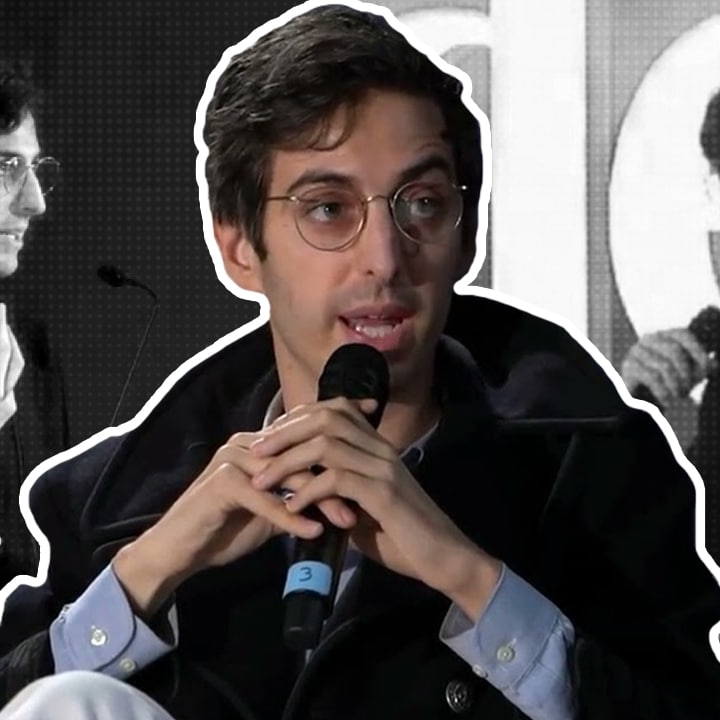
Transcript created using Descript and may be subject to misspellings.
Russell: This is the first episode of a four-part conversation between our team discussing the many false claims made about us by Hamilton Morris on Andrew Callahan’s forecast. If you’re familiar with our content, chances are you’re familiar with Hamilton Morris, but in case you’re not up to date with your psychedelic influencers, or you miss that sweet spot of vice journalism between 2010 and 2020, it’ll definitely help to have a basic understanding of who Hamilton is.
He’s the son of renowned documentarian, Errol Morris, who is famous for documentaries like The Thin Blue Line and Fog of War. Hamilton’s father also has some of his own psychedelic bonafide, including the documentary miniseries Wormwood about government experimentation with psychedelics and the story of Joanna Harcourt Smith, Timothy Leary’s ex-partner in my psychedelic love story.
Hamilton Morris started his career following in his father’s footsteps as a documentarian working for Vice News. The media Empire would send him all around the world for his show, Hamilton’s Pharmacopia to discuss and try drugs on camera.
Hamilton Morris: Feel high or sort of a little bit dissociated.
Thank you very much. Oh, it’s coming over me.
Oh,
oh.
Russell: This earned him a spot as a fairly well known psychedelic influencer. His career with Vice ended in 2021 when he took up a position as a full-time consultant with Compass Pathways, the psychedelic pharmaceutical company. That was trying to patent and bring to market a psilocybin formulation. And during his time at Compass Pathways, he worked in the lab of Jason Wallick, which has had a hand in filing over 200 other psychedelic patent applications.
He has since left this position with Compass Pathways and now produces what can reasonably be described as pro-industry content. Feigning is journalism. To a community of about 5,000 paying members on Patreon and gives the occasional interview on the good old days of vice misinformation about Psymposia or occasionally appearing for media stunts like the Livestreamed Psilocybin Trip of Longevity Guru Bryan Johnson,
Host of Bryan Johnson Livestream: I guess Brian Harris.
So, so Hamilton, um, gosh, I don’t even know how to fully. Introduce you. I, I first, you know, got introduced to your work as a documentarian and, and Hamilton’s Pharmacopia. And then, and I think, I don’t know, I I was gonna ask you what exactly you’re doing these days. The last thing I read, I mean, I think you were actually working at a, at a company these days,
Hamilton Morris: I’m not doing it full-time anymore, so I made the documentary series.
Then switch to full-time chemistry, and now I am still doing some chemistry, but I make a podcast the Hamilton Morris Podcast about chemistry and psychedelics.
Russell: Now that you’re all caught up back to the task at hand, this episode will explore Hamilton’s longstanding fixation with us, the setup to his conversation with Andrew Calla.
Recent allegations from Hamilton about our involvement with the DEA and claims about our conduct at the FDA Advisory Committee Meeting. Part two of this conversation dives into previous smear campaigns against us around our reporting on Martin Ball and the Church of Seth Oxen, as well as false claims about who funds us and why.
Part three, we’ll continue the conversation about our funding and explore Hamilton’s wild claims about the company Sana. In part four, we’ll explore numerous attempts that Hamilton has made to attack the work integrity and character of the members of our team. Let’s dive in. Hi, I am Russell with the Psymposia podcast, and today I’m here with Pace Normy and NSHE to discuss Hamilton Morris’ recent interview on Andrew Callahan’s five.
We put out a recent primer video on this interview and Andrew Callahan’s journalism in general. But during that video, we said we would be doing a full rebuttal to the claims made during that interview. That’s what we’re here to do today as some context. We’ve been targeted for nearly two years since the FDA’s rejection of MDMA assisted therapy.
During the FDA approval process, we reported to the FDA on a number of unreported harms that occurred during the clinical trial process. These were later proven through FDA investigations. After presenting these, we were targeted kind of on a large scale basis by a lot of people in the psychedelic industry, a lot of the funders behind the Lycos trials.
This is all detailed in our psychedelic syndicate reporting, which you can find on our website, and kind of a main person pushing some of these theories about us was Hamilton Morris. He’s done. Over 13 YouTube interviews and Patreon podcasts to his audience on what amount to conspiracy theories about Psymposia.
Normie: Yeah, he’s been having just an, an absolute crash out, uh, for the last year or so. It’s an, it’s an obsession with us that he’s had I, at this point, we’ve like broken his brain.
Hamilton Morris: I haven’t really talked about Psymposia for maybe even one entire podcast, so I apologize.
Russell: Yeah. And he has been escalating his theories about us from.
Uh, talking about our funding to being funded by another pharmaceutical company to his most recent podcast that he put out, speculating on whether we’re DEA informants,
Pace: both, um, Andrew and Hamilton have. Talked at length about the value of their journalism, and we have not been contacted in any of these exchanges where, uh, wild claims that are easily disprovable, um, have been made and, you know, credulously amplified to their various audiences.
So in many ways, we’re here to address the quality of that journalism.
Russell: What we have next to kind of start this episode is a clip from that most recent podcast.
Hamilton Morris: On August 17th and 18th, 2024, Johns Hopkins University hosted a conference in conjunction with Oxford on psychedelic ethics that was attended by many people in the psychedelic community.
The conference was bound by Chatham House rule. Which means that people could discuss items that were discussed in the meeting but couldn’t attribute it to anyone. This put people who were attending in a difficult position because a certain person at this conference who technically could not be named, who was at Johns Hopkins, who cannot be named, announced their intention to out a list.
Of 12 underground MDMA therapists. Supposedly this unnamed person also said that they had acquired a gun to protect themselves from disgruntled veterans who might wish to get revenge on them. This claim was independently conveyed to me by multiple people. I was so horrified. When I learned this, that I immediately started doing everything I could to try to prevent the unnamed individual from going forward.
And as you can imagine, this spread like wildfire throughout the underground psychedelic community. I reached out to a respected elder who I imagine will wish to remain unnamed, who I thought was. The only person who could talk sense into Nhe to prevent this from happening. We’re now not talking about the conference anymore, so I’ve just incidentally moved on to using the name.
Apparently the elder tried to intervene and it was of no use. It was utterly horrifying, and to everyone who knew about it seemed like. Unspeakable psychedelic McCarthyism of the most literal type. Announcing that you have a list of people who you will publicly disgrace is textbook Joseph McCarthy Behavior.
It inspires fear, paranoia, distrust, and had the intended effect of putting everyone very much on edge.
Russell: So, uh, I just wanna say off the top, what a failure of the Chatham House rules at the point where he’s tossing that out on a podcast. Um, but Nhe, do you wanna respond to that since he called you out by name there and kind of discussed his intentions of what he’s been doing for the last year?
Neşe: Yeah, well, it was really interesting to, you know, hear about this podcast coming out because we, we knew that we had been. Targeted by on the sustained and obsessive campaign by Hamilton for, uh, it’s been o over a year and a half now. Uh, with this, you know, MDMA, uh, assisted therapy specific focus, people would ask me, why is he so?
I like this with you guys. Like what happened? Yeah, like where does this obsession come from? And I, maybe this is a good place to mention the Wonderland situation ’cause I think, you know, this dislike of us proceeded the specific FDA circumstances, but it definitely, uh, accelerated to quite a large extent after that happened last or in 20 20, 24.
Russell: And in particular, he has been assaulting your and pace’s work. For a long time in at the Wonder Band thing, which will come up in some later clips. He specifically talks about
Andrew Callaghan: your work.
Pace: Yeah, back in 2022, um, was the first Wonderland interaction.
Russell: Yeah. The gist, which will come up later is essentially that in 2022, we were banned from a conference called Wonderland Miami that none of us had planned to even attend, and Hamilton Morris took to stage to basically mischaracterize a bunch of our research and reporting.
Pace: Um, it was pretty one-sided. Um, we, we do have a pretty full, um, video on that that people can revisit if they’re interested. Um, Hamilton did not come out of that situation looking. Very good at all. And I think that fueled, um, a lot of, sort of impotent rage towards us. And then the lycos, um, failure at FDA happened, um, which we were broadly scapegoated for.
Neşe: So, so I knew that he didn’t like us from that point. And it, it, it is worth mentioning as well though, that we did move in parallel circles years ago and we’re not. Always on this like terrible footing, uh, with him or, or viewed, viewed poorly by him. I, many years ago, co-chaired a panel at an art gallery in New York City with him.
So we had personal interactions in the past that were not hostile the way things have been recently. But what was helpful to, at least, what was helpful to hear about this most recent podcast was an actual. Motive for this sustained, targeted, har, essentially harassment of us over this long period of time, since 2024 as regards to the MDMA clinical trials.
And he’s very explicit in this podcast about saying that he is doing everything that he can to prevent. Me from communicating crimes to federal agencies, which is a bizarre thing to admit on a podcast. And just as some additional context about that, I’ve been very open about the fact that I presented to the FDA.
With the hope of getting through to investigators. I was in touch with sources that had experienced things of concern to public health, and some of those things were sensitive and they did not want it to be public. So I came forward explicitly trying to get through to investigators who could look into this, and there was a, an article in the Wall Street Journal in the summer of 2024.
That discussed how FDA investigators had reached out to me and I, I participated in a multi-agency investigation and ultimately the DEA was involved, but that’s because they were investigating clinical trials and clinical trials rely on DEA authorization. They were one of the federal agencies that participated in those conversations.
So none of this has been a secret. It has been very explicit the entire time, and yet Hamilton is warping it in a way to direct hate and justify retaliation against us.
Russell: And to, to be clear, the way he’s framing the involvement in a multi-agency investigation is that he’s, he’s essentially operating on rumors.
That we are taking all of our tips, emails and like relaying them to the DEA and stuff like that, which is completely false and we, that is not something we’ve ever done.
Neşe: The issues that we were in communication with those agencies about we’re about people being harmed. There was harm We are not talking about, we’re not reporting people’s drug use to get people in trouble the way that he is representing it.
The other significant thing about Hamilton’s admission that he’s been on this intimidation campaign and harassment campaign against us and me specifically, is that he has also acknowledged being a major source. For both the New York Times article and the Wired article, um, that have talked about Psymposia and been characterized, um, by others as hit pieces.
And it’s significant. I think that there are claims published in the New York Times article like that we have attacked veterans or that we have attacked researchers, psychedelic researchers at Johns Hopkins University. Neither of which are true. It’s completely fabricated and yet published in the paper of record and when those types of falsehoods are published in the paper of record and major newspapers.
It’s a sign that there are very powerful forces at work in trying to advance a, a certain narrative.
Pace: I mean, Hamilton being a major source for these publications Sure does explain, uh, you know, misinformation, taking root,
Neşe: his characterization of that conference.
Hamilton Morris: A certain person at this conference announced their intention to out a list of 12 underground MDMA therapists.
Neşe: Is completely false. So Pace was there as well. And can say, I I did not, I can confirm
Pace: big if true,
Neşe: not true. Big if true. And it’s so, it’s so fascinating though, ’cause it’s like, oh, this completely made up story has justified his, his harassment and he’s so, he wasn’t there about it.
Pace: He just wasn’t there. I was.
You were, you know, I think it’s important to address this specific claim. You know, that there was a, a dozen or more people that you were hell bent on threatening the community, or specifically outing or doxing. Um, that was something that was, you know, presented to me through my own networks. And I was like, what?
Because that, that’s just so far from our priorities and interests and, and what we do at Psymposia, that it was absurd and I, it literally took me a little while to have any sense of, of what game, of
Neşe: what they were talking
Pace: about could have gotten someone to that place.
Neşe: Yeah. Well it’s, it’s interesting ’cause it’s like we, we’ve been, we’ve never like run to the DEA about our enemies.
Like that just has never happened.
Russell: We’ve been targeted by people doing pretty shady underground stuff before, uh, to the point where we’ve been sued by people we’ve reported on for what amounts to like a one star review on Yelp. Essentially, uh, the church ofs Methin sued us and we never went to the DEA about them
Pace: if we were interested in putting drug users or even distributors, you know, in jail.
Um, when one of those very prominent. International Drug distributors, uh, is suing us for defamation for what amounted to like a single star Google Review about the quality and, and, you know, purity of their, their product. Uh, you know, that was found to not have any, uh, mythical asylum methin. This is, this is actually something that Hamilton weighed in on and uh, was also a co-defendant.
The asylum, the Church of Asylum, Methin later Sacred Synthesis, uh, you know, sued for, for defamation, for reporting chemical analysis. You know, and, and so if, if, if it was our interest to somehow retaliate, uh, against people that we, we didn’t like, if it was our MO to go to dropping a dime on them.
Normie: Yeah. You think we would’ve done that when we were sued for a hundred million dollars?
Right?
Russell: Yeah. There was no intention of, Hey, we’re gonna go narc on you to the DEA. It’s just they oversee schedule one substance, clinical trials and things like that.
Neşe: There is a, there is a, a longstanding trope in the psychedelic community of. The evil DEA informant as a type of person that everyone ostracizes.
And so Hamilton, I would argue, is very intentionally invoking that historical cultural connotation and using it to desperately try to cleave us away. From, um, c, C community re relevance.
Pace: This is exactly what’s happening. And I mean, the thing is, is that we do have to back up for a second and talk about, you know, the quality of the clinical trials.
It was rejected by the FDA for a variety of reasons that you can go read about in the complete response letter and the kinds of things that were. Happening in those trials were enough to, you know, cause doubt about the quality of the data, about the reliability of, of those data, and talking about that kind of, uh.
Th those kinds of activities to, uh, essentially regulators who are responsible for evaluating quality of clinical trials to, you know, sign off on a experimental protocol, a treatment protocol that will be then implemented at the national scale. This is not the same as like talking to the local police about your friend’s jansport full of weed.
It’s just not, these aren’t, it’s a false equivalency.
Neşe: When it’s also, it’s like my job as someone who studies like psychedelic bioethics, that if I in my research identify a flaw in a treatment that is on the cusp of mainstream approval, it is my job to say, you know, I have discovered this thing that I think we need to address in order to prevent these harms from scaling.
There is nothing controversial or sinister about doing so.
Pace: I mean, Psymposia is a watchdog. We are a research organization. We are often the people who receive, uh, stories of misconduct in both sort of the business world and the underground world, including inclusive of the world of FDA clinical trials.
We’re often people who are willing to hop on a call and listen to. These accounts from people who have otherwise been, you know, shut out or shut down, um, by multiple parties. And so a lot of this is documented in previous work that symposiums put out through a variety of formats and ultimately the kinds of things that Nhe was talking about with investigators.
These sorts of things were independently found in the FDA’s own postmortem of these clinical trials and this new drug application. They found these adverse events. When they looked and they said that they are ordering a full, a full review, uh, with the expectation that more will be found.
Neşe: Hamilton’s admission about why he’s been targeting us also explains why the narrative that Andrew, uh, put on his, you know, uh, five cast is so false and so extreme, and that ultimately means that.
Andrew Callahan, while claiming to be this truth telling journalist is amplifying a retaliation campaign against people who were speaking up in the interest of. Public health and safety.
Russell: Yeah, and to that point, our involvement, pre-approval or disapproval of lycos therapy application has been framed as this act of corruption that we somehow colluded with icer, this agency that gave it a bad review that we colluded with the FDA adcom, the advisory committee.
And in reality, what we did was an act of like civic engagement in a time where that is hugely discouraged. Public civic engagement is like, I mean hopefully it’s ramping up right now, but has been at an all time low. Is discouraged, is almost like criminalized in this era.
Freedom
Pace: of speech is under attack right now.
Freedom of speech.
Russell: Yeah, and we participated in a public process. What did we do? Nhe and PACE were involved in writing a petition that expanded the ad comms public comment period, which benefited us to be able to speak, but also a whole bunch of people that were pro MDMA pro Lycos. As well to be able to speak in this Adcom period.
We participated in the process with three minute. Talks to the advisory committee and we participated in a bunch of civic projects that none of this was corrupt. None of it was the way that they’re framing it.
Neşe: And, and there were three Psymposia members that were participating, but we were not part participating as Psymposia.
I was. Presenting my research that I’ve carried out for years at Universities PACE as well, describing university research. And Russ was talking about his journalism across multiple outlets, including truth digs. So we were not there representing Psymposia whatsoever, and there were only three of us.
Russell: And the reason we’re stressing this is because the number of people affiliated with Psymposia who participated in the advisory committee meeting.
Has been inflated and misreported by numerous sources since the meeting took place. First, the documentary filmmaker, NAND Molik, put out a short film associating numerous people with our organization. As undisclosed Psymposia activists, this number was then misreported in the New York Times, and the paper has refused to make any corrections.
The incorrect number has subsequently stuck in our Wikipedia page, even though it has been correctly reported in other sources and outlets since the original misreporting.
Pace: Right, like my day job is, uh, you know, in part teaching about psychedelics to college students, uh, a demographic that is, you know, among the most likely to have their first psychedelic experience.
What this weekend and. You know, harm reduction and presenting clearly in an evidence backed manner, the benefits, potential, and drawbacks or harms risks, potential of these substances is my duty. And introducing myself as being affiliated with the university that I am actually affiliated with, was met with claims that I am misrepresenting, uh, myself or, or that we all concealed our relationship with each other or with, uh, Psymposia.
And none of this was something that we, a, had a, like a duty, uh, legally or otherwise morally to report. And second of all, as we detail all of this. In the, the psychedelic syndicate with, you know, at adequate sourcing, uh, for the, for the topic.
Neşe: Adequate is an understatement,
Pace: right?
Neşe: Copious, copious
Pace: evidence.
Copious more than you might want to know. Um, but I mean, we, we also put out a press release before, uh, the FDA advisory committee even met, announcing that
Andrew Callaghan: we
Pace: were gonna be meeting. It was that a federal agency responded to a citizen petition at all, in which we announced before. The entire thing began that we would be participating in our relationship with Psymposia.
Uh, it was picked up by ap. What do you do? Okay.
Russell: Another claim about the advisory committee meeting that is consistently brought up by people like Hamilton is that Nhe supposedly lied to the FDA about a clinical trial therapist who was involved in the maps MDMA trials
Hamilton Morris: and was outed for lying to the FDA to serious crime about lying to the FDA, or at the very least.
Dramatically manipulating the FDA because there was clear misrepresentation and there was, there were clear conflicts of interest among many of the critics. And they were lying
Russell: in Morris’ Telling Nhe quoted a passage from an unrelated text about ketamine therapy.
Neşe: In this book, Veronica Gold Akos supervisor, trainer, and phase three therapist describes pinning down a patient as their distress escalated to the point of shouting, quote, go away, get your effing hands away from me.
End, but gold did not stop. As demonstrated by the the many Lycos therapists who endorse this abusive practice. This is an accepted component of the intervention that Lycos presented to this committee as necessary for positive patient outcomes.
Russell: But the quote was actually directly relevant to the MDMA clinical trials.
Neşe: Two of its three editors will Lycos trainers and phase three therapists, and it was endorsed by prominent members of Lycos Inner Circle,
Russell: although the quote was describing a ketamine therapy session. By Veronica Gold, a Maps Lycos therapist in her private practice, gold has acknowledged that these practices that Nshe described were drawn directly from the MDMA clinical trial protocol.
Neşe: Dolin admits that Lycos entire therapeutic approach is based on Stanislav Gros spiritual teachings.
Veronika Gold: So in the in, in the MDMA clinical trials, we use more of the same body work as, as Stan, uh, taught.
Neşe: Although this specific intervention isn’t in any of the briefing documents that were submitted to the committee.
It is associated with identifiable patterns of harm across lycos clinical trials
Russell: based on a belief that trauma can be healed by re-experiencing the traumatic event. The MDMA protocol allowed therapists to physically reenact assaults while the patient was in an altered state and begging for it to stop.
Other researchers had missed this fact. Since the protocol described these dangerous practices in euphemistic terms, few people were aware that they were even occurring. At the time of the FDA meeting, NHE was in direct contact with a patient of Veronica Gold’s from the phase 3M DMA clinical trials. And these methods had already enabled an on-camera abuse of another clinical trial participant.
In phase two, the pharmaceutical company, Lycos Therapeutics, or its predecessor maps, had never acknowledged the connection between their practices and the assaults on camera. This was the point, being stressed during the FDA’s advisory Committee meeting.
Neşe: This is yet another anti-intellectual kind of argument that, uh, Hamilton’s been making in the sense that I have very extensively explained that I did not lie to the FDA Board of Bioethicists has investigated claims that I was wrong and, and found my argument to be valid and important to the extent that they gave me another opportunity to go further into my analysis.
It’s a mischaracterization that people who haven’t read deeply into the situation don’t understand what’s actually been said. It doesn’t make sense that a top bioethics journal would publish my, my work about this matter in particular if it was just made up and false.
Pace: Yeah, ridiculous. Like, uh, these are people who actually evaluate claims, not vibes based like podcasters, uh, with a ax to grind like it’s, uh, yeah.
Next.
Normie: We’re dealing with a super culty new age, MDMA pharmaceutical company. There’s absolutely no reason to lie to the FDA, like, it’s right, not ne it’s unnecessary,
Neşe: but this, this is something that like, you know, no matter what we did. They would’ve found something to say that, that we were ill illegitimate for doing.
Like, this is not about us in our behavior. This is about, the outcome was different than a lot of people wanted and a lot of people are behaving like children. As a result of that. There,
Normie: there was an absolute necessity for there to be a scapegoat. They had to have that. They had ra, they had spent decades and hundreds of millions of dollars and they, and maps that crew.
Got so deep in bed with Silicon Valley, various investors, it was so deeply shocking and embarrassing what happened to them. There was an absolute necessity from a PR perspective to save their own asses, to cast blame, to distract and say it was all Psymposia and this. This rolled out in a public relations campaign.
It picked up steam Hamilton Morris was. Only too happy to like join in on that and to push that,
Russell: we extensively detail this PR campaign in a chapter of our psychedelic syndicate report called Flood the Zone. In this chapter, we review a number of emails that were leaked to us from people involved in this campaign.
For instance, Robin Thomas, who is involved with the psychedelic communications hub notes. Here I think a plan needs to include the coordination of the Com firm’s breakwater, who works with Lycos Therapeutics. Precision who works with the psychedelic science funders, collaborative, vitamin D, who works with healing, breakthrough and as much specificity as possible in the holding statements.
Here you can see another email that was leaked to us that was sent by the PR firm, vitamin D, who Robin mentions in that last email. This was sent out to journalists with an open letter from Heroic Hearts and Healing Breakthroughs, who the firm was representing. Which wildly mischaracterizes us and our intentions.
And in this video that was leaked to us of a meeting with the psychedelic communications hub who was part of this coordinated campaign, and you can hear them discussing the coordination.
Psychedelic Communication Hub Leaked Audio: Different folks have been hired for different, um, lanes of work, different, different areas of focus that the communications firms are aware of one another’s areas of focus, and that there is.
Um, intention for those folks to be, um, coordinated and each, as I said, each firm has their own charge and that we are in coordination.
Russell: And what’s been really disturbing is that what’s been focused on, by wired, by New York Times, and especially by Hamilton Morris, is the fact that we did. Hire the help of a PR firm in the midst of all these attacks on us from this coordinated campaign to help get our perspective out there around the FDA clinical trials and to help defend ourselves in this wave of misinformation.
What they did was help us write a few statements in response to some of these attacks and put out a few emails promoting our perspectives around these trials, and instead of contextualizing our reaching out to a PR firm for support in this time while we were being attacked. The New York Times has characterized it this way.
Writing concerns about the organization, Psymposias ability to disrupt the field have mounted in recent months after a public relations firm began amplifying Psymposias and Dr. DEOs allegations of malpractice against Leicas Wired S spotlighted. The fact that the group, us commissioned a PR firm without any kind of context that.
The industry had a coordinated campaign that was attacking us, and Hamilton multiple times went on his podcast To paint this in the most conspiratorial light possible, speculating on how specifically Nhe had the funding to hire a PR firm.
Hamilton Morris: She’s represented by an expensive PR agency. Just for some context, I can’t afford a PR agency.
I’ve never had a PR agent in my entire life. How the fuck does Nhe have a PR agent? Uh, let me give you a hint. Someone is paying for it. She’s not paying out of pocket for herself to have a PR agent to publicize the fact that she lied to the FDA. How dumb does she think everybody is? And there’s more, oh my God, there’s more.
There’s so much more, I don’t wanna say this in an uh, kind of Psymposia way, like more evidence will come out just you eight. Just you eight. The worst is yet to come.
Russell: So all of this is to say that there’s just been an enormous amount of attention spent on the fact that we briefly hired PR help. In the midst of being attacked by an industry funded, coordinated PR campaign on behalf of funders and organizations that wanted to see MDMA approved against scientific evidence.
Yeah, across multiple platforms. Hamilton has laid out all of his theories about us and Andrew Callahan’s Channel five platform gave him one of the biggest platforms to date to spread this misinformation. And I think the next clip we have of Andrew introducing their interview together gives a very clear picture of the narrative that they wanted to spread.
Um, so we can jump into that. Uh, Andrew describing this interview
Andrew Callaghan: today, we’re sitting down with the illustrious Hamilton Morris, as you guys have seen, and we’re gonna discuss many complicated and intricate things before ultimately diving into how and why a paid activist group called Psymposia, who were funded by an allegedly nefarious pharmaceutical company called Ussna, successfully interfered with the FDA’s plans to legalize MDMA after a series of highly successful clinical trials, in which it was proven that MDMA helped.
Many patients, including US Army veterans, cope and heal from their PTSD anxiety and depression.
Russell: All right. We are here right now with an
Andrew Callaghan: extremely special guest, Mr. Hamilton Morris, thank you so much for joining the five test today. Thank you for having me. For having me. We’re gonna get into some super spicy, potentially lawsuit inducing conversation.
Pace: I think it’s really apt that, um, this introduction is, uh, you know, Andrew Callahan in a, a sports jersey because he’s talking about these pharmaceutical companies because, you know, as Hamilton goes into, he’s, uh, had, uh, attachment to Compass as if they are, you know, competing sports teams where one is villainized and the other is given a pass.
Normie: I love, I just love how he says allegedly. He, he’s, Andrew comes in possession of all of this, this, this trove of controversy, and, and he frames it, that it’s potentially lawsuit inducing. Allegedly. Allegedly. And, and no contact. If you came into possession of this secret, wouldn’t you like reach out to them as a journalist?
Wouldn’t you reach out to them to get a comment, to try to find out like, what’s going on here? Nothing. ’cause that wasn’t the point. The point was attention. Uh, the point was he got Hamilton on there and just, just trusts everything. It, it’s his hero. So
Neşe: we’d also been very like, you know, demonized and so I’m sure there’s also an aspect of like, don’t trust them.
Like they’ll just lie to you. They’ll try to manipulate you like that. That has been happening a lot. Where it’s like we’re represented as like not worth engaging with. As we mentioned at the outset of this video, we could have easily refuted many of the claims that come up. And one of the reasons we wanted to put this together, this video today, is to show what we were able.
Back then to show Andrew, had he reached out responsibly to us,
Pace: it would’ve made for a much more interesting video actually, um, the kind of journalism that probably would’ve guarded a significant audience for Andrew, had he done it, but he’s not that kind of journalist.
Russell: This interview with Andrew was an escalation for Hamilton in that Hamilton had been spreading a number of rumors about our funding.
He’d been involved as kind of a background source on these articles like we discussed. Um, but up until this point, I hadn’t heard the claim that we were funded by another pharmaceutical company. He had been discussing things about our funding by other people up until this point. But in this interview, he rolled out this whole new theory that we were funded by a pharmaceutical company called Usona, and that’s where we’ll jump back in for part two.
Hey! Before you go… Psymposia is a 501(c)(3) non-profit media organization that offers critical perspectives on drugs, politics, and culture. We strive to ask challenging questions, and we’re committed to independent reporting, critical analysis, and holding those who wield power accountable.
Our perspectives are informed by critical analysis of the systemic crises of capitalism that have directly contributed to the unmitigated growth of addiction, depression, suicide, and the unraveling of our social relations. The same economic elite and powerful corporate interests who have profited from causing these problems are now proposing “solutions”—solutions which both line their pockets and mask the necessity of structural change.
In order for us to keep unpacking these issues and informing our audience, we need your continuing support. You can sustain Psymposia by becoming a supporter for as little as $2 a month.