Hamilton’s Pharma Cope, Part 2: Psychedelic Cult Defenders Transcript
In this episode, we examine previous smear campaigns against us related to our reporting on the Church of Psilomethoxin and Martin Ball, as well as false claims about who funds us and why.
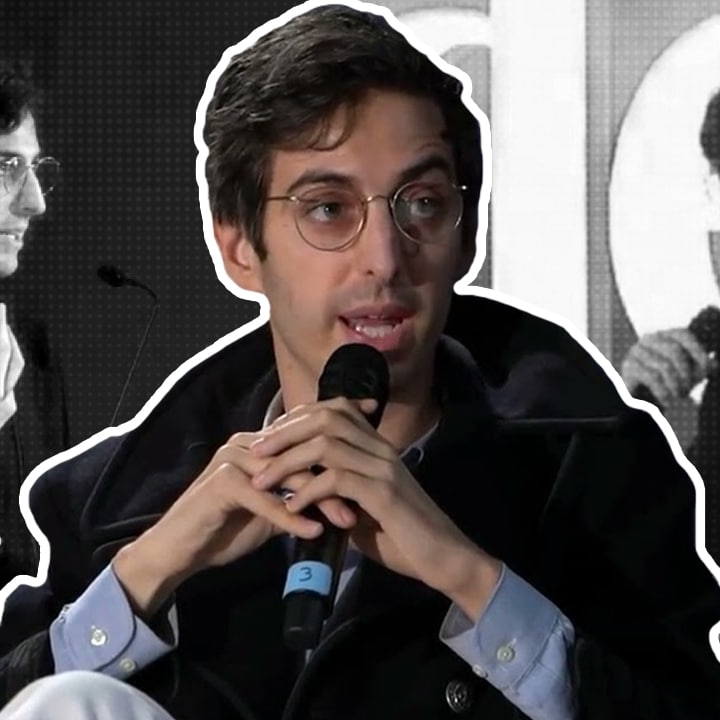
Transcript created using Descript and may be subject to misspellings.
Russell: This is episode two of a four-part series on the misinformation spread by Hamilton Morris on Andrew Callahan’s five cast. Last episode, we left off on the fact that Hamilton had begun claiming that we were being funded by a pharmaceutical company called Usona. We’ll jump in there, take a little detour through our history with the Church of Psilomethoxin and Martin Ball, and then get back to Hamilton’s theories about our funding.
This interview with Andrew was an escalation for Hamilton, in that Hamilton had been spreading a number of rumors about our funding. He’d been involved as kind of a background source on these articles like we discussed. Um, but up until this point. I hadn’t heard the claim that we were funded by another pharmaceutical company.
He had been discussing things about our funding by other people up until this point. But in this interview, he rolled out this whole new theory that we were funded by a pharmaceutical company called SA, their psilocybin manufacturer, who is allegedly kind of in competition with Compass Pathways and other psilocybin manufacturer who, who had funded the lab where Hamilton worked for years.
Pace: You know, it is just bizarre to listen to and, and watch claims about us that seem to be, you know, cut from whole cloth that have no grounding in, in reality like. You know, some of the things that we were talking about earlier might have a, a fun house view of, of some actual event. But, uh, or, or ba telephone game of telephone version of it.
But there’s just our interactions with Una proper are actually, you know, identical to Hamilton’s in some respect. Uh, they, they did, you know, cover some legal fees when it came to the asylum methin. They covered all, all defendants under one. Umbrella.
Russell: Yeah. Which was like over 15 defendants they offered to cover because they published, one of their researchers published an analysis of this church of PS, Methin Sacrament, saying it was just psilocybin, not something novel.
And
Greg Lake: they, they sued anyone who republished those results, including us. That was the story.
Russell: All right? The whole Psilomethoxin saga comes up multiple times in this conversation, and it’s genuinely too weird and interesting of a story to leave under explained, and it also provides a clear lens into previous smear campaigns against us for our reporting on abusive practices and practitioners in the psychedelic space.
So I’m gonna catch you up to speed real quick. The Church of Psilomethoxin was a psychedelic church allegedly operating legally above ground in Texas. They basically claimed to have developed a novel tryptamine psychedelic that was like an oral version of five M-E-O-D-M-T, which is like the smokeable psychedelic.
You hear people discuss getting from like a toad. They basically claim that they discovered a way to make an oral. Five M-E-O-D-M-T experience by soaking the substrate of psilocybin mushrooms in five M-E-O-D-M-T, therefore making mushrooms that produced Ps Methin, which produced a five MEO. DMT experience
Greg Lake: in 2007, Alexander Shulgin, uh, on his website, you know, he noted that there were people in Germany who at the time were feeding other synthetic tryptamines to mushroom substrates and getting four hydroxylated versions of it, uh, in, in the mushroom fruiting body.
He said, I theorized that if you throw or were to mix in, uh, five DMT salt to a, to a growing mushroom substrate, um, that it would produce silo methin. Ian, my law partner, um, stumbled across it and Ian being the person he is, had access to the resources, uh, to, to try this. And so, yeah, so it was tried. Um, as far as we know it was successful on the very first run.
Obviously we’ve tweaked the process and are continuing to tweak the process as we move forward. But yeah,
Russell: so. They have this claim and because they say it’s a novel tryptamine, it’s like kind of a gray market product that they begin selling on their website for $300 an ounce cut to 2023 to Usona chemists Samuel Williamson and Alexander Sherwood.
Publish a pre-print analysis of the sacrament that is being sold Assam Methin by the Church of Psilomethoxin, right? Their Preprint alleges that their analysis finds nos methin, no novel tryptamine in what the church is selling to its members, but they do find all of the ingredients and chemicals you would normally find in a psilocybin mushroom.
So we go ahead and report on these findings at symposia. And essentially say according to this chemical analysis, it looks like the Church of PS Methin is selling regular psilocybin mushrooms under a different name and shipping them across the country to its members. And a number of other independent analyses were released basically finding the same thing, or at least the fact that no Cyl Methin was detected in the sacrament.
Throughout this whole debacle, the church basically fell back on saying, well, we never claimed thats Methin was positively detected in our sacrament. We operate based on faith that this is a novel tryptamine, just not completely true. As we discuss in our article with a number of citations in which they discuss how psilocybin and.
Normal things you’d find in mushrooms actually were not found in their sacrament and and things like that. But yeah, we produce a four-part series on this whole debacle and the fallout from it. And for this series, I interviewed church co-founder Greg Lake about some of the questions that we had and accusations flying around about their church.
I’ll play a couple highlights from that interview here.
Greg Lake: Given the
Russell: current stuff that has come out about the sacrament and sort of the questions around whether Sima Oin is actually present, were participants informed that they, that there hasn’t been a positive identification of So Methin in the Sacrament, or was it presented as,
Greg Lake: I think that’s, that’s.
Ever since we started, that’s been abundantly clear.
Russell: And you feel like the way that the church has sort of messaged about the sacrament has made that clear?
Greg Lake: Yeah, absolutely. I mean, I mean, there’s been several different articles and conversations that have made that abundantly clear from day one.
Russell: Gotcha.
I guess to me there, there does feel like a little bit of, um, a reasonable. Expectation that people when getting the sacrament from the church would be receivings. Methin. I mean, given everything that I’ve heard in conversations, but also just the idea that you’re the church ofs Methin, right?
Greg Lake: Yeah. I mean, again.
I I, we’ve been abundantly clear many, many, many times, I’m guessing. Yeah, we’re a church. People are allowed to operate on faith. If people have taken a sacrament and they feel truly that this is new novel, and in their opinion, Solomon boxing, they have perfect right to do it. Now that this article’s been published, people can make up their own mind and we’re good with it.
Either way, it, it would, to me, I would be more hurt by not. Giving people continued access to it than, than to just like cut it off. I’m just, again, people, I think people have a right to say. I don’t wanna, I don’t believe the science a hundred percent here.
Russell: I guess in, in light of the article that was published and the GCMS testing that you’ve done, do you think there is the potential that there isn’t PS methin in your sacrament?
I mean, do you make space for that potential that maybe it, it, it is just powdered psilocybin, psilocin Bay system.
Greg Lake: I mean, I, I firmly believe it is, but like, if someone else has room for, for some doubt, that’s fine.
Russell: After all of this had like seemingly blown over a letter, arrived in our inbox. That was an initial letter saying that we would be sued unless we settled out of court with the Church of Sacred Synthesis now, and that if they were to take it to court, the church would be seeking $500 million in damages.
The list of defendants on this included us, Usona, other publishers like psychedelics today, um, and Gordo Tech, who published the results of this analysis, basically suing. Anyone who republished the results of Sherwood and Williamson’s analysis, what they deemed defamatory analysis results. The original letter of notice from the church, which was being represented by Greg Lake, the co-founder who I interviewed, who stepped down from his church leadership position to.
Single-handedly represent the church in court. It included notice of defamation on behalf of a psychedelic practitioner named Martin Ball as well, who we had previously reported on for his role in the publication of. Maps, Canada’s executive director’s psychedelic guidebook, uh, that was gonna come out.
He was a publisher. He wrote the forward to it.
Martin Ball: I didn’t just design the cover for a Hayden in his book. I was actually a contributor. I was the editor. I wrote the forward to that. I edited, I formatted, I produced that book.
Russell: We’d reported on Ball and his involvement with this book, not because he was just some random guy with wacky ideas.
But because he was kind of paraded around as a respected underground facilitator with a number of very problematic practices, these practices have been detailed in past books by ball, including psychedelic integration guides and facilitator guides, mostly around the psychedelic five M-E-O-D-M-T.
However, ball has asserted in the past that his practices could be applied across the board. There’s a consistent attempt by mainstream psychedelic outlets to uplift practitioners from the underground space and their practices into mainstream psychedelic therapy Contexts. Maps Canada affiliated with the maps, taking MDMA through clinical trials.
Their executive director was producing a book. With Martin Ball, who was on record in publicly available content, discussing touching client’s genitals while they were under the influence, throwing up on client’s heads and putting his tongue in the mouth of unresponsive clients
Martin Ball: sometimes. It just happens where I throw up on the person because that’s what they need.
He did need someone to lick his heart, so he’s lying down and I’ve got my tongue on his heart and then I can feel it coming and then right on his chest, and then he like smeared it all over himself. But she’s on the mat. I’m on top of her and my tongue is on her forehead. I’m growling and then all of a sudden I can feel it.
It’s coming. It’s coming. And I threw up all over her head. This is what I’ve learned about throwing up on people. They’re usually like, oh yeah. Oh. My job as a facilitator here is simply to follow the energy and to embody it fully. And if it means I need to throw up on someone, throw up on ’em, just do it because they’re going to appreciate it.
As odd as it may seem, I’ll tell you, there was one time I had this woman who was 79 years old because she, she wasn’t breathing and she was just lying there. What happened was is I ended up lying down on top of her, so I put my tongue in her mouth. And I pushed against her tongue and there was no pushback.
And I was like, okay, you know, this is, this is serious. And so then I just waited with my tongue up against the tip of her tongue, and after a while she suddenly pushed my tongue out of her mouth.
Russell: And these practices weren’t even just spur of the moment riffs. He essentially wrote the exact same practices in his book and Theo liberation writing in a chapter called Being a Non-Dual Energy Practitioner.
When the energy is ready to release, it may come out of either you or your client’s body. This can take the form of dry heaving and gagging, or full purging and vomiting. In rare cases, the energy may be so demanding that you’re required to purge directly onto the client. Though this sounds perfectly awful, you can trust that if it occurs, it is what the client needs in that moment and will be appreciated.
When we reported on this, Mark Hayden really tried to backpedal and distance himself from Martin Ball saying he wasn’t familiar with Ball’s techniques. However, his own book, the Manual for Psychedelic Guides listed Entheogenic Liberation as suggested reading. In another book of balls all is one. He also asserts that morality and ethics are purely products of the ego, and as such are imaginary constructs.
This comes up repeatedly in the reporting that we do at symposia around the psychedelic therapy teachings of facilitators. This idea that you know what your client needs best, that your intuition, even if it’s throwing up on your client’s head, will be appreciated and is what the client needs. Because you have done the work and your intuition essentially operates as some kind of voice of the divine.
These practices can manufacture consent for many harmful practices. The response to our reporting on this collaboration between Mark Hayden and Martin Ball on a new guide for psychedelic practitioners was emblematic of how much of the space reacts when called out for abusive practitioners, legacies, and practices within the space.
A particularly emblematic conversation happened just recently between a writer named Tom Hatis and a podcaster named James Jesso, retroactively discussing the situation, mischaracterizing and misremembering the whole situation, what was reported and why.
Tom Hatsis: The tearing down of an innocent man like Martin Ball.
Uh, they just decided that he was this evil person. Um, even though he’s actually a good friend of mine, he one of the kindest, most you, um. And they went after him over some absolute nonsense. They accused Martin Ball, who used to be a five M-E-O-D-M-T facilitator of abusing his clients. And not only could they not find anybody who reported Martin or felt like he had abused them, but his clients actively.
I got in touch with symposia and said he didn’t abuse us. This is what we wanted. He cured me. He, you know, he was great.
Russell: So I helped report that story and what he’s saying there is actually completely false. We didn’t have people reaching out saying Martin was great or that they got what they asked for.
What we did have was people reach out saying, in context of our reporting, they were disturbed by previous interactions with Martin. But what Hatis is getting at here completely misses the point, which is that we didn’t need to hear from Martin’s clients. He was out here in public YouTube videos describing his practices in a way that.
Was perfectly fair game to criticize. And there was a lot of this misinformation around the Martin Ball situation where people either weren’t reading the source material, why we were reporting it in the first place, or sprinkling their own misinformation in, and this is consistent across the field of our reporting on abuse.
We have consistently called out people for consent violations and abusive practices. People turn that around in. Podcasts and propaganda misinforming their audience and expecting them not to go look at the source material. And then they say there should be a place for watchdogs like symposia in the space.
We just don’t like how they do things or what they report.
Tom Hatsis: Look there. There are people that are abusive. Um, facilitators who do cross the line, and it’s a good thing to have somebody watch dogs like symposia out there, making sure that these abuses are brought to light. But what I’ve realized from symposia is that guard dogs need watch kitties.
Russell: And there are plenty of, as Hatis describes them, watch kitties out there who are ready to attack our reporting on people they’re either friends with or met one time and thought we’re very nice people.
Tom Hatsis: He’s actually a good friend of mine. He’s one of the kindest, most generous and genuine human beings you’ll ever meet.
Hamilton Morris: I actually met the woman who is accused of elder abuse at the Mass conference, and she seemed like a nice lady to me.
Russell: Their function seems less making the space any safer and more providing apologetics for abusive practices and practitioners in the space. Since our reporting on Ball, he has largely retained his status as a five M-E-O-D-M-T guru in the underground space.
And in this role, he found himself promoting and reviewing the church of Sli Methin sacramental substance.
Martin Ball: For me personally, all of my experiences with the SLI Methin so far is, you know, people ask me like, is it really edible five M-E-O-D-M-T? And I was like, yeah, to the best of my way of describing it, that.
It seems like a totally legit way to describe what this molecule is.
Russell: We covered these endorsements in our reporting on the Church of Psilomethoxin, and this was one of the reasons alongside our previous reporting on ball’s collaboration with Mark Hayden. That ball was included in that initial letter sent by the church.
When the official lawsuit was filed, however, ball was not included and Usona offered to defend all of the republishers of their chemist’s analysis in court. So they took that to court and it was ultimately dismissed under an antis slapp judgment. Along the way, though, an interaction between our legal representation and Greg Lake from the church was discussed on a legal YouTube channel.
Matt Zorn: More concerning. Um, and in effect, it, it is as part of what appears to be a fact gathering operation to complete service, plaintiff’s counsel impersonated a fake individual and contacted the Usona, one of the Usona defendants, Usona. And, and this is beyond dispute, your Honor, because there’s a recorded voicemail of plaintiff’s counsel purporting to be a person named G.
But this was one day after plaintiff sent a demand letter to Usona. Plaintiff’s counsel calls impersonating an individual named G, and then also sends a written communication where plaintiff’s counsel purports to be a Roger growing. Um, and then when we confronted plaintiff’s counsel with frankly, these unimpeachable facts, plaintiff’s counsel floated conspiracy theories like his phone number, phone being hacked, and then simply stated, he never misidentified himself.
Greg Lake: Unfortunately, this has caused me a lot of stress, my normal work, plus taking on this litigation, and I had a couple seizures over the course of about three weeks, and I, I honestly do not remember placing these two phone calls. Two, uh, s Usona, my wife tells me that I did, did make the one with, with, and identified myself as g.
Um, you know why I did that, where I. Where I was mentally when I did that, I, I do not know.
Russell: In case that wasn’t clear, that was Greg Lake, one of the founders of the church of Psilomethoxin, who was representing the church in court, saying that he impersonated people while attempting to contact Usona. But doesn’t remember it due to some state of mind around the time of this lawsuit.
We were leaked text messages from Greg discussing other instances in which his state of mind has conflicted with court cases that he was involved in. Um, in one instance he texted this group saying he sued someone MRV and Star Magazine in 2013 for defamation in state court in Texas. I was a year out of law school on my own, so strung out on drugs.
I was living in a 150 per week hotel room and didn’t have an office. Stayed high and drunk all day every day, and lost the case on a slap motion. In the following text he wrote, symposia probably won’t survive this suit, but they need to go also in these text messages. Lake wrote more about his intentions of suing us and Usona writing.
I have no reservations about shutting down entire entities. We never did a thing to hurt anyone and only had the best of intentions. We all suffered greatly, and now it’s time to let them feel what I felt, let them struggle to pay bills and feed their kids. Nothing I do in this space has anything to do with money, but this lawsuit, it does.
And it should because people like Usona Symposia. Promega psychedelics today. That’s the only way they will learn. The case was initially dismissed on that Antis Slapp defense, but has remained in appeals court since 2024. The church ofs Methin is still around today under the Church of Sacred Synthesis name.
Still sellings Methin on their website, as well as products like five M-E-O-D-M-T, nasal Spray and Light Wands, and an upcoming cacao product as sacraments. Greg Lake, who was featured heavily in this video and who was a co-founder of the church no longer appears in leadership. And that’s gonna kinda wrap this Postscript editor’s note on the Church of Sila Methane and Martin Ball.
Thanks for bearing with me here. We thought it was important to cue the audience into some of these past smear campaigns that have been run against us and the nature of the misinformation that had been spreading about our organization even prior to all of this Hamilton Morris FDA nonsense.
Normie: And to just clarify how this works, the Church of Silo Methin sued UNA and then sued all anyone who had commented on that in a publication Una, since they were the biggest players in that, they offered to defend everybody on that.
And, and Hamilton knows this ’cause he was on that, he withdrew from that eventually. And, and I don’t, I don’t have, I, I don’t know why he wasn’t on the final thing. I don’t know if he worked out something with Greg Lake from the Church of Settlement with Oxon. I’m not sure. But this conspiracy theory, uh, that symposia was funded or supported by you, Sono, if.
We could have withdrawn from that, that lawsuit that would require us petitioning the courts and everything. And then getting our own separate legal representation. Now, the legal bills in that case, uh, the Church of Asylum Meth, and they were hit with an anti slapp. I’m not gonna get into all of that, but it, it’s, it’s essentially to prevent, um, the chilling of free speech from publications and whatnot.
And so they were hit with an antis slapp. And they, they lost that case and then they had to, the judgment against them was, uh, to pay the lawyers’ fees. We never saw any of the money. None of the, none of the public publishers saw any of the money. So essentially, Usona and Bill Linton step in. They defended everybody.
They paid for the legal team. They got the judgment in their favor. And that case the last I checked, was in in appeal right now. So spinning that out into that we’re secretly funded by Usona. Hamilton knows that’s a lie. He knows that that wasn’t true. He was dealing with the legal teams on his own privately.
So it’s just complete bullshit.
Russell: So yeah, we’ve talked through some of the details around. This game of telephone that led to Hamilton claiming that were funded by Una or something along those lines. The next round of clips we have, we’re gonna start with Hamilton describing a situation between George Sarlo and Vicki Doula.
George Sarlo being a major psychedelic funder. Vicki Doula being a board member of Maps. The two of them were involved. You’ll hear Hamilton describe it, and then we can make some clarifications afterward. He started his sort of round of conspiracies about us regarding this. Sarlo providing us money to tank an MDMA application and then gets into the SA funding after that.
So we’re gonna start by discussing some of the Sarlo funding claims, and then we’ll jump back into his claims around us being funded by this pharmaceutical company, Ana. So this first clip is gonna be about the Sarlo Foundation.
Normie: And so, by the way, this next clip is such a fire hose of bullshit. We’re gonna have to pause it multiple times to address all of the just like raging conspiracy theories that Hamilton is about to share with Andrew and his audience.
Andrew Callaghan: So the stoner theory here is like, oh fuck this corporation who, who stopped MDMA from being legal, from being legalized? That’s just like big pharma and the Sackler family and the SSRI lobby, like trying to stop acid from healing the world, bro, MDMA, obviously we know it’s not that simple.
Hamilton Morris: Yeah.
Andrew Callaghan: So what is the deeper agenda of, of the, the other side?
Hamilton Morris: There’s multiple agendas. And the deeper agenda is, is a complicated story, but it’s because a very rich Holocaust survivor was befriended by a board member of Maps who gave him MDMA. He had a cathartic release of his emotional trauma related to surviving the Holocaust. Decided to leave his fortune to maps his estranged daughter.
Susie was horrified that she was going to lose part of her inheritance and then funded. The opposition campaign.
Pace: A Pause it. Pause it. If we could pause it. Actually on that, uh, Olivia Goldhill piece, I think it’s worth pointing out because this is an interesting dynamic between Andrew and Hamilton and, um, speaks to both of their.
A literacy on this topic that they’re presenting to their audience. You know, Olivia Gold Hill’s piece on George Sarlo and the elder abuse that he endured, allegedly from Vicki Dulai, who is now the board chair and treasurer of Maps. That this relationship was core to the facilitation of vast sums of money being committed to maps, projects and other, other sort of things that, um, that were directed by, by Ms.
Ulai. Now, the thing is, is that this is a good piece that if either of them really thought about it, I don’t think Hamilton had much, uh, say in the editing choices at Channel five. Putting it in front of the audience is giving them the information to not believe anything that they’re saying right here.
Like that is a very concerning article of a a sorted stain. On the, the behavior of, of maps in their current, uh, organizational structure, they would be involved in any, anything like that is, is wild. But it, it represents a kind of contempt for their audience because here right in front of you is the thing that they’re utterly misrepresenting.
Russell: Yeah. And for anyone who’s new to this situation, who ha should go read this article. If you’re not familiar with the psychedelic space, the Mul Maps is the Multidisciplinary Association for Psychedelic Studies. They were the nonprofit who started in the eighties trying to take MDMA through clinical trials, spun themselves off into LICOs Pharmaceuticals, and that’s what we were talking about up top as the FDA application that was rejected.
Normie: Yeah. And everybody who’s aware of this story this whole time, like. Kind of, you know, privately has been like, what is Hamilton even doing with this? Anyone, anyone who understands what happened to George Charlow is like, understands that this is really dirty, really gnarly, and he’s just bringing more attention.
To what actually happened in the abuse, in the predatory behaviors that the psychedelic industry, the funders, the investors, George Sarlo had a lot of money and he attracted a lot of maps. The Maps orbit, the Maps network, he, they were attracted to him, and it wasn’t just. Like a lot of abuse that occurred because he had money, and for him to just dismiss this, it’s, it’s really apparent to me that he either has not read or familiarized himself with this story, or he doesn’t give a fuck about it at all, because the behavior, those could be trues that are in it are horrific.
Russell: Yeah. Had he familiarized himself with the story, it’s the, the major claims revolve around the fact that George. As an aging man had like memory issues and Vicki was pumping him full of psychedelic drugs. Not just MDMA, but ketamine regimens. All, all this stuff. At the time that he was donating, I think over a million dollars to maps over multiple years, and these behaviors were concerning enough that the conservator of George Star’s estate sued Vicki July for elder abuse, which Hamilton completely mischaracterizes in what he puts forward here about Susie Sarlo.
And he’s also completely projecting an assumption about the Sarlo family’s views on maps or MDMA or anything along those lines in general.
Andrew Callaghan: Oops. That’s what happened, and that’s why MDMA was banned from being legalized.
Hamilton Morris: That’s a potential major reason. Yes.
Andrew Callaghan: So symposia is a useless group of paid activists trying to throw a wrench in the game for no reason.
Hamilton Morris: Yes.
Andrew Callaghan: What’s their reason? Just money.
Hamilton Morris: Uh, to prevent sexual abuse would be, no, no,
Andrew Callaghan: that’s a smoke screen.
Hamilton Morris: Yeah, yeah, yeah, yeah. What is there real reason they got paid? Reportedly, we can censor this, but reportedly $185,000 by Susie Sarlo.
Russell: I kind of think we should pause it here. I. I just want to say from a journalistic standpoint, what was that like?
Right. The, the idea that Andrew acting in the role of a journalist here describes us as a useless group of paid activists trying to throw a wrench in the game for no reason. What journalist would say that without contacting the source, without anything,
Neşe: with a real journalist that would pique their spidey senses to say like.
That doesn’t sound, that doesn’t sound realistic. Maybe I should look into this further, but that’s, yeah, that doesn’t happen.
Normie: What’s kind of funny is in, in, in all of this media circus that Hamilton has been doing when he did the vice episode with Shane Smith, like Shane was one of the guys that was like, what did he say?
Something like, oh, I’d be really interested in what their side of the story was or what they have to, to say about this. What’s the other side of the story? 185 grand
Hamilton Morris: doesn’t seem like enough. Well, maybe not for you.
Normie: Andrew. Doesn’t even
Pace: real basic question.
Normie: There’s no, it, it’s just, it’s just absolutely.
Pace: Of course, Shane Smith, um, you know, who ran.
An, a media empire also does not answer his own question, which he’s fully capable of doing. There’s a lot of bad actors here.
Normie: It’s just very bizarre to claim that we are doing the bidding of our, of our donors or we’re doing this because this was, we were getting paid to, to do this like. We were doing this regardless if we get a donation or not.
Yes. Anyone that knows us understands this, so it, it’s just really goofy.
Neşe: Yeah. And so just as a point of fact, we did receive a donation for, from the Sarlo Charitable Trust for our harm reduction nonprofit, but that was not for. Targeting the FDA hearings and the Sarlo Foundation has funded a broad swath of harm reduction efforts in the field with an eye towards making the field safer, not for destroying it.
And my, my first communications with the foundation only occurred after. Our, uh, citizen petition was already written, so we were already, we already had developed our, our plan for the civic engagement organizing to go forward and present our concerns at the FDA before we ever received funding and symposia operated on a purely.
Volunteer basis before that where we had some, um, we had some Patreon money coming in that helped keep the lights on and keep our website up, but we were not making any money. We do this work because we understand the seriousness of. The field moving forward without addressing the, the, the problems that are going on and trying to make this field less dangerous for people to enter into.
Normie: And just for anyone really not familiar with, like how this space is funded, if there’s a money geyser that exists in this space, and if we got along with, if we just wanted money from this and we went with the program. There’s endless, you know, Kimball Musk, David Bronner, PSFC money out there. You just gotta get in line with the program and like it, it’s Charlatan V out there.
So as long as you just come up with some nonsense course or say the right things to the donors, or tell Graham Boyd who runs PSFC, that you are in alignment with his views for the psychedelic revolution. PSC, you will get funded
Neşe: PFC being the psychedelic science. Uh, funded collaborative that we wrote about in the psychedelic
syndicate.
Neşe: Yeah.
Pace: A group. Yeah.
Normie: Yeah. They’re the groups that’s, uh, the group of, uh, financiers behind Maps and most of the university programs in the smaller nonprofits and all of the, uh, ballot initiatives, um, in Oregon, Colorado, Massachusetts, and legislation in California.
Russell: You can read about those PSFC. And so much more in our psychedelic syndicate reporting where we meticulously detail their influence on the psychedelic field.
Normie: Alright, let’s get back to the clip.
Hamilton Morris: And that’s not including the money that Bob Ja paid them while he was part of the board of directors of Usona. So, and that’s just what I know about,
Normie: I gotta pause this quickly. Daily, um, uh, six to seven years ago, uh, unsolicited, Bob Jesse donated $500. I think two times to symposia.
So that’s the basis of this, again, this like ridiculous claim that we’re funded by who? Whatever he is saying, it’s not
Hamilton Morris: from people telling me it’s possible. There was more.
Andrew Callaghan: And why did Susie Sarlo pay them?
Hamilton Morris: Because. She wanted to get revenge on maps because she lost a portion of her inheritance.
Andrew Callaghan: She is the sister or daughter of the Holocaust.
Robert? Yes.
Hamilton Morris: Yeah, yeah,
yeah,
Andrew Callaghan: yeah. Oh my God.
Hamilton Morris: Yeah.
Normie: Oh my God. Like, and just,
he
Russell: can’t even, so moving like Andrew’s, Andrew’s veracity here, he just can’t even keep straight Who Susie Sarlo is.
Normie: This is like two conspiracy theorists talking to one another right now.
Andrew Callaghan: Wow. Yeah, so this has nothing to do with anything but a personal vendetta.
And they’re using identity politics on a grassroots paid activist level. To prohibit the rival pharmaceutical organization from getting legal MDMA approved so that she can have a better chance at getting her settlement in the future?
Hamilton Morris: Yeah. I don’t think she’s even getting that money, but it’s very close.
I don’t think she’s even getting the money. I think it’s just a personal vendetta at this point. I don’t think she’s getting the money that she donated to maps back, although they did create some kind of civil lawsuit for elder abuse, claiming that they’d given him drugs and that he was. Uh, had Alzheimer’s disease and couldn’t consent to consuming the drugs or giving this money to maps.
I actually met the woman who is accused of elder abuse at the MAPS conference, and she seemed like a nice lady to me.
Andrew Callaghan: There’s no George Soros involvement?
Hamilton Morris: No. Just one crazy lady and one pharmaceutical company, USona.
Pace: So this is Hamilton’s journalism and Callahan’s journalism on full display. You know, Hamilton says, I met the person accused of, uh, you know, major.
Abuse and, you know, exploitation. She seemed like a nice lady to me. And that is good enough for the both of them.
Neşe: Well, and it’s not, it’s not just about them there. I mean that’s a lot how a lot of the psychedelic industry works where, you know, they’ve really glossed over that, not able to consent and given a bunch of drugs moment where it’s like, you know, that’s a big theme throughout all of the work that we’re being targeted for, for doing is calling out when people are.
Put in situations where they’re not able to consent to what’s going on. Um, so the fact that they don’t care about that and the fact that they go into this, you know, vibes based assessment of who, you know, the most charismatic people in the room get the most credibility, like it’s more systemic than just them.
Russell: Yeah. So that’s sort of the basis of what Hamilton has been spreading about us. Since the FDA Adcom stuff, what came during this interview specifically? That was a level that he hadn’t gone to yet was all the stuff about us. A funding. So the next couple of clips are focused specifically on that UA funding, which Normie emphasized was something like maybe $500 or
Normie: it wasn’t us a funding.
It was, like I said, it was Bob Jesse’s, I think six plus years ago, Dean, 2020 personal donations. It was a personal donation for $500. Yeah, I he, he did it maybe once or twice
Russell: when we had the initial conversation for these recordings. We were fairly sure that Jesse had been responsible for two donations in the past that were somewhere below a thousand dollars in total.
After we had the conversation, we went back and checked the details and the specifics are that we received two donations at the recommendation of Bob Jesse from the San Francisco Foundation for a total of $700.
Normie: And then that combined with the silo, meth and defense to which Yu Sona provided for everyone.
This has been spun up into this conspiracy narrative that we’re, this is a, a, a source of funding for us.
Russell: And that’s where we’ll pick back up for part three.
Hey! Before you go… Psymposia is a 501(c)(3) non-profit media organization that offers critical perspectives on drugs, politics, and culture. We strive to ask challenging questions, and we’re committed to independent reporting, critical analysis, and holding those who wield power accountable.
Our perspectives are informed by critical analysis of the systemic crises of capitalism that have directly contributed to the unmitigated growth of addiction, depression, suicide, and the unraveling of our social relations. The same economic elite and powerful corporate interests who have profited from causing these problems are now proposing “solutions”—solutions which both line their pockets and mask the necessity of structural change.
In order for us to keep unpacking these issues and informing our audience, we need your continuing support. You can sustain Psymposia by becoming a supporter for as little as $2 a month.