
The Psychedelic Syndicate: Part 2
How Silicon Valley Used Veterans to Hijack the Psychedelic Industry
Principal authors: Neşe Devenot, PhD; Russell Hausfeld; Brian Pace, PhD; and Brian Normand. Contributing authors: Meaghan Buisson and James Curtis.
Executive Summary | Part 1 | Part 3 | Part 4 | Primary Documents | Download PDF
A year-long investigation reveals how a small group of Silicon Valley elites sought to capture the psychedelic therapy industry — using a network of affiliated organizations to scapegoat critics while pressuring regulators to approve their botched MDMA clinical trials.
Part 2 of The Psychedelic Syndicate exposes the compromised foundation of PSFC’s influence network — from the abuse scandals that undermined their preferred therapy model, to undisclosed ties with the sole FDA advisory committee member who voted unequivocally for MDMA approval.
Editor’s Note: We sent detailed requests for comment to 54 individuals and organizations named in this report, but some did not respond to requests before publication. We invite any parties who wish to respond to the reporting in this article to contact us at research [at] psymposia [dot] com. Any substantive responses will be published as updates to this article or as separate pieces, at our editorial discretion.
Content Advisory: This report contains descriptions of physical abuse, sexual abuse, and coercive control in the context of psychedelic therapy.
Legal Review: Every claim has undergone rigorous pre-publication legal review. Psymposia received legal support from ProJourn, an innovative pro bono program operated by the Reporters Committee for Freedom of the Press. Psymposia is a member of Reporters Shield, an organization developed by investigative journalists at the Organized Crime and Corruption Reporting Project and lawyers at the Cyrus R. Vance Center for International Justice, which defends investigative reporting around the world from legal threats meant to silence critical voices.
Chapter 6: “The Dangerous Virus of Silicon Valley”
On May 8, 2021, an email from Green popped into the inboxes of PSFC members with the opening line, “We are looking forward to welcoming you to Half Moon Bay next week.”
Nestled in this California resort town, the beach house of billionaire PSFC member Steve Jurvetson and his wife — PSFC board member Genevieve Jurvetson — overlooks a bluff-lined Pacific coast. This residence, known colloquially as “Casa Jurvey by the Sea,” would serve as the backdrop for the launch of PSFC’s Landscape Report. The summit spanned three days (between May 14-16) and included guest speakers, strategy planning, guided meditation, and — in true SpaceX board member fashion — a “Rocket Launch.” (📁 Document #12)
The exclusive event also featured two politicians who represented PSFC’s bipartisan ‘chess pieces’: former Texas governor Rick Perry (R), and current California state senator Scott Wiener (D). (Speaking to the Economist in 2022, Graham Boyd “credit[ed] veterans with persuading Rick Perry” to back a Texas measure to legalize psychedelic research, without acknowledging PSFC’s long relationship with Perry.) In a 2021 email describing Wiener’s proposed psychedelics legislation, Green described Wiener as “a friend and one of the politicians I respect most.” He noted that Wiener’s bill “is sponsored by two groups focused on helping veterans using psychedelics, VETS, which Gen and Steve Jurvetson have been big supporters of (along with many others in this group) and Heroic Hearts Project, which worked with us in Oregon.”
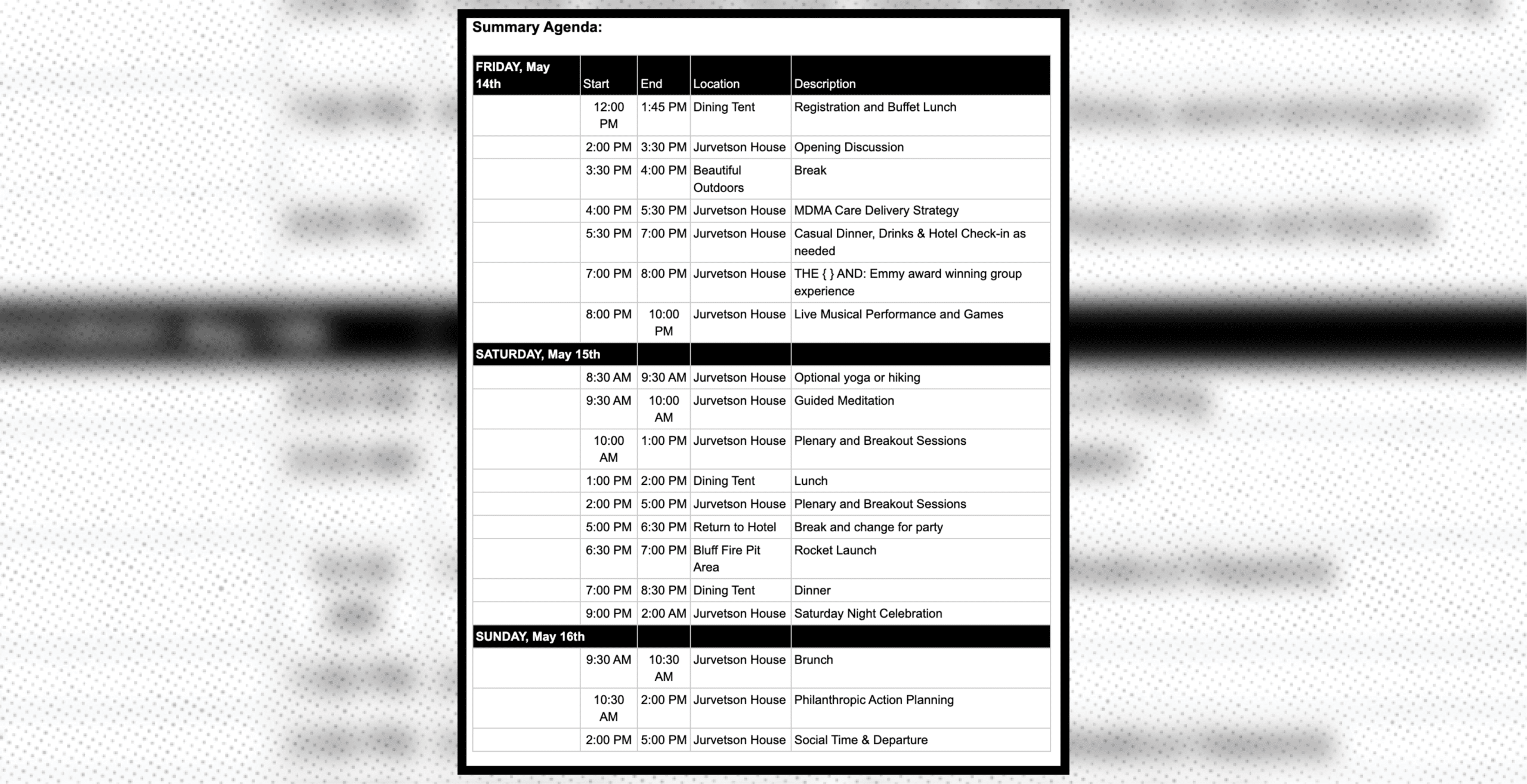 Event Schedule in an email promoting the launch weekend for PSFC’s Landscape Report hosted May 14-16, 2021 at Steve and Genevieve Jurvetson’s home in Half Moon Bay. Attendees were asked to sign a non-disclosure agreement. | Source: Email from Joe Green
“Casa Jurvey by the Sea” has a history of hosting elite gatherings that blurred lines between personal and professional interactions.
As reported by Emily Chang in Brotopia (2019), the environment at one of these gatherings enabled sexual harassment and abuses of power, which contributed to Steve Jurvetson’s removal from his Silicon Valley venture capital firm, Draper Fisher Jurvetson (DFJ). As DFJ commented to Recode after Jurvetson’s departure in 2017, “We were dismayed to learn of behavior at the party that was completely at odds with DFJ’s culture which has been, and will continue to be, built on the values of respect and integrity.”
Chang spoke with one female attendee who “felt ambushed” after being given MDMA for the first time by a venture capitalist and founder who was at the event:
“‘They said it will just make you feel relaxed and you’re going to like being touched,’ Doe recounted to me. Nervous, she dipped her finger into the powder and put it in her mouth. Soon, her guard dropped. Then, the male founder asked if he could kiss her. […] [Doe felt] as if she had been pressured or targeted. ‘I don’t know what I’m doing, I feel really stupid, I’m drugged up because I’d never taken it before and he knew I’d never taken it,’ she recalled.”
Given the immense wealth and power differentials in Silicon Valley, this kind of behavior creates environments where consent is compromised. These dynamics are normalized by Silicon Valley’s cavalier attitude towards consent of all kinds, which is inflamed by their self-image as cosmically significant technological disruptors. Describing the mentality of Silicon Valley’s elites, Chang wrote: “They don’t see themselves as predatory…. When they look in the mirror, they see individuals setting a new paradigm of behavior by pushing the boundaries of social mores and values.”
This grandiose mindset informs how PSFC envisions its plans for a psychedelic future. In one 2020 email, Green wrote: “I feel even more sure than before that our work is of utmost important [sic] at this moment in human history.” (📁Document #13)
Four years after the reporting on this party and Jurvetson’s departure from DFJ, Casa Jurvey at Half Moon Bay would become the backdrop for PSFC’s exclusive psychedelic industry gathering. The guestlist featured much of PSFC’s Founders Circle — donors who have given at least $1M to psychedelic projects. Among those attendees were Silicon Valley startup founders, MAPS board members, politicians, venture capitalists, and biotech entrepreneurs.
In order to attend the private gathering, Green requested that attendees provide a picture of their vaccination card and sign a non-disclosure agreement (📁Document #14).
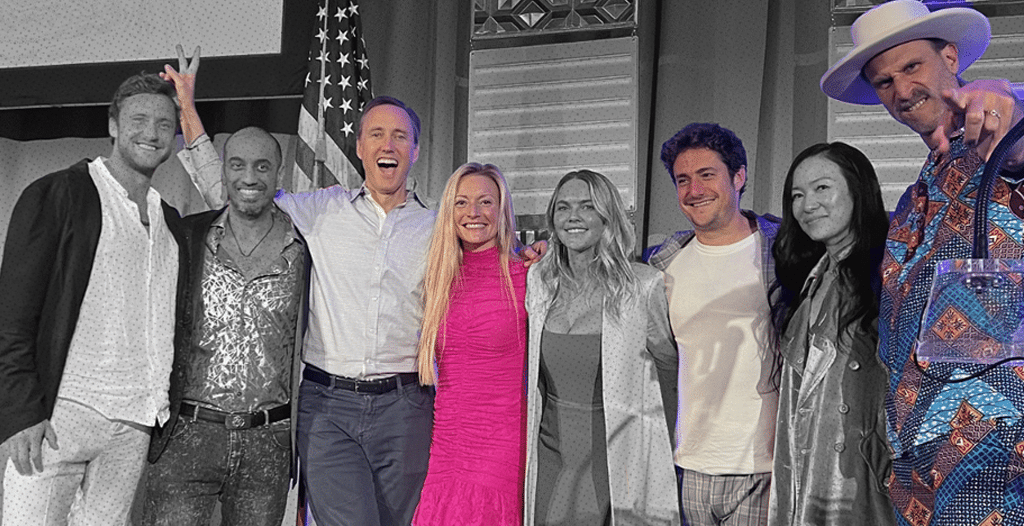 Steve and Genevieve Jurvetson (left, color) and Joe Green and David Bronner (right, color) pose with veteran activists in 2022 | Source: “The VETS Gala on Coronado Island,” Steve Jurvetson, Flickr, Creative Commons 2.0
While typical in Silicon Valley tech culture, the unusual nature of the request to sign a non-disclosure agreement to attend a psychedelic gathering was swiftly rebuked by one longtime psychedelic donor: “Totally cool NDA/waiver form but I’m not going to sign it. Sorry but conferences don’t last minute propose a confidentiality pledge. Even early on they don’t. Nor any other I’ve ever attended.”
The summit advertised ten guest speakers who represented the state-federal approach outlined in PSFC’s Landscape Report. Françoise Bourzat presented alongside her daughter, Naama Grossbard.
Although Bourzat was newly positioned on PSFC’s chessboard, her group’s relationship with Silicon Valley went back many years. The extent of their influence in Silicon Valley only became apparent four months later, with the publication of Will Hall’s article in Mad in America that sent shockwaves through the field: “Ending The Silence Around Psychedelic Therapy Abuse.”
Hall — a counselor and mental health advocate — had not planned to write about his experiences with Bourzat’s group until he read Michael Pollan’s 2018 bestseller, How to Change Your Mind. In that book, one disturbing interaction with an underground guide deeply unsettled Pollan: “I kept hearing things…that set off alarm bells and made me want to run in the opposite direction.”
Under the pseudonym “Andrei,” the guide told Pollan that he “used to work with whoever came to [him],” but that he decided not to “work with crazies anymore.” Instead, Andrei said that he now works primarily with “young people in the tech world.”
Andrei described his ability to reorient the priorities of these tech elites in grandiose terms: “I’m the dangerous virus of Silicon Valley.”
Andrei’s grandiosity is especially concerning due to his unapologetic disregard for established therapeutic ethics: “In mainstream psychology, you don’t hug. I hug. I touch [clients]. I give advice. I have people come stay with us in the forest…. Those are all big no-no’s.” Pollan observed that after this comment, Andrei “shrugged as if to say, so what?”
These ethical violations were spotlighted in September 2021, when Hall identified “Andrei” as his former abuser, Aharon Grossbard — Bourzat’s husband and an original co-founder of the Center for Consciousness Medicine (CCM). →
→ EXTRA CONTEXT: In a 2021 letter responding to a draft of Hall’s article, Grossbard’s lawyer asserted that “Mr. Grossbard never stated that ‘he was ‘Andrei’” and that “it is Mr. Grossbard’s understanding that the character ‘Andrei’ is not intended to represent a single, real person, but is instead a fictional figure. Mr. Grossbard did not author or authorize the language used in the book.” The letter did, however, acknowledge that Grossbard had a conversation with Pollan prior to the publication of the book.
Although the pseudonymous “Andrei” is described in How to Change Your Mind as Romanian, Pollan’s account has shifted over time. In a 2025 presentation, Pollan attributes the statements made by “Andrei” to an experienced Israeli underground psychedelic guide, which corresponds to Grossbard’s profile.
Hall was a student of Bourzat and Grossbard, and he also assisted their workshops in San Francisco during the 1990s. He was abused while he was Grossbard’s therapy client.
Hall’s account was subsequently corroborated by an article published in Inverse, two months after his Mad in America publication. In the process of investigating Hall’s disclosures, journalist Katie MacBride interviewed seven sources “in or close to the couple’s community” who alleged “a decades-long pattern of sexual contact between guides and clients, as well as Grossbard and Bourzat acting as leaders who felt ‘above’ professional and ethical norms.” Five sources told Inverse that it was “not uncommon” for Grossbard to “ritualistically anoint” the naked genitals of male clients “by touching them and sometimes inserting his finger into their anus” during psychedelic sessions.
MacBride wrote that Grossbard continually pushed Hall to try psychedelic-assisted therapy, “despite his reluctance.” According to Hall in Mad in America, this pushing of boundaries escalated once psychedelics were introduced: “After Grossbard encouraged me to use psychedelics in therapy sessions, my critical thinking was set aside in favor of ‘surrender’ and ‘letting go.’ Grossbard told me to ignore my increasing fears about his conduct so I could ‘break through’ my ego and rational mind.” In addition to sexual abuse, Hall was conscripted into unpaid landscaping, childcare, and teaching assistance by both Grossbard and Bourzat. →
→ EXTRA CONTEXT: Legal scholars have suggested that anti-trafficking laws could potentially apply to cult organizations exhibiting dynamics similar to those allegedly present in Bourzat and Grossbard’s group. A 2024 analysis of the NXIVM case highlights how Keith Raniere’s conviction under anti-trafficking statutes was supported by evidence of “trafficking-adjacent harms” that included coercive control, gaslighting, and trauma-coerced attachment (a form of trauma bonding that develops when victims form powerful emotional dependencies on their abusers through alternating cycles of harm and intermittent reward during states of extreme vulnerability).
Hall identified clear patterns in the abuses by Grossbard and Bourzat, as the guides would coach clients to associate healing with overcoming resistance and submitting to distress. As supporting evidence for this pattern, Hall shared a civil lawsuit that was filed in 2000 by a former client of Bourzat and Grossbard. This lawsuit — and other details about patterns of harm in Bourzat’s community — were later discussed in the podcast Cover Story: Power Trip, which was produced by David Nickles and Lily Kay Ross and co-produced by New York Magazine and Psymposia.
In addition to similar allegations of unpaid labor, the lawsuit accused Bourzat of fraud, professional negligence, sexual battery, and sexual harassment. According to the complaint, Bourzat fondled his genitals, told him their kissing was “therapeutic,” and said that the plaintiff’s “passion needed awakening.” The lawsuit was settled out of court.
Many other details of Bourzat’s social and domestic interactions with the plaintiff would only be appropriate in a close personal relationship. Bourzat’s unboundaried healing ideology created an environment where abuses are more likely to occur. This environment is foundational to the lineage of her therapeutic approach, as she described to an audience at UC Berkeley in 2020: “This forging of this personal work as well as the community that we formed as [my teacher’s] clients, really gave me a very personal sense of what this work could look like and the community it could create. And that this work was not just a personal experience…but also a communal experience.”
During the years identified by the lawsuit, Bourzat’s Hakomi certification was permanently revoked due to “multiple ethical violations,” but she continued to advertise herself as Hakomi-certified for two decades. (Hakomi — a “mindfulness-based somatic psychotherapy approach” — is influential in the Bay Area’s underground network.) Through the Center for Consciousness Medicine, both Grossbard and Bourzat continued to refer students to Hakomi trainings, and they employed certified Hakomi trainers and teachers as staff. After additional allegations of abuse surfaced in 2021, the Hakomi Institute severed ties with CCM. →
→ EXTRA CONTEXT: According to a 2022 statement by the Hakomi Institute, “Francoise Bourzat was briefly certified as a Hakomi Therapist, and her certification was permanently revoked in 1997 based on multiple ethical violations. She continued to mention Hakomi certification in her bio without our knowledge after she was no longer certified. This has now been corrected. Aharon Grossbard, Francoise Bourzat and CCM referred students to Hakomi Trainings, and a connection between the Hakomi Faculty and CCM existed for a period of a few years when one Hakomi Trainer and two Hakomi Teachers were on the faculty of CCM.”
Despite their alleged patterns of abuse, Bourzat and Grossbard were shielded from accountability due to their influence within underground psychedelic networks, as Inverse identified: “For people who want to become trained in psychedelic-assisted therapy, there are only so many options for hands-on experience. There’s a fear that…speaking out against Grossbard and Bourzat will ‘leave them with no place to go for this training.’”
This reluctance to confront abusive practices is not limited to potential trainees; it also applies to facilitators and organizations that are already associated with their practices. One source told Inverse about the dilemma faced by former trainees, many of whom have gone on to train their own students in these practices: “Françoise especially is so well known in the field, if her name is tainted, their [own] name is tainted.”
Those who choose to speak out encounter other challenges, due to the pair’s social connections across the field. While Hall was searching for a publisher, he sent a draft of his 2021 article to Chacruna, a nonprofit organization that represents itself as “a pillar of…ethics in this movement.” Hall’s manuscript was subsequently mishandled by Chacruna’s Executive Director, Dr. Bia Labate, who is also an employee of MAPS. Hall described this incident in a 2023 Medium post, titled “Did Chacruna.net and Dr. Bia Labate Help Protect Psychedelic Therapy Abuse?”
Without informing Hall, Labate forwarded the draft to the Chacruna board, which included Bourzat’s close associate, Brian T. Anderson. She also sent a “summary” of the article to two employees of MAPS and MAPS PBC: Betty Aldworth, Director of Communications at MAPS; and Shannon Carlin, then-Chief of Therapy Training and Supervision at MAPS PBC.
Following Labate’s mishandling of Hall’s manuscript, the website for the Center for Consciousness Medicine changed to remove references to Grossbard and Bourzat as co-founders, as Inverse reported. (During 2021, PSFC’s Graham Boyd was a legal advisor to CCM.)
On October 20, 2021, MAPS published a statement acknowledging MAPS’s relationship with Bourzat and Grossbard, titled “Regarding Recent Allegations of Sexual Harm in the Psychedelic Community”:
“In fulfillment of MAPS’ commitment to transparency, we are sharing here that Grossbard and Bourzat were previously listed among the founders of The Center for Consciousness Medicine (CCM), a psychedelic training, treatment, and research center. […]
“CCM is one of dozens of organizations MAPS has fiscally sponsored during their start-up phase; in June 2021, CCM received its own tax-exempt designation and the fiscal sponsorship was concluded. MAPS and CCM have previously discussed opportunities for future therapist training collaborations.”
As Psymposia’s investigation reveals, however, MAPS’s “commitment to transparency” was counterfeit. In an email seen by Psymposia, Doblin acknowledged that Bourzat had trained multiple Israeli therapists working in MAPS’s clinical trials. Bourzat was also listed as a MAPS PBC Training & Supervision Advisor for the “Theoretical Approach” to their therapy model, according to slides prepared for a MAPS PBC board meeting in 2020. MAPS also dispersed an additional $47,500 to CCM in 2022, the year after MAPS claimed the fiscal sponsorship was “concluded.” →
→ EXTRA CONTEXT: MAPS describes its fiscal sponsorship program as “an empowering collaboration between MAPS and the operators of independent projects aligned with our mission.” This allows organizations to receive tax-exempt donations without non-profit status.
The theoretical approach underlying both MAPS and CCM consists of a constellation of ideas that contradict established norms of ethical therapeutic practice, which increases the potential for therapy abuse. The model’s central tenets conflict with decades of research about the risks of dual relationships, diffuse/nonexistent therapeutic boundaries, overreliance on facilitator intuition, normalization of touch, and excessive self-disclosure and harmful countertransference in the name of “therapeutic alliance.”
This is not just a matter of isolated cases of abuse. This lineage — which PSFC was working to legitimize — enables abuse.
In May of 2021 — while PSFC was celebrating their plans to mass produce therapists in partnership with Bourzat and Grossbard’s CCM — Hall was corresponding with legal counsel to chart a safe path for releasing his account of abuse. After recognizing Grossbard in Andrei, he could no longer remain silent.
“It’s hard to say exactly what put me off working with Andrei,” Michael Pollan wrote. “Andrei mentioned that an aspiring guide he was training had ‘once asked me, ‘What do you do if someone dies?’ I don’t know what I expected him to say, but Andrei’s reply, delivered with one of his most matter-of-fact shrugs, was not it.
“‘You bury him with all the other dead people.’”
Chapter 7: “Flood the Zone”
Although this variant of psychedelic therapy was largely incubated in the Bay Area underground, its DNA was spliced into the conceptual framework for the therapeutic approach advanced by MAPS, Lykos, and PSFC. As Maira Evelyn Clancy summarized, the pattern of psychedelic therapy abuse “has spread like a virus as more people have trained under those who have caused harm.” Fueled by Silicon Valley’s ethos of rapid scaling and disruption, multiplication of harms is inevitable.
The protocol Lykos submitted to the FDA did not disclose this therapeutic framework or its association with specific patterns of abuse. The consequences of this were that most of the field believed that the MDMA-AT was “non-directive” in the sense of “encouraging the patient to go with the experience,” with therapists providing minimal support that could include a reassuring hand on the participant’s hand or shoulder.
However, in our research, we discovered that the protocol submitted to the FDA was euphemistic and obfuscated the actual range of MAPS’s directive practices. These undisclosed elements included “psychodramatic enactments” of trauma through “focused bodywork,” wherein a therapist could use physical touch to “amplify” distressing symptoms by physically struggling with participants. (This dangerous approach was internally justified based on MAPS leadership’s unscientific assumption that emerging trauma imprints must be “fully experienc[ed] and express[ed]” for healing to occur.)
As Devenot wrote in a recent bioethics commentary, “This version of ‘focused bodywork’ was a central feature of the on-camera physical and sexual assault that occurred during Lykos’ Phase 2 clinical trial in Vancouver…. Lykos has never acknowledged that this assault was facilitated by MDMA-AT’s reliance on focused bodywork, which has no empirical support for its use.”
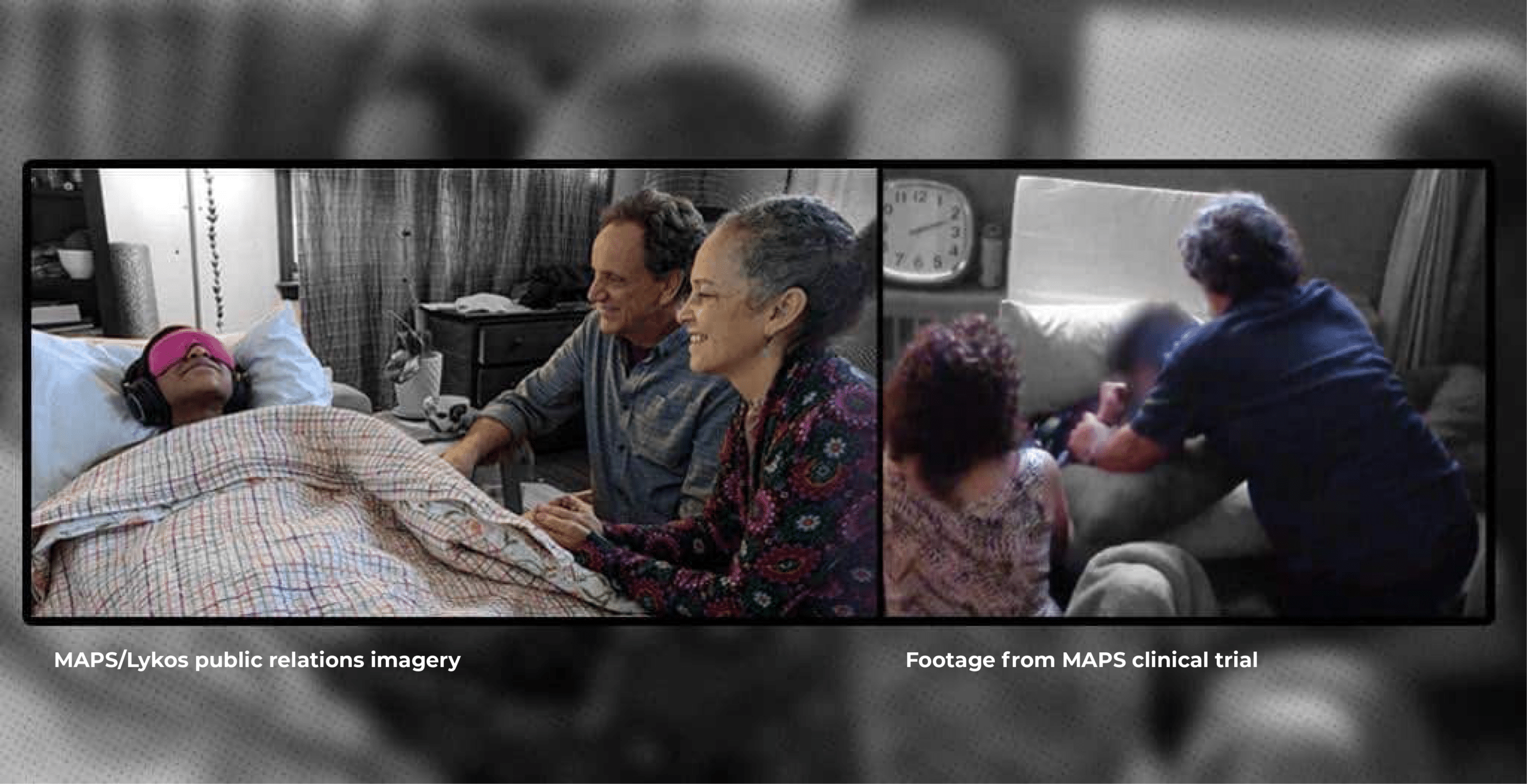 Caption: Expectation versus reality: Left, MAPS therapists Marcella Ot’alora and Bruce Poulter pose in a PR image released by MAPS. Right, a still of MAPS therapists engaged in abuse enabled by Grofian “focused bodywork” in the MAPS therapy. Doblin downplayed this abuse as “psychodrama, [which] is not an unknown approach.”
In conversations with whistleblowers — including former high-ranking employees and Phase 2 and 3 trial participants — it became apparent that this combination of secrecy and undue confidence in their approach reflected an organization struggling to transition from a renegade underground MDMA network to a regulated pharmaceutical company.
Several employees provided detailed accounts of MAPS PBC/Lykos’ lack of internal safety procedures and noncompliant data collection practices. Allegations included data manipulation, frequent drug use by employees, and systemic underreporting of Serious Adverse Events (SAE’s). Some of these former employees described cult-like dynamics within the company, leading to the ostracization of employees who raised concerns about the company’s practices.
These insights from trial participants and former employees helped create a window into the internal operations of the company, providing an explanatory framework for the organization’s repeated failures. This window revealed not just isolated missteps but a broader pattern of dysfunction, rooted in the organization’s foundational assumptions and contempt for critics and mainstream science. This corporate dysfunction, combined with the fundamental flaws within Lykos’ proposed New Drug Application, would inevitably lead to harm if scaled.
Based on these conversations with former employees, researchers at Psymposia concluded they had an ethical obligation to alert the FDA advisory committee to the dangers of Lykos’ and PSFC’s proposed MDMA-AT therapy model. →
→ EXTRA CONTEXT: Psymposia’s assessment was informed by reviewing hundreds of texts, emails, primary source documents, and videos spanning more than a decade, alongside hundreds of hours of interviews with former high-ranking employees, trial participants, private clients of MAPS-trained therapists, and MAPS/Lykos principal investigators (PIs).
In the wake of the June 4 advisory committee meeting, Lykos and PSFC — disinterested in slowing down to assess safety concerns — activated their “insurance policy”: members of the network amplified one-sided stories from their “cadre of beat reporters” and veterans proxy groups across social media, leveraging this coverage as a “bulwark against backlash.” →
→ EXTRA CONTEXT: Describing this communications network in a Subtack post from June 25, 2024, Jules Evans wrote that “the team’s first big item to rally around was an article [published in BBC Future] by Rachel Nuwer, a freelance journalist and author of a glowing book on MAPS / Lykos and MDMA called I Feel Love.” Evans noted that Nuwer was a recipient of the UC Berkeley psychedelic journalism grant, which was funded by PSFC member Tim Ferriss.
The Substack article documented the coordinated use of this story by PSFC members and Lykos supporters: “The piece quoted only researchers and activists in support of Lykos’ application, all of them saying, in short, ‘the advisory committee don’t understand psychedelic science’, and ‘if the FDA rejects this application, it would be very bad for psychedelic science, very bad for veterans, and very bad for America’. Many of the researchers quoted in the piece (not all of them) have received some funding by philanthropists who are part of the Psychedelic Science Funders Collaborative (PSFC) and who also fund MAPS and / or invest in Lykos… Once the article was published on BBC Future, it was widely shared by members of the PSFC, by Michael Pollan, by Tim Ferriss, and by members of the PSFC.”
Multiple Lykos and PSFC-aligned organizations retained public relations teams that would coordinate to shift the narrative and direct attention away from Lykos’ clinical trial failures.
The ensuing media offensive followed the strategic recommendations that had been outlined in PSFC’s Landscape Report. To create “a sense of urgency among both the public and lawmakers,” their coordinated campaign would amplify the voices of those “who are either highly sympathetic or highly relatable” — predominantly veterans. Public relations firm RALLY relayed communications from these organizations to the Psychedelic Communications Hub, with support from Robyn Thomas.
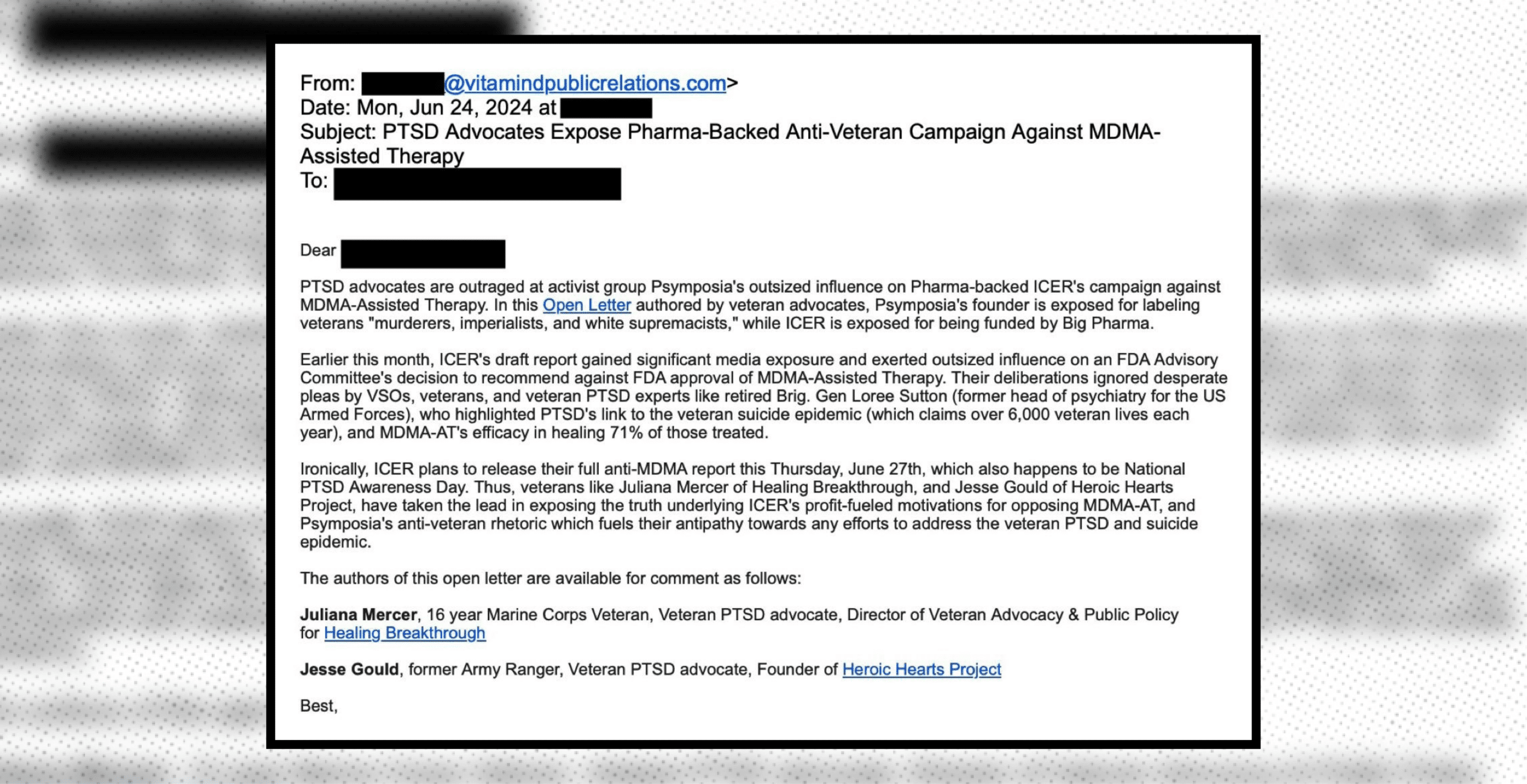 PR firm Vitamin D circulated a false and misleading email to the media on behalf of Heroic Hearts and Healing Breakthrough, promoting an open letter accusing ICER of being “funded by Big Pharma.” This email also incorrectly describes Psymposia’s former Managing Editor as the organization’s “founder” and misrepresents his statements | Source: Email sent by Vitamin D
While each firm would operate within a defined scope, the Hub’s role would be to coordinate messaging across the campaign. Although the Hub had originally represented itself as a neutral vehicle for greater cooperation within the psychedelic ecosystem, Thomas steered the Hub’s network to support PSFC and Lykos’ interests in the lead-up to the FDA decision. (Thomas’ 2025 bio acknowledges that she “played a key role in the campaign supporting legal MDMA-assisted therapy.”)
In an email to the Hub on June 18, 2024 — two weeks after the FDA advisory committee meeting — Thomas enlisted the group’s support for a “Crisis Communications Plan” covering the lead-up to the FDA’s decision:
“We had our meeting in NY today and I’d love to talk tomorrow to fill you in and get your help. I’ve offered to take on putting together a Crisis Communications Plan for any new issues that come up in the next 6 weeks and I thought it was a great piece for the Hub to get involved with. I have access to a lot of contacts and assets for the experts/quotes/etc through the campaign but would love help thinking through the likely scenarios and responses.
“What comes to mind for crisis off the top of my head are the same or other patients coming forward with negative stories and another round of the ICER report coming out on 6/27 apparently, and not sure what else. I think a plan needs to include the coordination of the comms firms – Breakwater (works with Lykos), Precision (works with PSFC), Vitamin D (works with Healing Breakthrough) and as much specificity as possible in the holding statements. Let me know if you have time to talk tomorrow or if email is easier for everyone.” (emphasis added) →
→ EXTRA CONTEXT: When contacted for comment, Hillary Moglen — a RALLY representative — stated that RALLY was “proud to co-create and run the Psychedelic Communications Hub” but denied involvement in “the crisis communications campaign specific to the FDA/MDMA approval.” Thomas, when contacted, denied that the Psychedelic Communications Hub was involved in a crisis communications plan. This is contradicted by the email shared with Psymposia, where Thomas states that she has “offered to take on putting together a Crisis Communications Plan” that would “need[] to include the coordination of the comms firms[.]”
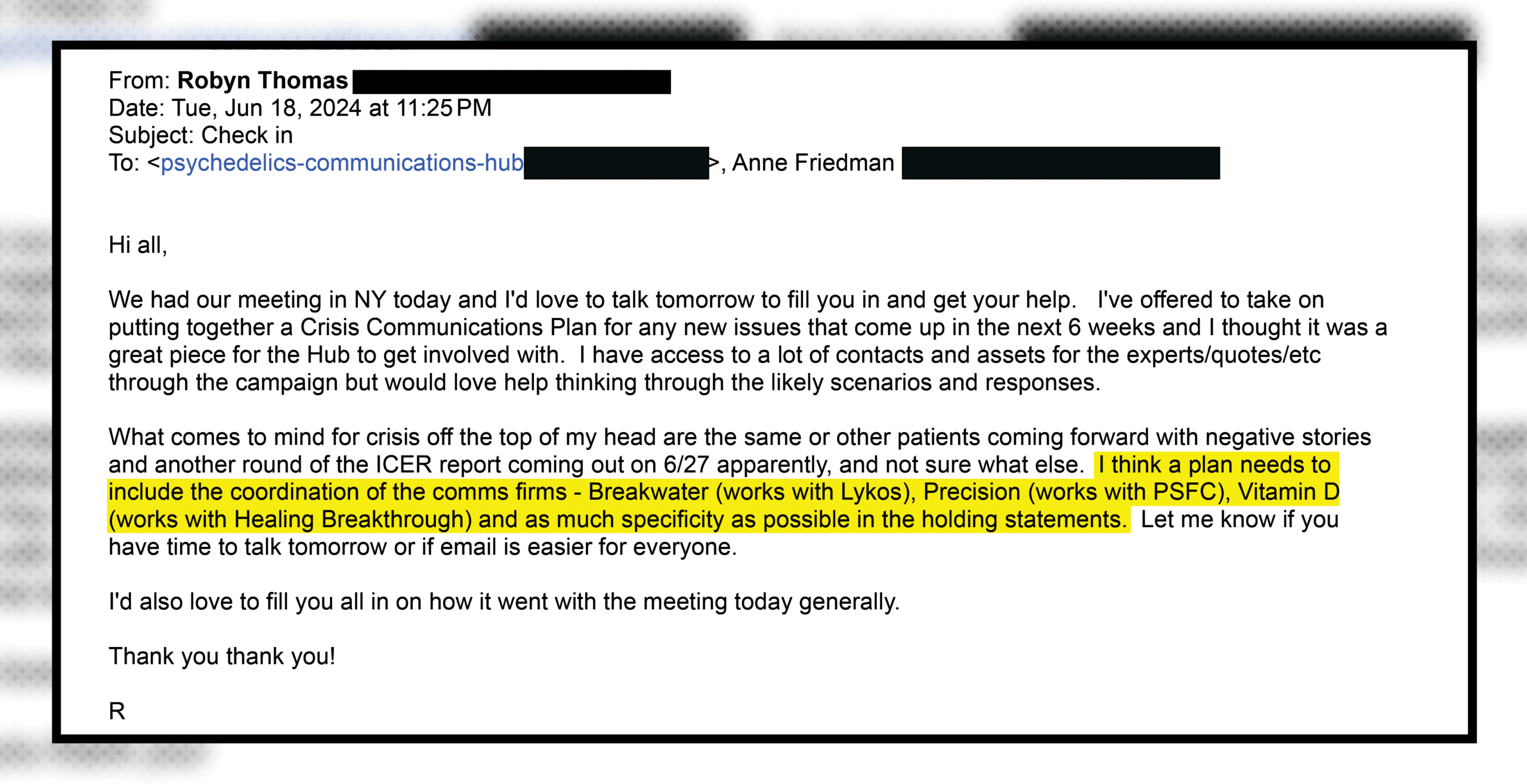 Robyn Thomas emailed The Hub on June 18, 2024 to explain that she was putting together a “Crisis Communication Plan” around the approval of Lykos’ New Drug Application. | Source: Email from Robyn Thomas
Recipients of the Hub’s crisis communications plan emails extended beyond grassroots organizations to include leadership from MAPS, Lykos, and PSFC. In an email shared with Psymposia, Lykos and PSFC board member Dan Grossman responded to Thomas’ email with interest in attending this meeting, writing “If you lock that time soon, I’ll protect it, thanks!” (In its 2023 tax filing, PSFC paid $149,900 to Wearerally LLC (the advocacy agency conducting business as RALLY) for “communications.”)
In other emails shared with Psymposia, Thomas provided Hub members with strategic talking points, templates, and “social media toolkits” tailored “to amplify photos or press coverage” related to Lykos’ MDMA-AT application across various platforms (📁Document #15).
For instance, three days after the FDA’s advisory committee voted against approving MDMA-AT, Thomas sought to rally grassroots support for Lykos through coordinated messaging that favored the pharmaceutical company’s messaging. “We trust that Lykos will work closely with the FDA to provide them with the necessary data from the MDMA-assisted therapy trials, as the agency makes their final decision,” the guidance read, suggesting how supporters might publicly frame the issue in Lykos’ interests. Thomas wrote that she would follow up with links to “positive media coverage” and offered support for coordinating op-ed placements “so that we can make sure we are not crossing signals.”
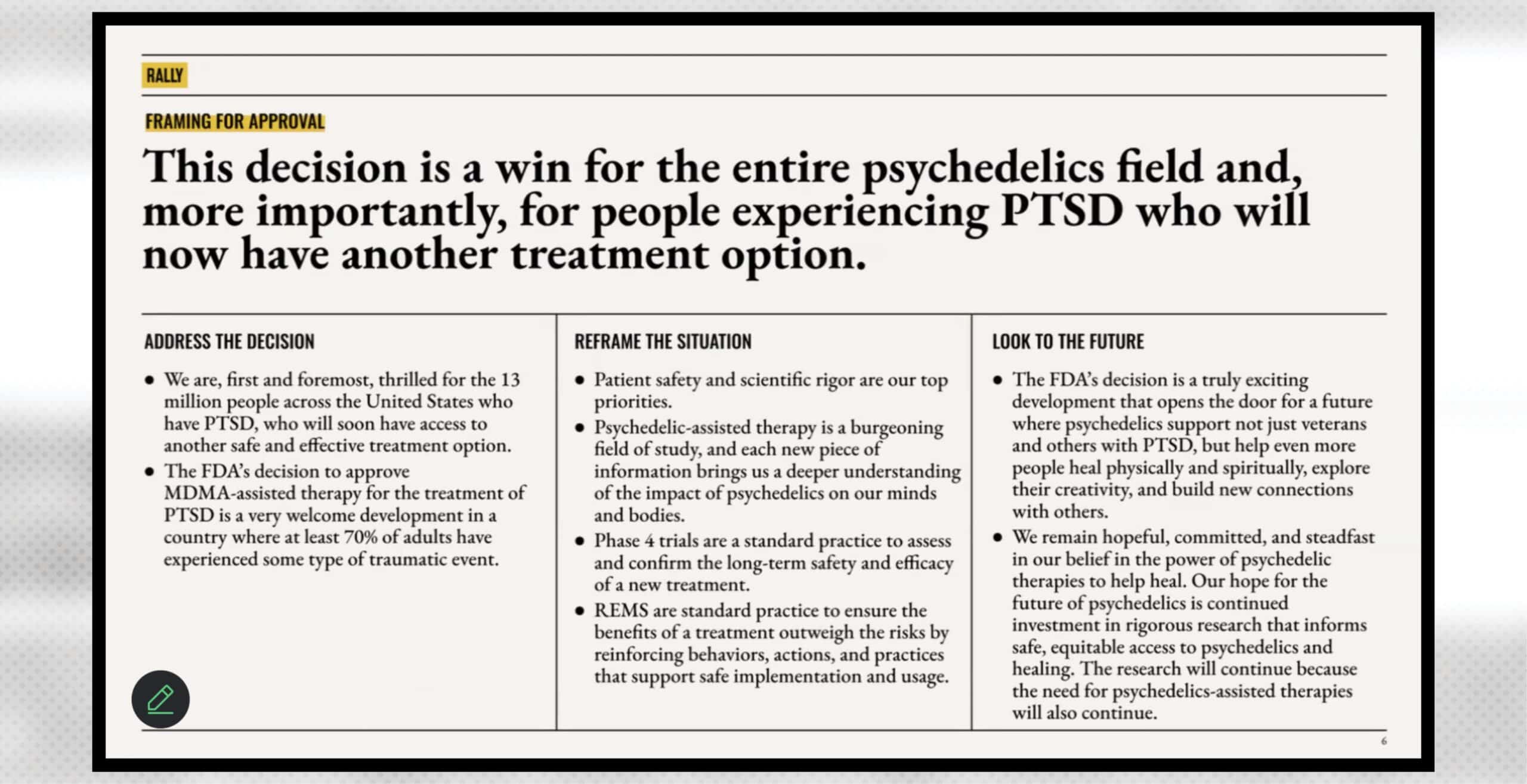
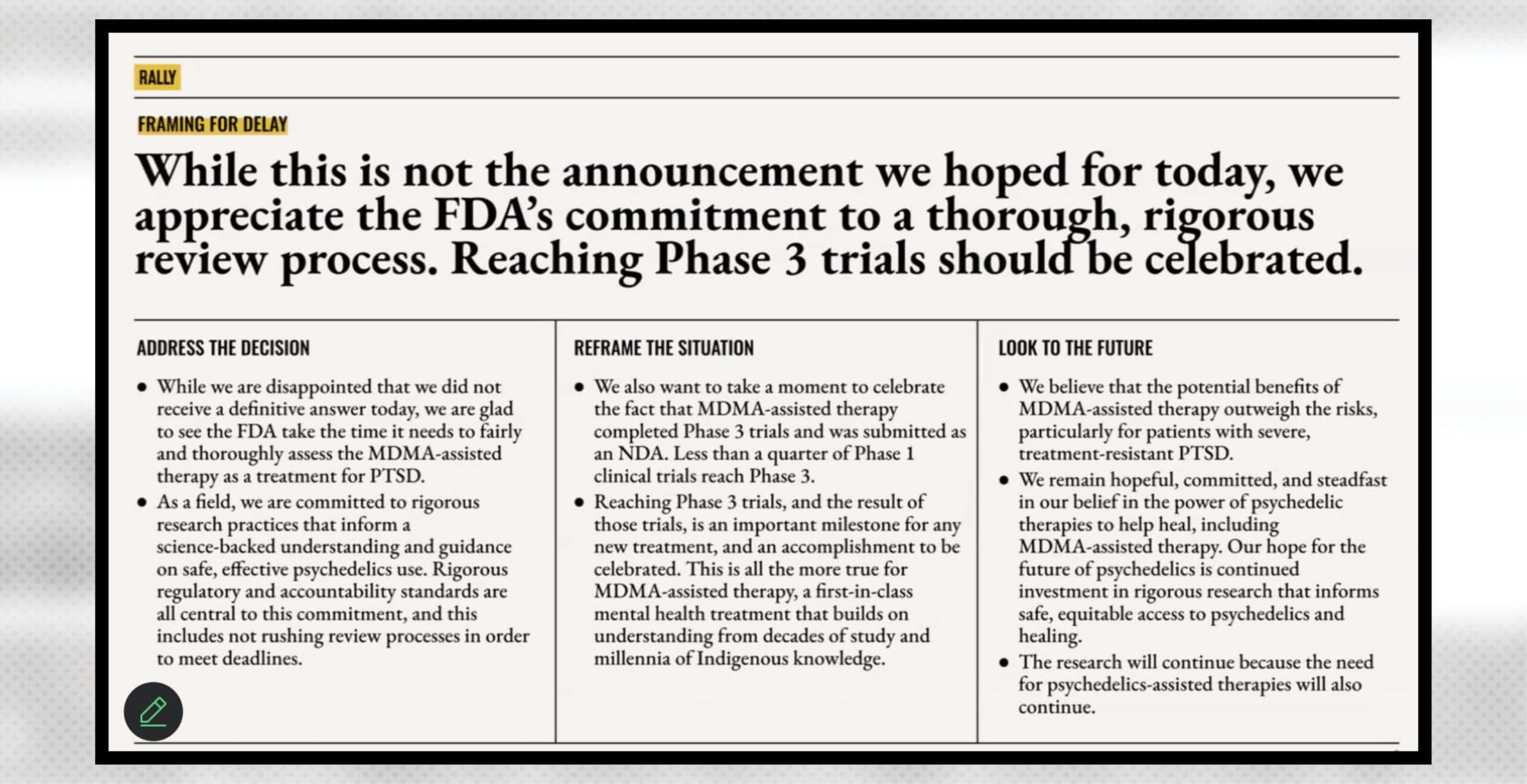
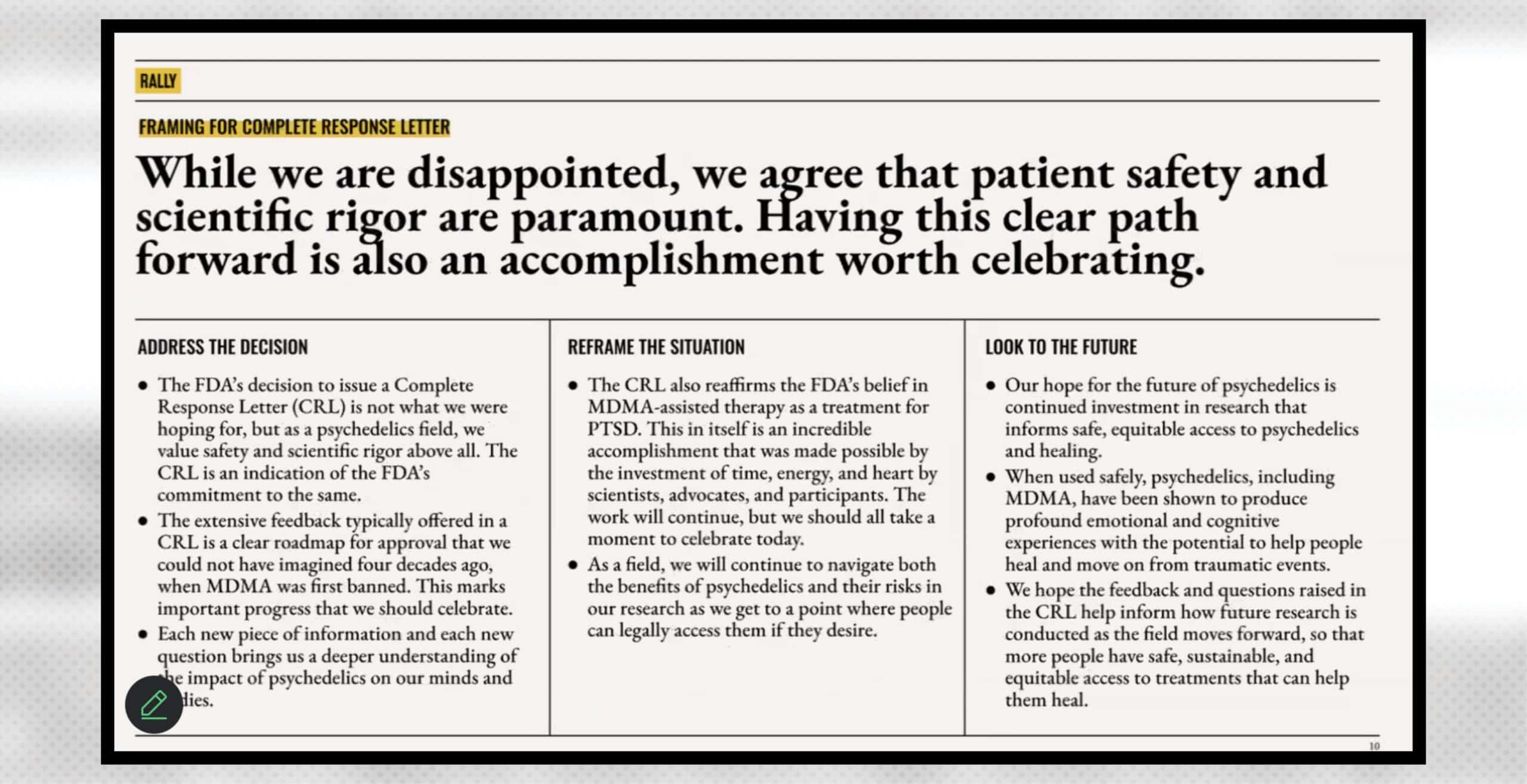
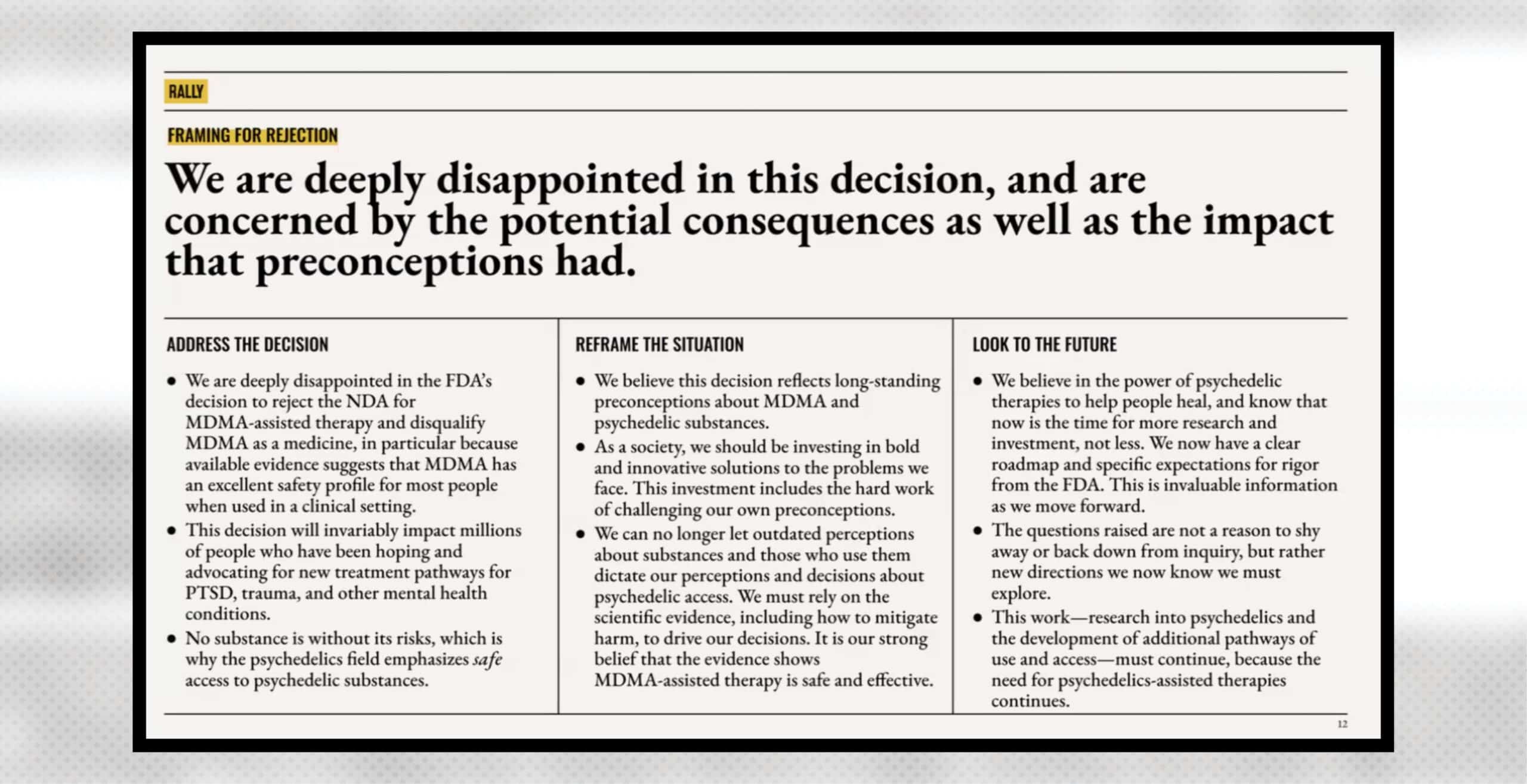
RALLY offered guidance to the Hub for responding to potential FDA decisions based on industry-friendly talking points (scroll gallery, hover or click to pause)
In one email dated July 19, 2024, Thomas encouraged members to celebrate the veterans press conference jointly hosted by Heroic Hearts and Healing Breakthrough. This email — which included a shared folder containing 35 professional photos from the event for use on social media — promoted the original narrative from Heroic Hearts’ open letter: “Roughly 17 veterans die by suicide every day. This status quo is unacceptable, but not inevitable. Studies show that MDMA-assisted therapy can save lives. @WeHeroicHearts and @HBveterans brought together a bipartisan group of leaders to share their support for MDMA-AT.” (There is currently no research demonstrating that MDMA-AT reduces suicides.) In a statement to Psymposia, Thomas claimed she was “not aware of the details [of Heroic Heart’s messaging] and had no involvement in the messaging utilized by Heroic Hearts so I’m not sure how it would be relevant to the Hub.”
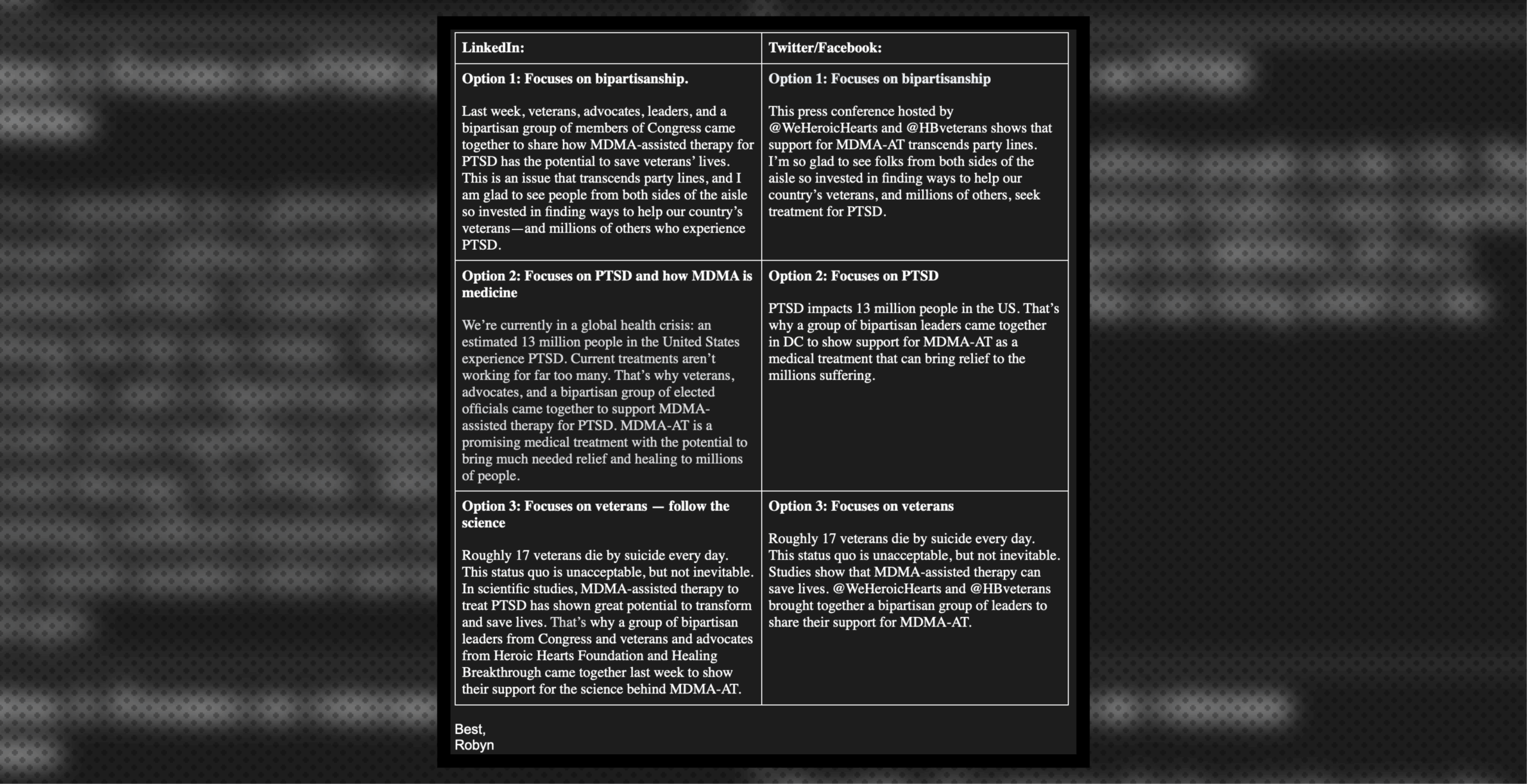 “Subject: Subject: Update on FDA Campaign” | Source: Fri, Jul 19, 2024, Psychedelic Communications Hub from Robyn Thomas
The next day, MAPS employee Dr. Bia Labate emailed the Hub listserv with a new article published on her website Chacruna, titled “The Unbelievable Claims of Psymposia about MAPS and MDMA-Assisted Therapy.”
Two hours later, PSFC’s Genevieve Jurvetson tweeted a link to the article with commentary, urging the FDA to ignore its independent advisory committee:
“Want to understand how the most promising therapy for PTSD got subverted by special interests? Read this objective and well-researched article…. Fringe activists – who have gone on the record with their anti-police, anti-veteran rhetoric – are leading the opposition of legal access to MDMA-therapy. Veterans and 1st responders are my heroes, and deserve treatments that actually work. The good news is that it’s not too late, this decision is now in the hands of @US_FDA + @DrCaliff_FDA who spent years working with MAPS/ Lykos and awarded the treatment ‘Breakthrough Therapy Designation.’ Let’s follow the science and create safe access for the 13 million Americans suffering with PTSD.”
Within minutes, Steve Jurvetson responded with a pull quote from the article to discredit Psymposia. That night, Steve’s close friend Elon Musk responded to Genevieve Jurvetson’s post commenting “Would help a lot of people” and recommending a documentary on MDMA by Peter Jennings.
In the article, author Dr. Geoff Bathje speculates that “what prompted the war with Doblin and MAPS was the heartbreak of initially believing MAPS could fully represent their anti-capitalist and anti-establishment values.” This false characterization aligns with other narratives that PSFC’s network has promoted. Bathje concludes by arguing that Psymosia would not be “greeted as liberators,” alluding to Dick Cheney’s quote about the US invasion of Iraq.
Bathje is a psychologist and co-founder of Sana Healing Collective, a nonprofit “committed to the development of psychedelic-assisted therapy[.]” Bathje’s published model for psychedelic integration is endorsed in The MAPS Integration Workbook and featured on the MAPS website.
While this coordinated messaging campaign reached its intended audiences, the content raised concerns among some members of the Hub. Based on conversations with members and Hub communications reviewed by Psymposia, some individuals involved in the Hub became uneasy about being mobilized as footsoldiers for Lykos and PSFC.
In one call, some members discussed reservations about the aggressive tactics of Heroic Hearts, which Hillary Moglen — a representative from RALLY — acknowledged as a component of the coordinated campaign. Thomas denied that members expressed reservations, stating “if they had/have discomfort, that should be expressed to Heroic Hearts directly.” This assertion is contradicted by expressions of discomfort on the call, however.
Excerpt from a June 2024 Psychedelic Communications Hub meeting.
Instead of reconsidering the ethics of these tactics, Moglen responded to these concerns by encouraging Hub members to publish alternative narratives that she would help craft: “For those of you who don’t feel comfortable with particular type[s] of messages that are going out, the best way to counter that is to sort of ‘flood the zone’ with other kinds of messages.” →
→ EXTRA CONTEXT: According to her RALLY bio, Hillary Moglen — who suggested “flooding the zone” with other messaging — co-led three pro bono campaigns aimed at “reshaping public perceptions of survivors” and “recently led the firm’s deep dive into the science of persuasion.” Despite her stated commitment to shifting narratives around survivors, the PR campaign coordinated by RALLY for the Hub functioned to minimize the voices of survivors speaking out about harm.
The idiom “flood the zone” was popularized by Steve Bannon — the former chief strategist to President Trump — who told author Michael Lewis in 2018: “The real opposition [to our goals] is the media. And the way to deal with them is to flood the zone with shit.” Reporting for Vox, Sean Illing wrote that this idea isn’t unique to Bannon, but that Bannon’s implementation of the strategy during the Trump campaign exemplified its inherent issues:
“The press ideally should sift fact from fiction and give the public the information it needs to make enlightened political choices. If you short-circuit that process by saturating the ecosystem with misinformation and overwhelm the media’s ability to mediate, then you can disrupt the democratic process.”
In the aftermath of the advisory committee’s decision, undisclosed Lykos allies “flooded the zone” with baseless conjecture and outright falsehoods. Chapter 1 introduced these deceptive tactics, which this chapter will examine in greater detail.
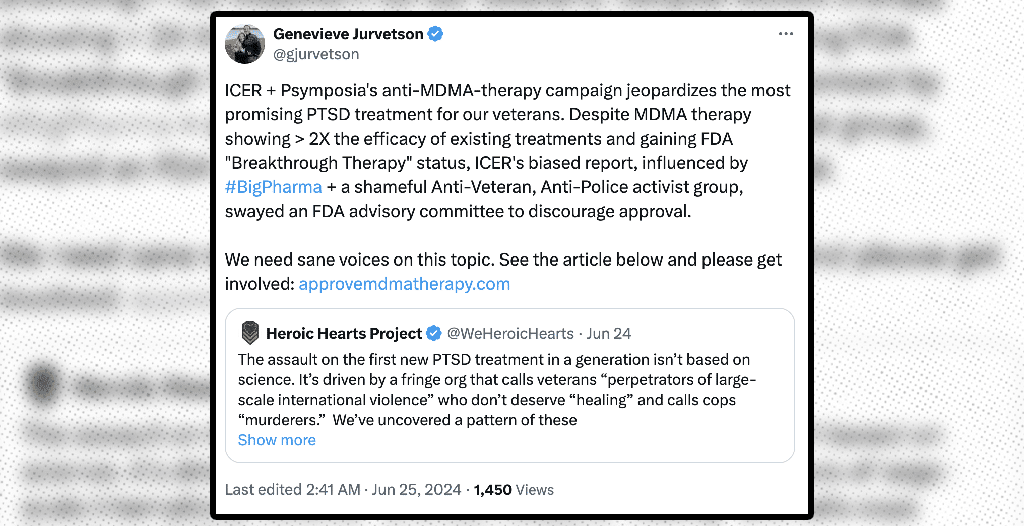
PSFC board member Genevieve Jurvetson tweets multiple falsehoods about Psymposia on June 25, 2024. | Source: Twitter/X
This media misinformation campaign — which heaped blame for the NDA rejection on Psymposia and ICER — was released into a political environment marked by “an epidemic of stochastic violence,” as disinformation and conspiracy theories increasingly motivate politically inspired violence and mass shootings. This campaign explicitly embraced Heroic Hearts’ letter, which blamed future veteran suicides on ICER and Psymposia. This rhetoric amounts to stochastic terrorism, or the “demonization of a foe so that [they] might become targets of violence.” It accomplishes this by representing a dehumanized outgroup as a direct mortal threat to the audience’s in-group.
Psymposia’s members recognized the threat implied by these tactics and felt obligated to invest in personal security measures. Based on her policy background, Thomas also should have recognized the danger of these tactics.
Although Robyn Thomas served as Executive Director of the Gifford Law Center to End Gun Violence for 16 years, the Hub participated in a campaign that relied on tactics associated with gun violence. In an analysis published to the Giffords Law Center website on August 2, 2024, Jessie Ojeda emphasized that “extreme rhetoric and easy access to guns can lead to real-world violent acts.” On its website, RALLY similarly highlights its role in supporting two national initiatives on reducing gun violence: Sandy Hook Promise and March for Our Lives. (Thomas denied that the Hub was “involved in any attacks on whistleblowers, trial participants and critics of MAPS/Lykos or others in any way.”)
Like Thomas, Lykos — a company “dedicated to transforming mental healthcare” — embraced the dangerous rhetoric. In a July 5 statement to Psychedelic Alpha, Lykos Therapeutics emphasized that it “appreciate[d]” the Heroic Hearts campaign that led to death threats and harassment against Psymposia’s members. Devenot also received a private email from a director of Heroic Hearts Canada which concluded: “Karma is a bitch. You’ll live with this for the rest of your life.” (This director was subsequently removed from the organization and apologized privately.)
Despite Heroic Hearts’ reckless implication that Psymposia would have blood on its hands if the FDA were to vote against Lykos’ application, Thomas continued to promote the organization throughout the Hub as part of her crisis communications plan. Jules Evans wrote in Ecstatic Integration that this kind of targeting amounts to more than reputational harm: “It might even be unsafe, if you’re telling desperate and occasionally armed veterans this [person] is wishing you hate and perpetuating your suffering.”
Stochastic terrorism relies on rebroadcasting from large media platforms to provoke political violence that is statistically predictable, given the scale of the audience. While sharing Heroic Hearts’ letter, Rep. Dan Crenshaw directed his followers to contact Psymposia and “tell them to stop hating veterans.”
“Given how they feel about people in the military, maybe it’s no wonder that they’re against actually treating veterans with PTSD,” Crenshaw spoke into the camera.
Dan Crenshaw directs his followers to ICER and Psymposia social media pages | Source: Twitter/X
As a consequence of this campaign, Psymposia continues to receive hateful and dehumanizing messages, including: “How dare you stop access to it? Go to your graves”; “You support rape and lynchings and beheadings”; “You revel in the blood you spill just as the Vietnam Generals you abhor did”; “Why do you believe the underground should be allowed to rape as many women as they please”; “I want to say fuck you as loudly as possible. Thank you for ensuring the continued suffering of millions”; “They [Psymposia] will feel my wrath”; “i [sic] definitely believe you’re pretty high on the list of people who don’t deserve to live.”
At the university of one Psymposia member, the department administrator needed to unplug their phone from the wall and file a police report after repeated harassment from a caller.
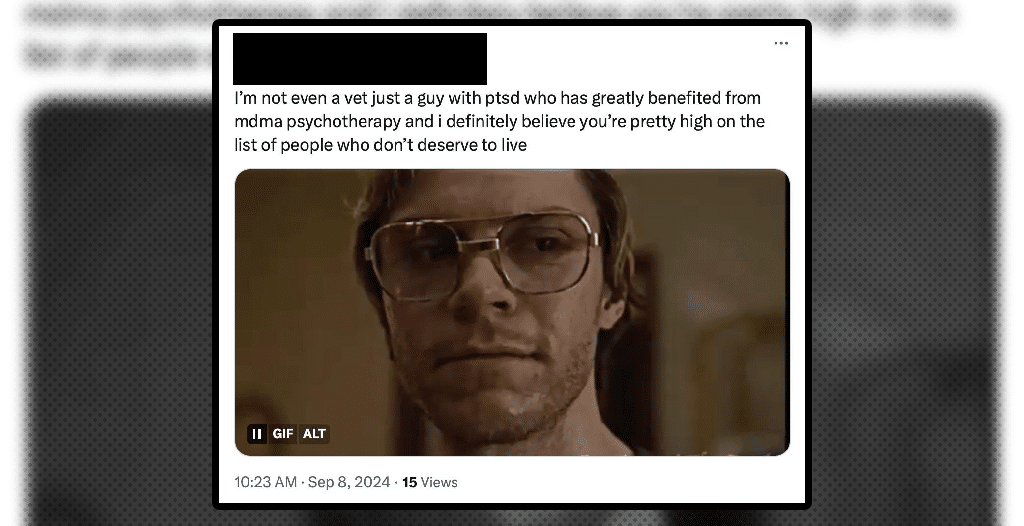 Threatening tweet directed at a member of Psymposia including an animated GIF from a biopic about serial killer Jeffery Dahmer.
These consequences did not slow down efforts to scapegoat Psymposia for the FDA advisory committee’s vote. In a last-minute effort to flood the zone with disinformation before the final FDA decision, filmmaker Nirvan Mullick compiled the coordinated PR campaign’s false narratives into a propaganda video engineered for social media virality. →
→ EXTRA CONTEXT: Mullick has been filming a documentary called What a Trip since 2014, which “follows Dr. Rick Doblin, the colorful founder of MAPS, on his half-century odyssey to legalize psychedelics.”
The GoFundMe page for the film states: “Our film will be released after MDMA is rescheduled by the FDA to become a prescription drug (estimated to happen in August of 2024), and will tell the incredible true story of how that happened.”
This 15-minute video, called Debunking FDA Advisory Meeting [sic] MDMA Therapy for PTSD, was posted to the social media account of Mullick’s unfinished documentary What a Trip. Within hours, it was shared by PSFC members Tim Ferriss and Genevieve Jurvetson with explicit support.
The short propaganda video displays photos of Psymposia members, with presenter Lauren Taus alleging they “appear to have manipulated the media and possibly derailed a federal regulatory process — in a way that could end up denying millions of people a life-saving treatment.”
Two individuals involved in spreading this misleading video had a vested interest in legitimizing MAPS’s therapy. Genevieve Jurvetson shared the video without disclosing her MAPS therapy training, while Taus omitted her status as a MAPS-certified therapist. (Taus is the founder of Inbodied Psychedelic Assisted Therapy & Integration Training which prepares providers “for working with MDMA and psilocybin in therapy when these consciousness tools are legally available.” Inbodied charges $5,000 for training mental health professionals and $6,000 for training medical doctors.)
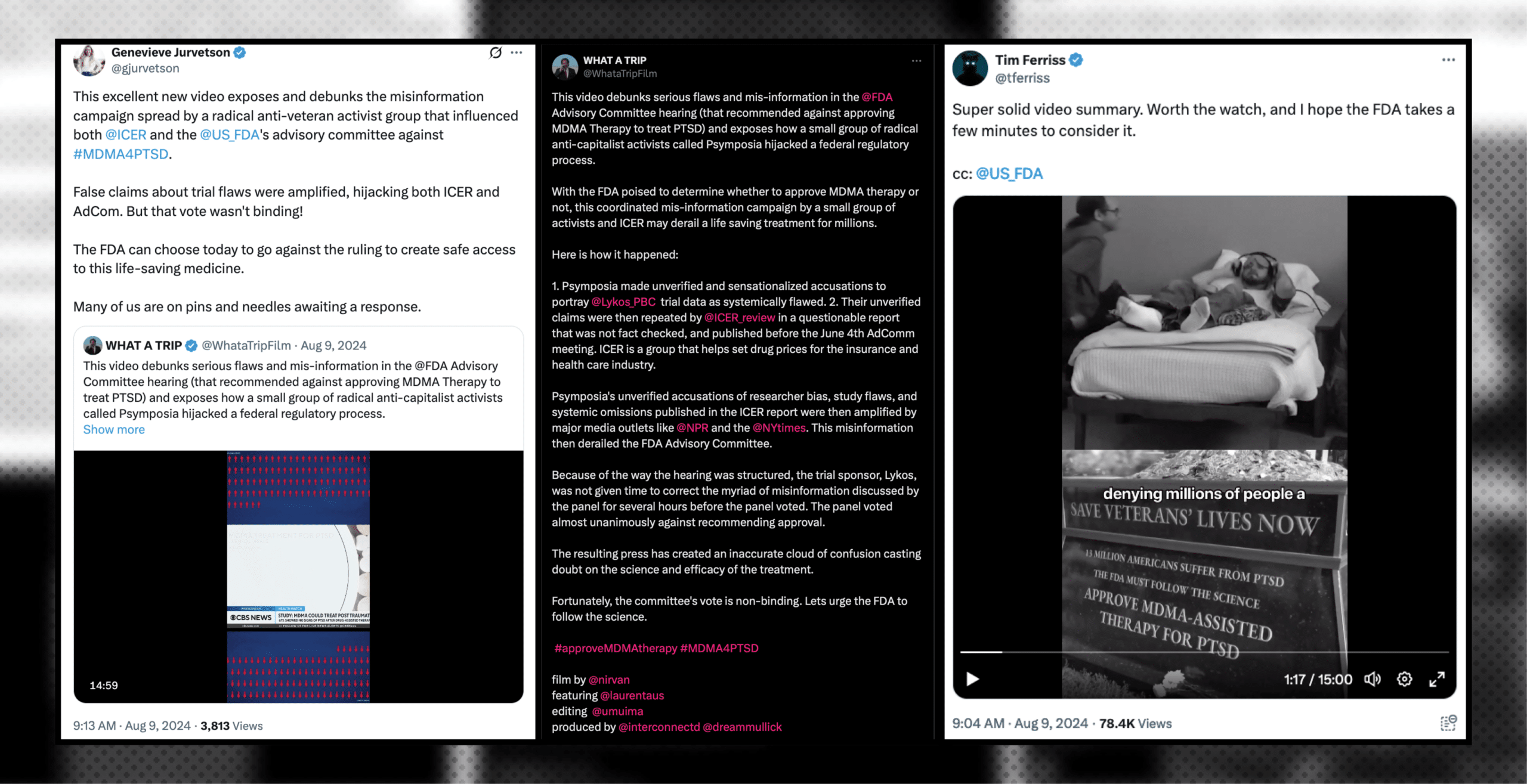 PSFC members Genevieve Jurvetson and Tim Ferriss promote Nirvan Mullick’s viral video blaming Psymposia for the FDA Advisory Committee’s rejection of Lykos Therapeutics’ application.
The video’s creator also had a vested interest in Lykos’ success. Alongside the video’s release, Mullick reassured supporters that the FDA could vote against its advisory committee and approve MDMA-AT, which would allow his film to proceed:
“For friends who’ve been messaging me, who know I’ve been working on this documentary about the journey to make MDMA into a medicine…and you’ve been reading headlines that say the FDA has rejected this as a treatment and…messaging me saying, ‘Oh, I’m so sorry,’ or ‘it’s over.’ I just want to create one message here to let you guys know, it’s not over.”
Two months later, Mullick reposted the Debunking FDA Advisory Meeting video to his personal account with a grossly misleading note: “We just finished exposing how a small group of radical activists hijacked a federal regulatory process to review MDMA Therapy to treat PTSD, potentially depriving millions of people suffering from PTSD from a life saving therapy.” →
→ EXTRA CONTEXT: In his repost of the video, Mullick omits that his financial and professional interests were tied to FDA approval of MDMA-AT. After the FDA rejected Lykos’ application, Mullick acknowledged this conflict of interest in a January 2025 interview with Denizen podcast. During the interview, Mullick explained that he and Doblin made a deal to only release the film after “the FDA rescheduled MDMA” so that the full story could be told “including parts of the work that’s underground” which have “been illegal — still is [illegal]. And Rick is doing work above-ground with MAPS…and working through all the federal regulatory processes to try to get this…to a prescription drug, but I wanted to tell the full story.”
“Suddenly [after the advisory committee decision] I kind of felt…like, ‘Oh, I’m not going to be able to finish this film for another three to five years.’ Like…my fate is tied,” Mullick told Denizen.
After the FDA declined to approve MDMA, Mullick describes how he pivoted the focus for What A Trip to show “how things at the FDA really went off the rails and were derailed by different forces.” The interview concludes with an acknowledgement from Mullick that PSFC member Blake Mycoski is “a great supporter, really generous supporter.”
Other notable financial connections between Mullick, MAPS, and PSFC members include a Quarterly Update from 2019 where PSFC encouraged its members to support the film’s production by buying “Legalize Rick Doblin” merchandise. Under the film’s previous name, Prescription X: The Rick Doblin Story, MAPS served as its fiscal sponsor, and then-MAPS PBC CEO Amy Emerson donated $1,000.
In an attempt to justify why anyone would oppose life-saving therapy, Mullick included a clip from Rep. Crenshaw’s video, where he mischaracterizes Psymposia as anti-veteran extremists bent on preventing veterans from accessing treatment.
Although the film accuses Psymposia of hiding its members’ participation in the FDA advisory committee meeting, Psymposia published a public press release prior to the meeting announcing its members’ participation, stating: “Two authors of the petition — Drs. Neşe Devenot and Brian Pace — are board members of Psymposia. Four of the petition’s co-authors will be participating in the [open public hearing].”
According to the FDA’s own disclosure guidelines, which the agency describes in a document titled “Guidelines for Speakers at the Open Public Hearing,” disclosures are only recommended for financial associations with the pharmaceutical sponsor: “FDA encourages you to incorporate into your presentation an explanation of your financial association, if any with the company whose product is being considered by the FDA advisory committee.” No members of Psymposia have any financial association with Lykos Therapeutics (or any of its competitors). →
→ EXTRA CONTEXT: Three days after Mullick shared his Debunking FDA Advisory Meeting video, an anonymous ethics complaint was filed against Brian Pace to his university employer which mirrored these erroneous claims: “It was particularly troubling that Pace did not disclose his affiliation with Psymposia or his connection to his other colleagues affiliated with that group who were also present at the meeting (nor did they disclose their own affiliation with the organization).” After formal investigation by the Office of University Compliance and Integrity, the complaint was adjudicated and found to be without merit.
To support their false argument that Psymposia improperly influenced the advisory committee, the film misleadingly cuts away from the FDA’s full instructions to suit their narrative. In the film, Taus claims that the advisory committee was inappropriately discussing concerns with the application “until an actual member of the FDA stepped in and said this conversation needs to stop.” The film’s catalog of concerns included — but were not limited to — the contributions of three Psymposia members to the meeting’s public comments. (Taus erroneously identified multiple unaffiliated individuals as “undisclosed Psymposia activists.”)
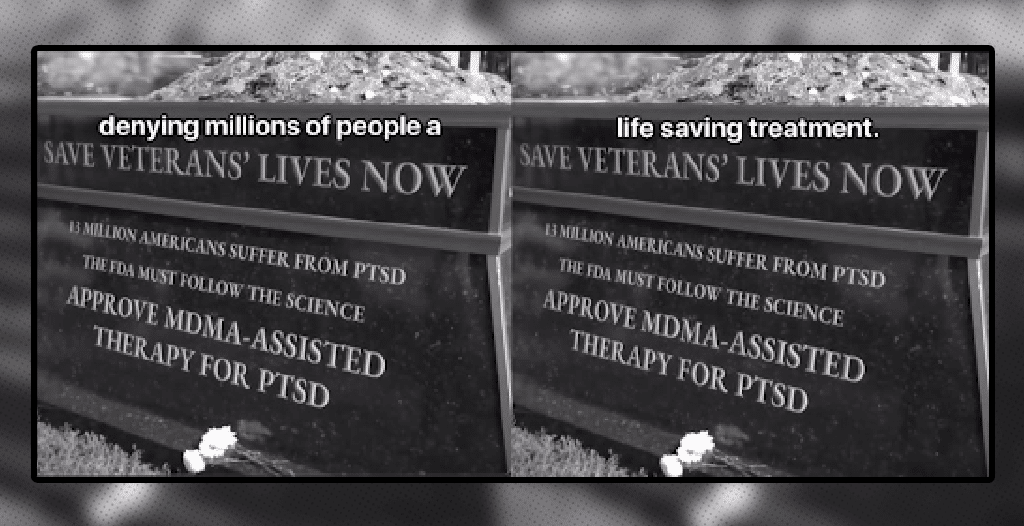 Stills from “Debunking the FDA advisory committee” directly following photos of members of the Psymposia team. | Source: “Debunking FDA Advisory Meeting” video created by Nirvan Mullick
This deceitful, selective editing implies that critical testimony should have been ignored by the committee. But as the full unedited clip demonstrates, FDA’s Dr. Teresa Buracchio clarified that while “outside reports” should not be included in the committee’s deliberation, all critical commentary from the open public hearing was explicitly admissible: “The discussions and voting should be based on what is contained within our briefing documents, as well as what you may have heard during the open public hearings — also fair.”
Comparison between selectively edited clip from Nirvan Mullick’s video and the actual footage from the FDA advisory committee meeting.
Beyond misrepresenting Psymposia’s compliance with FDA regulations, the video failed to disclose multiple financial relationships between Lykos and its interviewees.
“Psymposia spoke as if they were independent voices,” said Dr. Gül Dölen, a researcher who joined the psychedelic research department at UC Berkeley in 2024 following a $6 million donation from PSFC member and MAPS donor, Bob Parsons.
That clip was directly followed by Jesse Gould of Heroic Hearts: “None of them disclosed their connection. I personally think that lack of transparency is unethical and troubling.”
The video ends by directing viewers to the “Approve MDMA Therapy” campaign led by Heroic Hearts, Healing Breakthrough, and The Mission Within.
Chapter 8: “The One Guy Who Voted Yes”
As we listened to Gould’s accusation in Mullick’s video, one of us posed a question: “Did Jesse Gould even present at the FDA?” We looked at each other across computer screens, trying to remember.
Just before midnight on August 10, 2024, we clicked through to the 9-hour FDA advisory committee broadcast and jumped forward to the open public hearing to find the answer (he did not), which prompted us to look further. If Heroic Hearts wasn’t there, which veterans groups did participate? Among the list, one organization stood out:
“Speaker number 10, please introduce yourself. Please state your name and organization for the record. You have three minutes.”
A bearded person with glasses sat in front of an impressionistic painting. “Hello. Thank you for the opportunity to speak today. My name is Brett Waters, and I’m an attorney and the Co-Founder and Executive Director of Reason for Hope, and Co-Founder of the Veteran Mental Health Leadership Coalition.”
We opened the Veteran Coalition’s website, which lists 36 partner organizations including Reason for Hope, Heroic Hearts, The Mission Within, and Juliana Mercer’s Sabe Journeys (whose description links to the website of Healing Breakthrough). The Veteran Coalition describes itself as a “coalition of Veteran-led organizations committed to ending the Veteran suicide epidemic by any means necessary.”
Checking our files, we found the combined pitch deck (📁 Document #16) for Reason for Hope and the Veteran Coalition, which was presented to PSFC on December 14, 2022 by Brett Waters and Lt. Gen. Martin Steele.
Pitching themselves to PSFC as “a trusted partner in crafting state and federal policy,” with the ability to provide for “regulatory streamlining,” the groups highlighted their prior work in crafting “landmark federal legislation with Senator [sic] Booker and Paul,” and their lobbying capacity of $435,000.
One slide succinctly described the function of the Veteran Coalition: “Uniting the Veteran community to change hearts and minds.” The background image featured a diverse mix of orderly veteran activists, holding signs for the camera behind a podium that read “Open Hearts. Open Minds.” On one level, this was a straightforward illustration of the sort of event they could organize on behalf of PSFC’s interests. But there was subtext in the signs that faced PSFC donors: ‘insert federal priorities here.’ →
→ EXTRA CONTEXT: In related fundraising emails reviewed by Psymposia, Gould emphasized that Heroic Hearts could exert influence on politicians to achieve MAPS’s pharmaceutical interests, which meets the definition of a veterans proxy or “front” group for the pharmaceutical industry. Elsewhere, Waters has described the efforts of VMHLC and Reason For Hope as helping “unlock more than $12 million in state funding…primarily for advancing research into MDMA-assisted therapy and psilocybin therapy.”
As Psymposia’s full report illustrates, the psychedelic industry is following the playbook of the opioid industry, which funded veterans-focused groups to “increase opioid use among veterans” and produce educational materials that “minimized addiction risks and exaggerated long-term benefits.” These materials relied on “empathy-driven narratives” that “prioritiz[ed] immediate pain relief over potential harms.”
On the next slide, a Venn diagram illustrates the intersections between different political caucuses within Congress. Overlapping circles represent key political affiliations and caucuses: Progressive Democrats, Blue Dog Democrats, Black Caucus, Latino Caucus, Moderate Republicans, and Conservative Republicans. Arrayed around these caucuses are the veterans groups associated with the Veterans Coalition, which conveys how these groups can establish federal priorities by acting in concert to exert influence across the political spectrum.
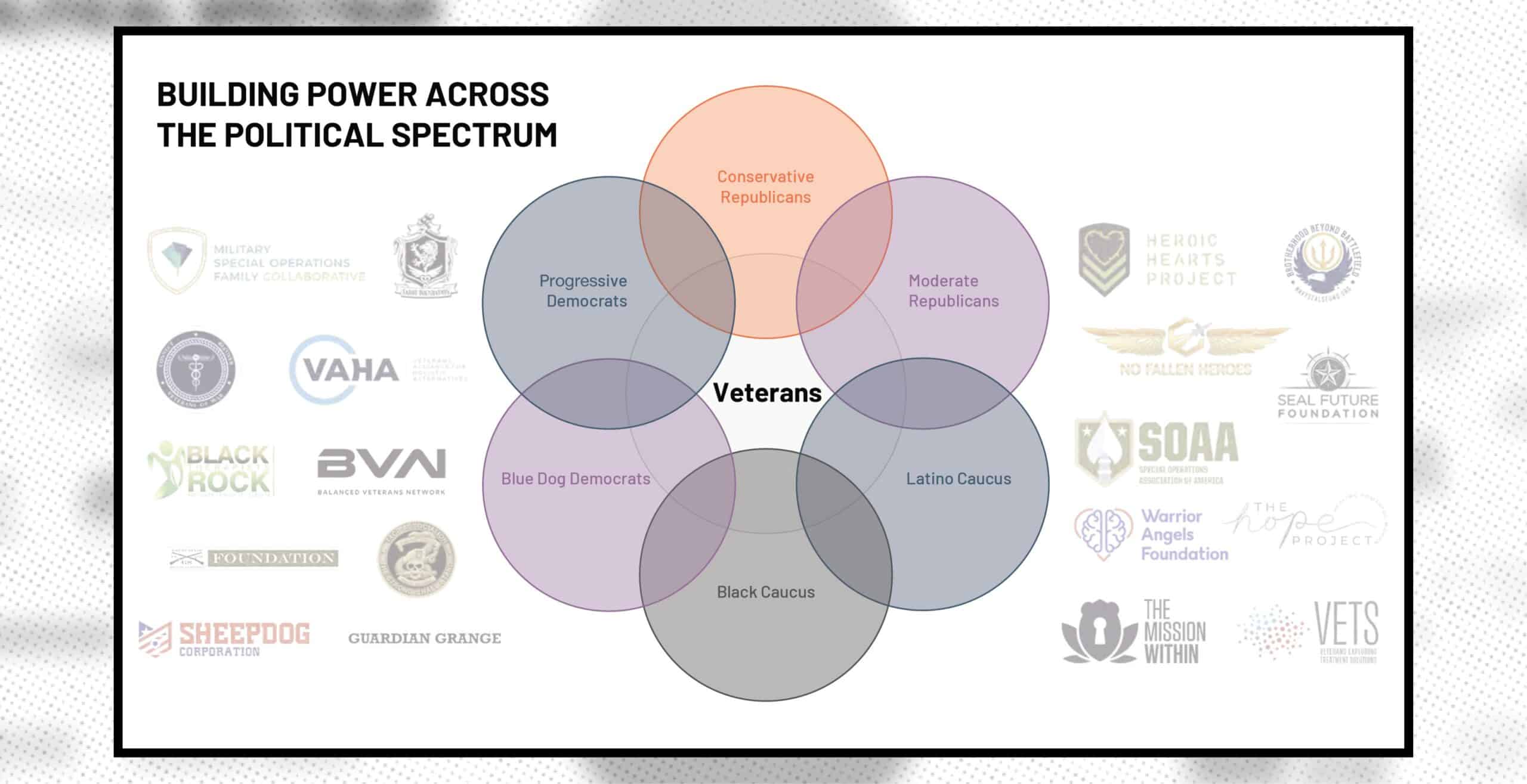 Slide from Veteran Mental Health Leadership Coalition and Reason for Hope’s pitch deck to PSFC (December 2022)
The pitch deck appealed to donors with a shared interest in influencing nationwide psychedelic legislation. Reflecting on this pitch, PSFC member David Bronner described Reason For Hope as coordinating a “powerful lobby into an extremely effective force on the Hill in DC.” →
→ EXTRA CONTEXT: The Veteran Coalition’s strategy produced results in 2023, when they worked with Kentucky’s Opioid Abatement Advisory Commission to allocate $42M from the state’s opioid settlement funds to ibogaine research. Mired in controversy, the plan would have siphoned settlement funds away from vital harm reduction efforts in the state. The funding scheme was eventually spiked when Kentucky Attorney General Daniel Cameron lost reelection.
In an email shared with Psymposia, Genevieve Jurvetson wrote to PSFC members on the day of the funding announcement: “This morning Kentucky announced $42mm in funding for Ibogaine research, as well as public-private partnerships to help push Ibogaine through the FDA approval process. The funds are coming from a large pool of Opioid Settlement Funds and will be allocated over the next 7 years. […] A massive THANK YOU to the funders on this thread of Reason for Hope. Your support enabled this unlock. Another testament to the power of the Veteran voice to catalyze meaningful change in this space.” (📁 Document #17)
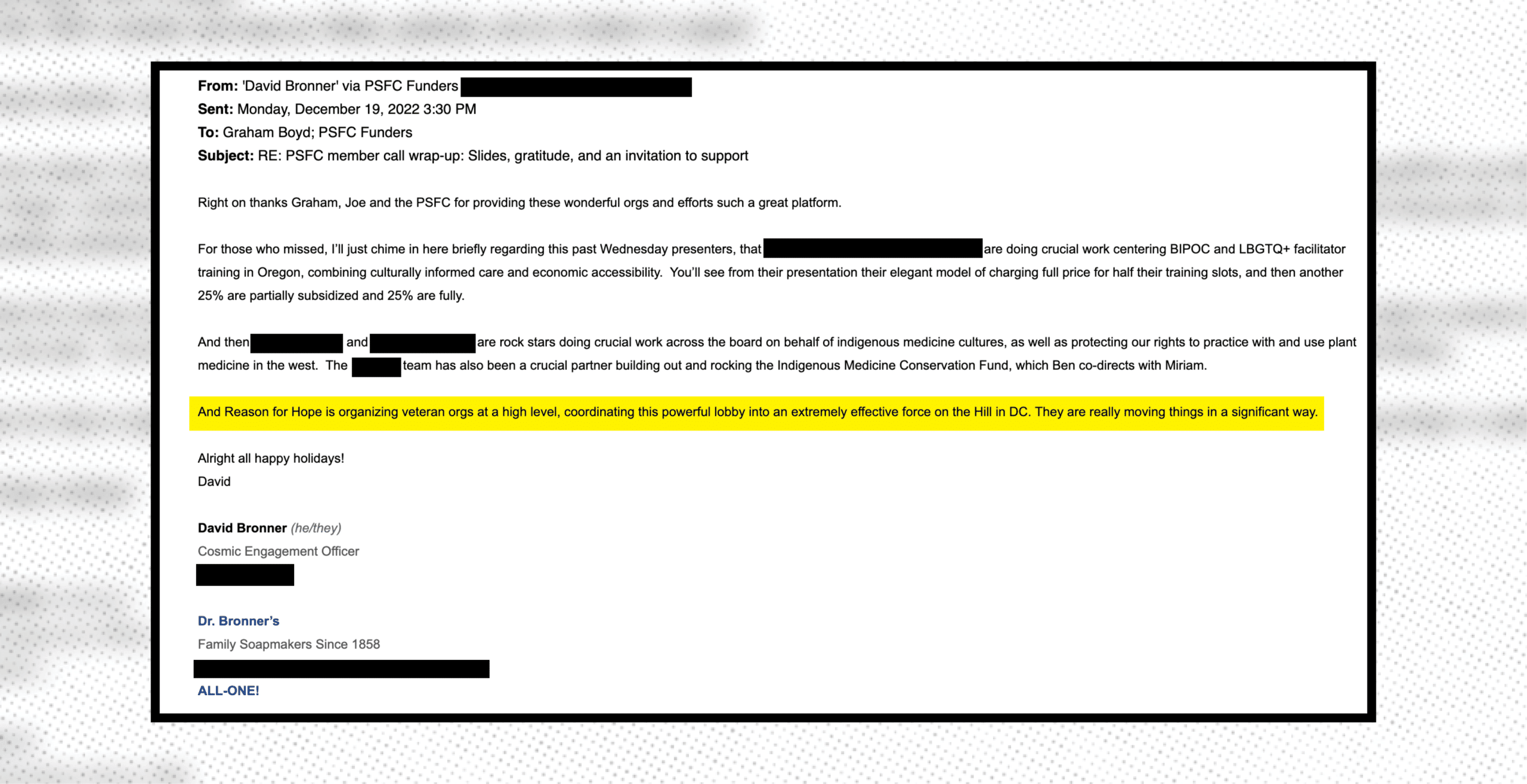 December 2022 email from David Bronner describing Reason for Hope as coordinating a “powerful lobby.” | Source: Email from David Bronner
With this level of influence, Waters’ Veterans Coalition could mobilize politicians to act en masse in service to pharmaceutical interests — the sort of mobilization that transpired on August 2, 2024, when Jack Bergman (R-MI) led 61 Housemembers to sign an open letter in support of MDMA-assisted therapy. This kind of bipartisan rapid response to pharmaceutical interests requires an extensive, pre-existing lobbying infrastructure.
The letter offered political cover for the FDA to ignore its advisory committee’s vote by characterizing Psymposia’s concerns as meritless. While Psymposia is not mentioned by name, the letter mirrors the false characterizations in the original Heroic Hearts letter, where Psymposia was represented as an organization bent on discrediting effective therapies for people suffering from mental anguish:
“[W]e are aware that as this application has made its way through the regulatory review process, certain groups and individuals have voiced criticism of the application. It is our understanding that while these critics may be well-intentioned, their criticism is not necessarily reflective of the science, but rather their personal ideological beliefs and biases related to the medicalization of substances like MDMA.
“While all Americans are free to voice their views on this and other topics of public interest, scientific evidence should not be ignored in favor of those who have been on a mission to discredit this promising treatment at all costs – especially when that would come at the cost of our servicemembers and Veterans.” (emphasis added)
On August 5, a companion letter supporting MDMA-assisted therapy was signed by 19 Senators, led by Sen. Michael Bennet (D-CO) and Sen. Thom Tillis (R-NC): “If comprehensive evidence demonstrates that MDMA-AT is both effective and safe when administered in appropriate settings, it is our responsibility to ensure that this treatment option is made available to those who could benefit from it.” →
→ EXTRA CONTEXT: These letters were referenced by Lykos’ supporters to demonstrate bipartisan support for overriding the FDA advisory committee’s recommendation. On August 7 — two days before the FDA’s decision on Lykos’ NDA — Christiana Musk published an appeal to approve the application in an opinion piece for TIME Magazine, titled “There Are No Good Treatments for PTSD. MDMA Can Change That.” To bolster her argument that the FDA should ignore its advisory committee’s vote, Musk cited the House letter in support of approving Lykos’ application based on the urgency of addressing veteran suicides: “Members of Congress from both parties—along with veterans groups, some of MDMA-assisted therapy’s strongest advocates—called on the FDA to ‘follow the science’ when they gathered July 10 at the Capitol.” In the TIME essay, Musk claims that “[a]lthough I am not an investor in Lykos Therapeutics, the company that is trying to bring this treatment to market, I philanthropically support several research centers that conduct MDMA-assisted therapy.” She does not mention her role as operating partner at Satori Capital, whose “advisory affiliate” Satori Neuro participated in Lykos’ $100 million Series A investment round.
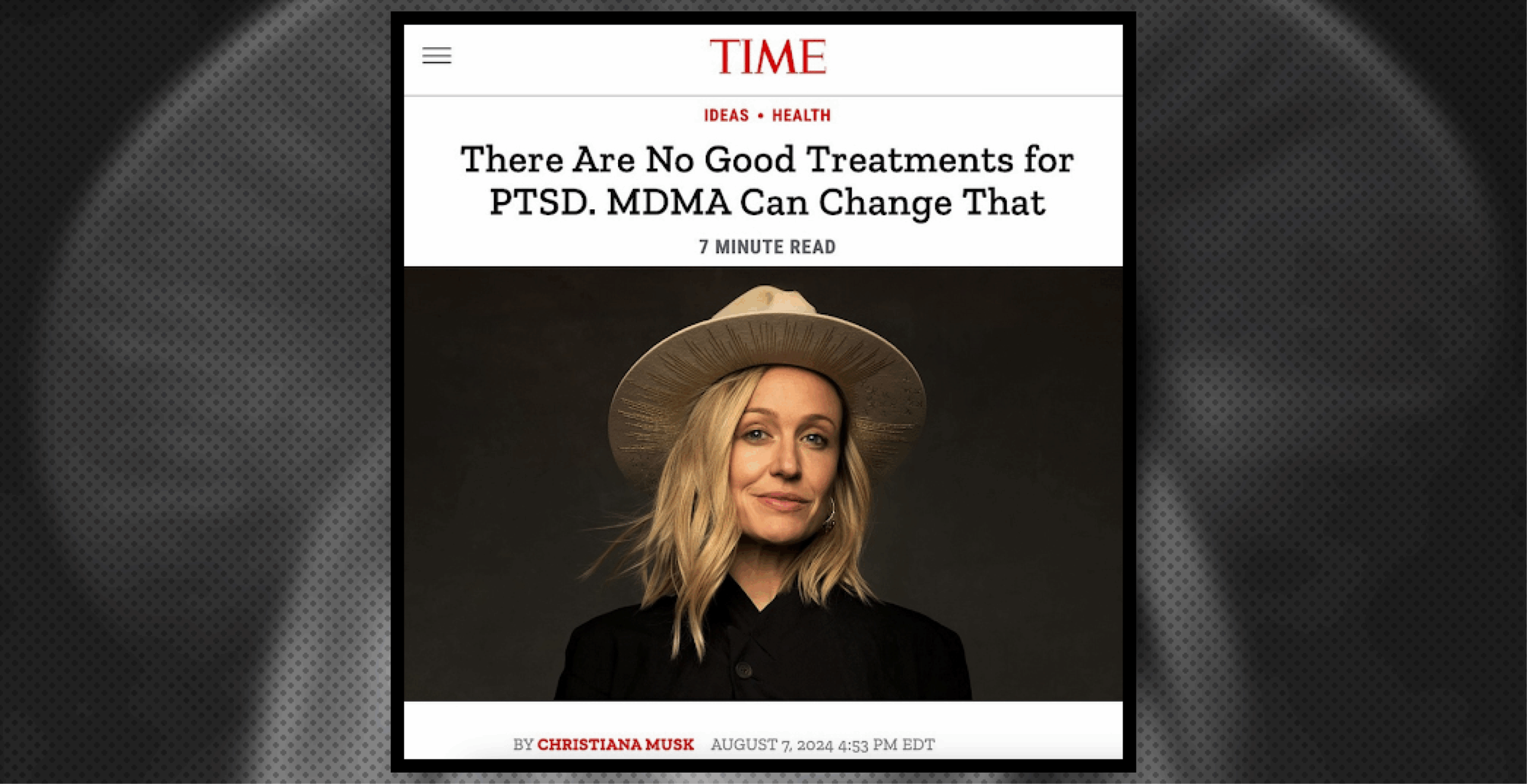 Christiana Musk wrote a personal appeal in TIME Magazine for the FDA to overrule the recommendation of its Advisory Committee.
In collaboration with Reason for Hope, Heroic Hearts, and Healing Breakthrough, the Veterans Coalition shared an Instagram gallery that began with excerpts from a CNN story about the two congressional letters. Alongside images of the two congressional letters, the gallery included the “Letter to President Biden from VSOs and Veterans” from the Approve MDMA Therapy campaign website. According to the Instagram post, that letter was “co-authored by 14 veteran service organizations and 730 veterans” and published “in conjunction with the congressional letters.” Of the 14 signatory organizations, 12 were VMHLC partners.
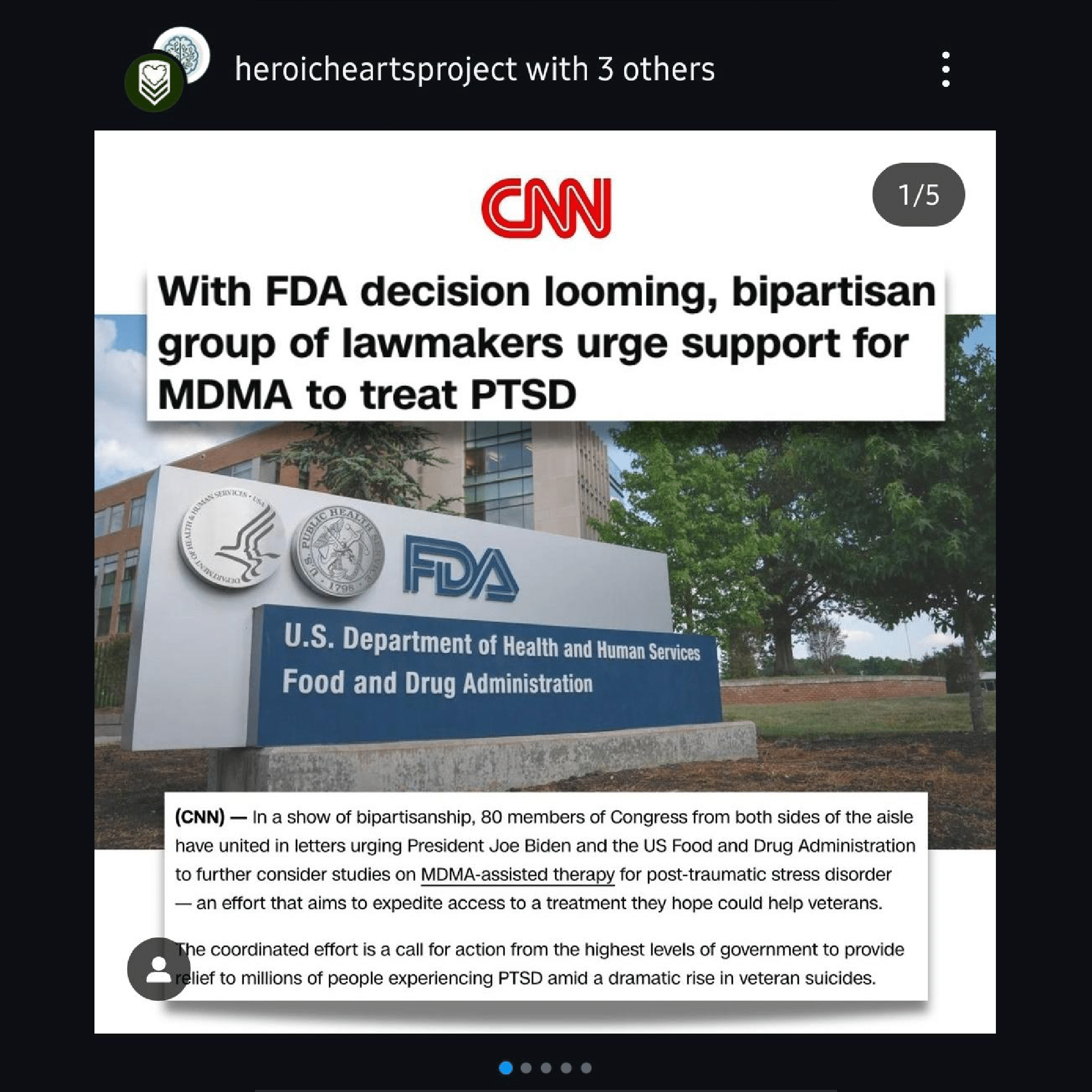
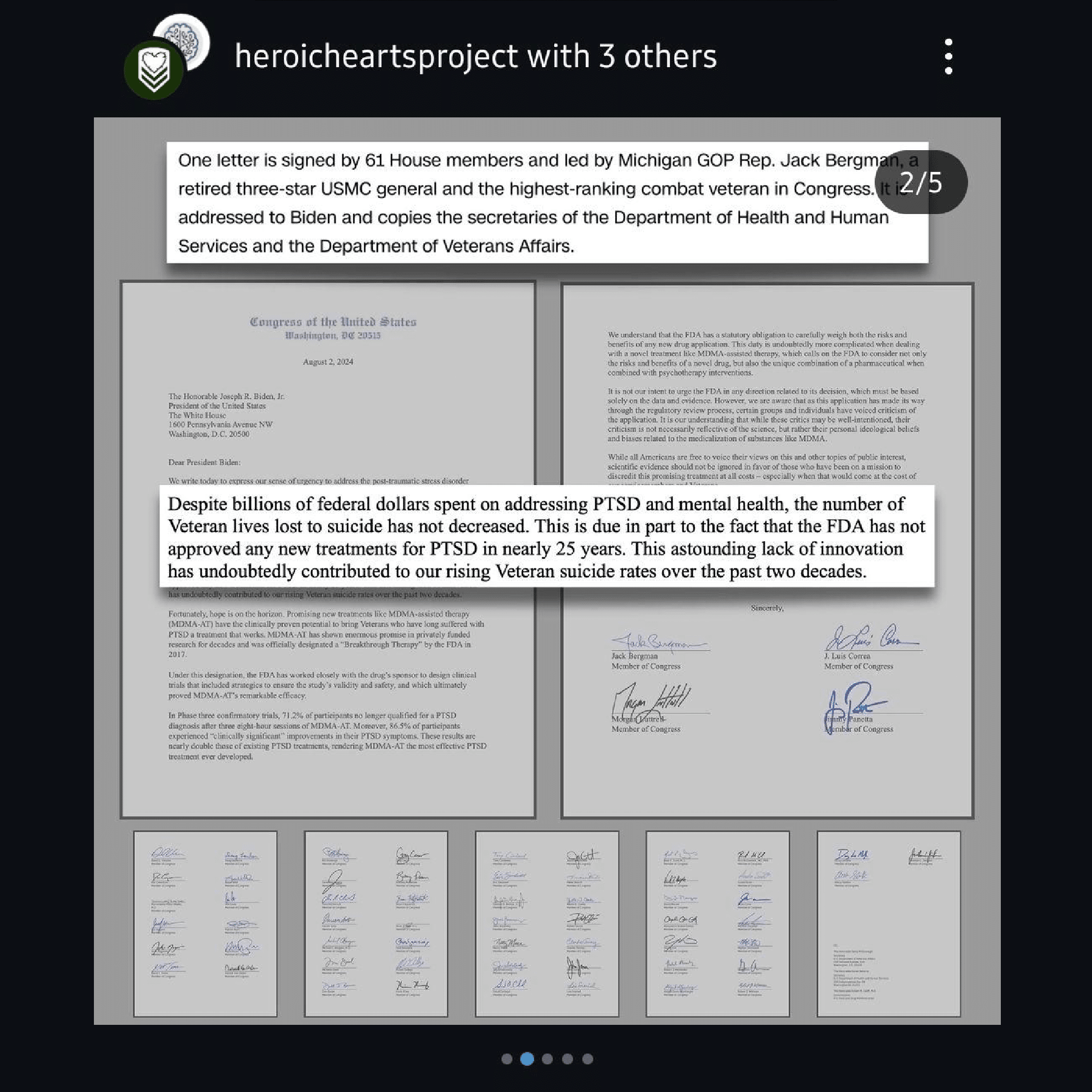
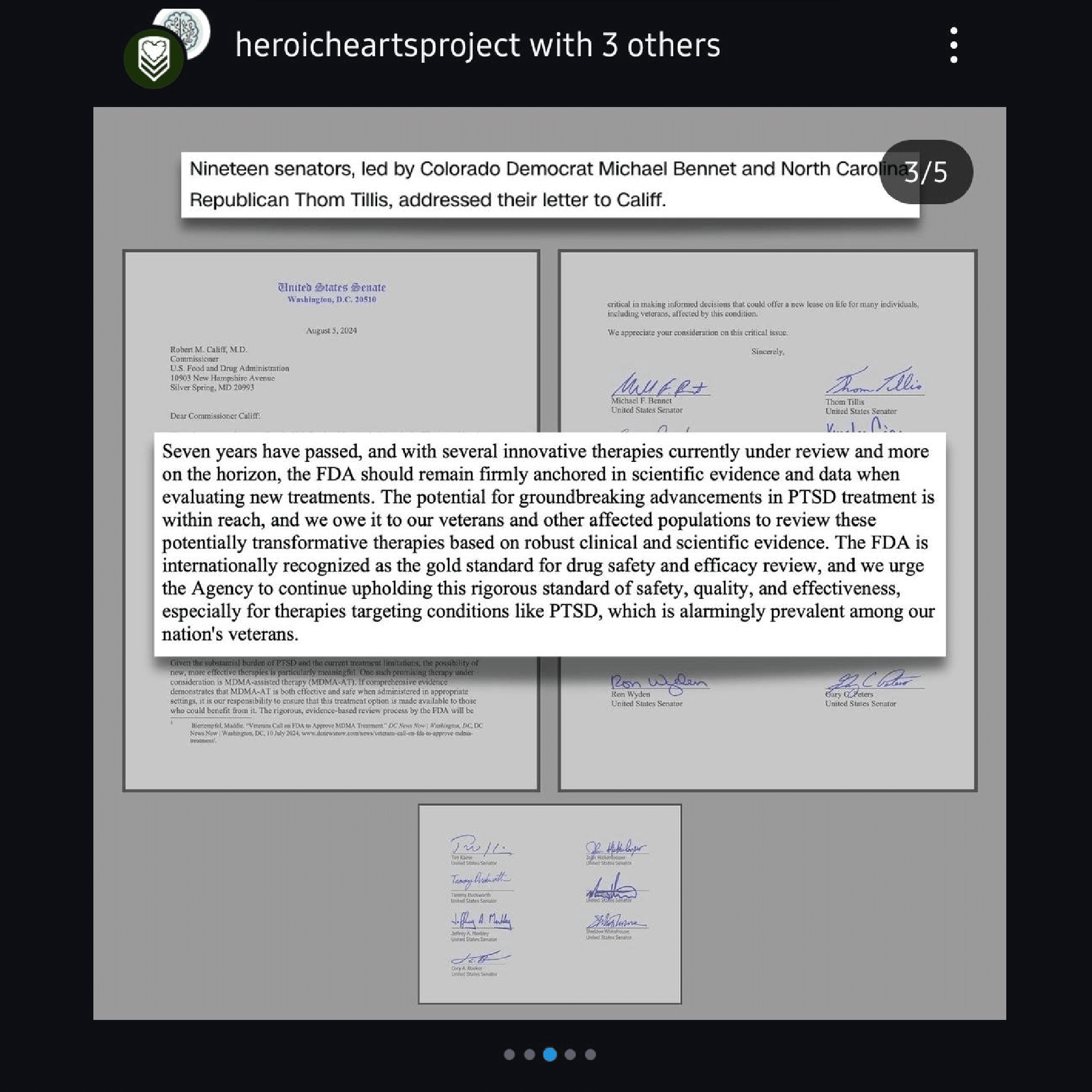
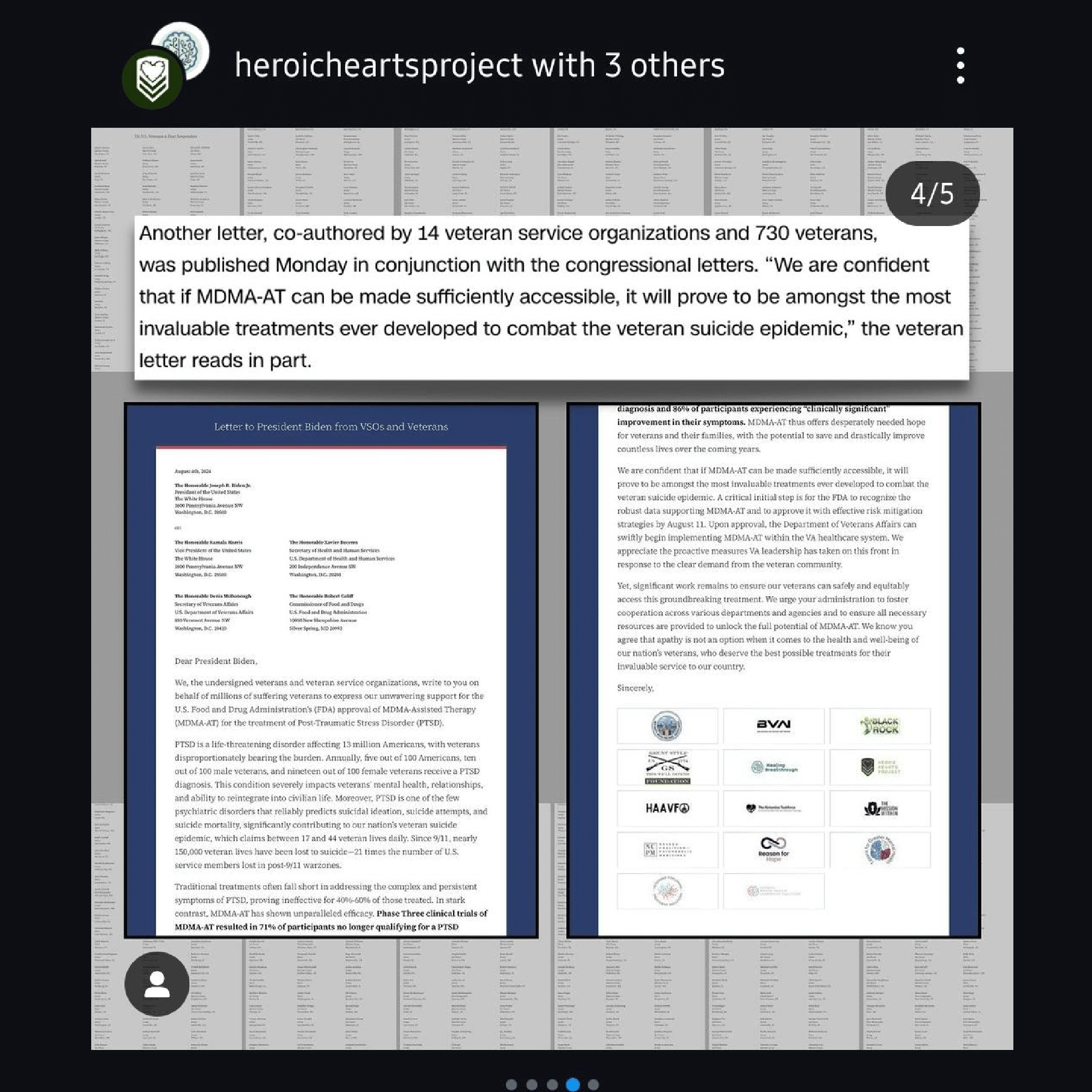
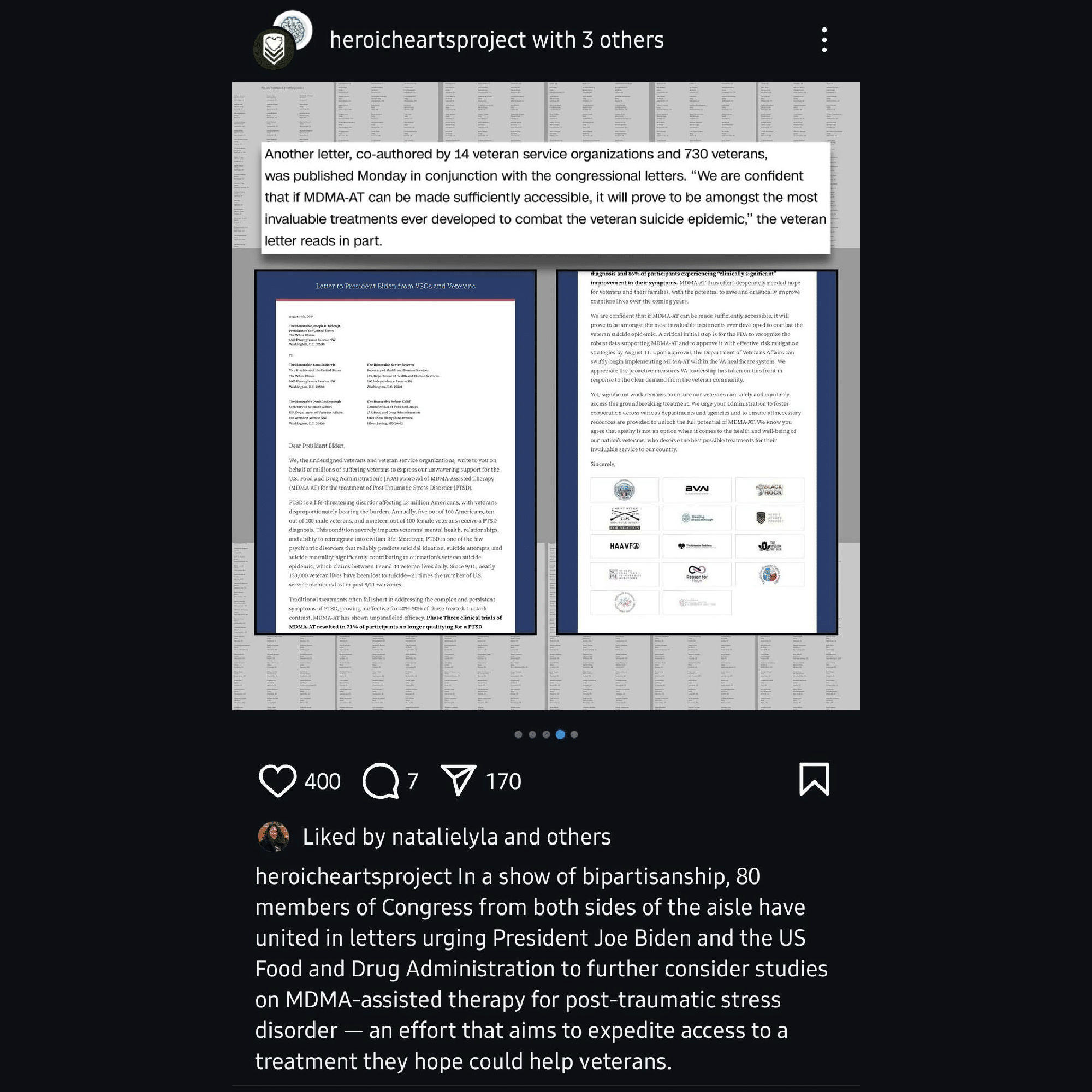
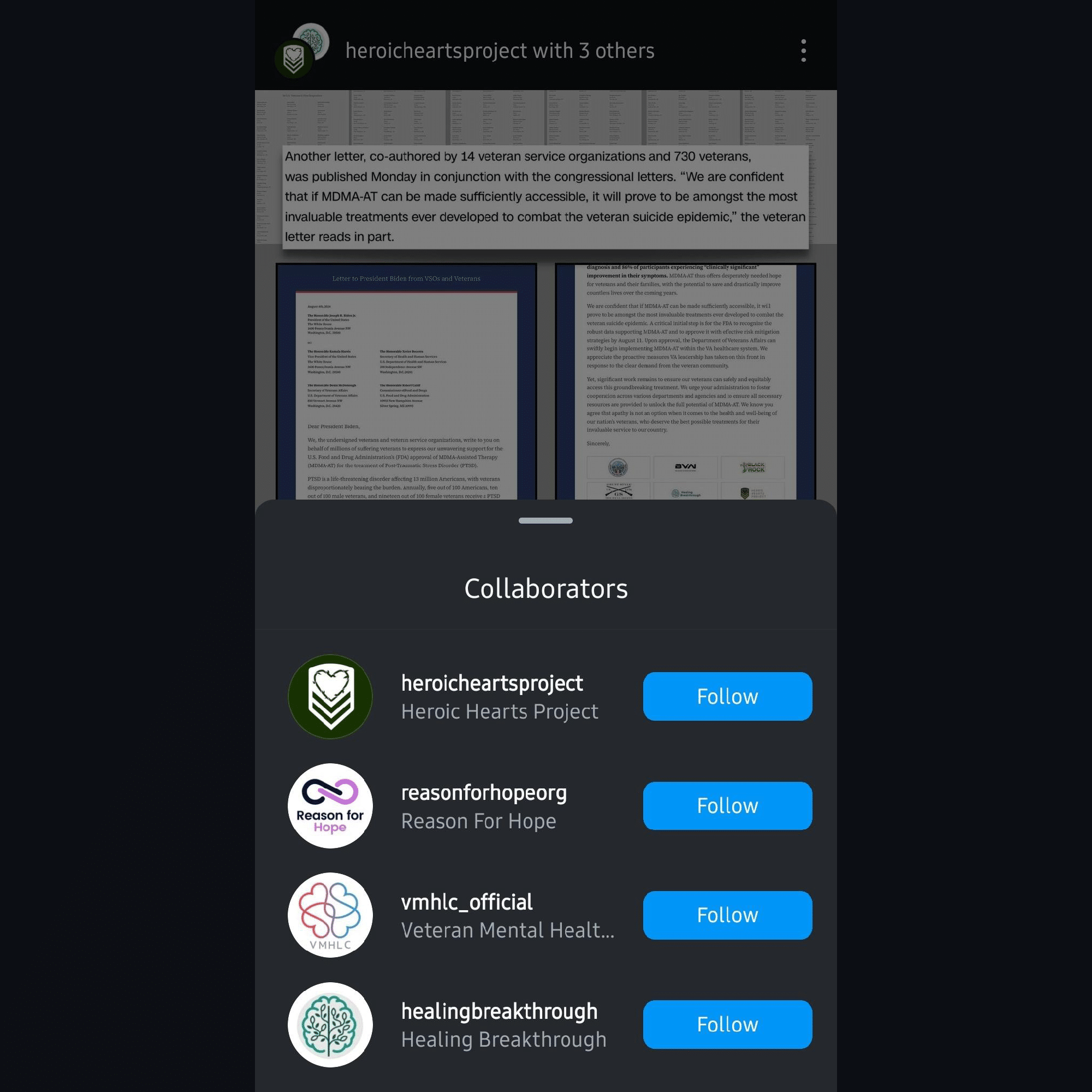
VMHLC Instagram posts (scroll gallery, hover or click to pause)
VMHLC was not on our radar until the Mullick video prompted us to rewatch Waters’ testimony. Suddenly, we were noticing the organization everywhere.
After the FDA advisory committee meeting, Waters was photographed at the July 10 press conference alongside the heads of other PSFC-aligned veteran groups, Heroic Hearts and Healing Breakthrough. Although Waters did not speak at the lectern, his connections with Lykos funders, Congress, and veterans groups were indispensable for assembling all of the event’s moving parts.
In November 2022, Waters told Lucid News that he was involved in “many” of the federal initiatives supporting psychedelic access, which included a Senate bill on psychedelic research; a congressional caucus related to psychedelic medicine; and new guidelines for psychedelic research from both the Veterans Administration and the National Institute for Mental Health.
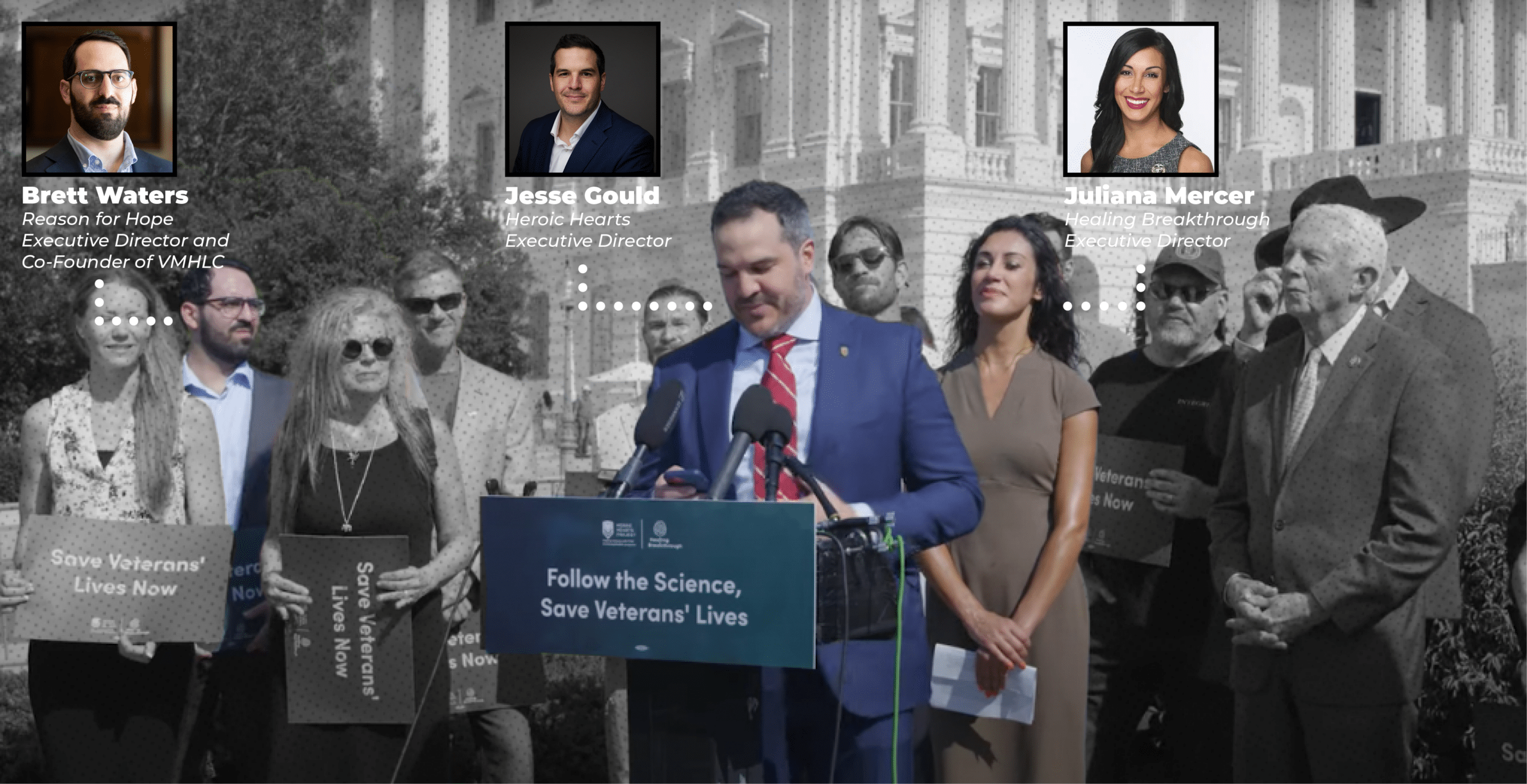 Washington, D.C. press conference. Reason for Hope Executive Director and Co-Founder of VMHLC, Brett Waters (left), Heroic Hearts Executive Director Jesse Gould (middle), and Healing Breakthrough Executive Director Juliana Mercer (right). | Source: “Bipartisan Congressional Press Conference on New Therapies for Veteran PTSD/Suicide” video
On social media, VMHLC urged followers to participate in the DC event: “join us in person on The Hill as we fight for the approval of MDMA-Assisted Therapy (MDMA-AT) for PTSD. This is our moment to unite and make a difference. The FDA’s decision is imminent, and we need to show our strength and solidarity.”
Since the start of our investigation, Psymposia had been exploring the deep political and financial connections between MAPS, PSFC, and these various veterans organizations. This was the moment that the true extent of these connections became apparent.
On June 4 — the same day as the FDA advisory committee hearing — a psychedelic ethics paper was published in The Journal of the American Medical Association (JAMA) authored by 21 psychedelic researchers and industry stakeholders, including Waters and Devenot. As required by the journal’s guidelines, Waters disclosed his financial conflicts of interest, noting his roles as the executive director of Reason for Hope and co-founder of VMHLC. In this disclosure Waters reported that these organizations were “funded by grants or donations from the Steven & Alexandra Cohen Foundation, the Joe and Sandy Samberg Foundation, the Jurvetson Foundation, Flourish Trust, The Austin & Gabriela Hearst Foundation, [and] Michael Cotton,” along with several other groups.
Waters chose not to disclose any of these conflicts of interest during the FDA’s June 4 advisory committee meeting, even though the guidelines provided to speakers encouraged — but did not require — presenters to identify any financial association “with the company whose product is being considered by the FDA advisory committee” during presentations. Each of these disclosures would have been materially relevant to the advisory committee’s deliberations on Lykos’ application, since all of these entities have financial ties to Lykos. →
→ EXTRA CONTEXT: The Jurvetsons, Michael Cotton, and Austin Hearst are members of PSFC, which donated millions to MAPS to achieve PSFC’s “core focus” of getting MDMA-AT approved by the FDA. (The Jurvetsons personally donated at least $2.6 million to MAPS and Forbes reported Hearst as a donor to MAPS’s Capstone Fund.) The Cohen and Samberg foundations directly participated in Lykos’ $100M Series A investment round along with Satori Neuro, which is an “advisory affiliate” of Satori Capital. Satori Capital’s operating partner Christiana Musk is also a director and co-founder of Flourish Trust, which funded Waters.
Waters’ failure to disclose his own financial ties to Lykos’ backers only scratched the surface of VMHLC-related conflicts of interest that Psymposia uncovered: these conflicts extended to the FDA’s advisory committee itself.
While we rifled through these connections and conflicts of interest, Brian Pace called our attention to VMHLC’s website, “Hey, look at this. This coalition includes Heroic Hearts, Healing Breakthrough and The Mission Within, along with a bunch of other veteran organizations I’ve never heard of.”
Almost simultaneously, Brian Normand squinted at his own screen. “You guys have to see this.” He shared his screen to reveal that psychiatrist Dr. Walter Dunn had professional ties to both Reason for Hope and VMHLC.
Neşe looked up, incredulous: “Is that — the one guy who voted ‘yes’?”
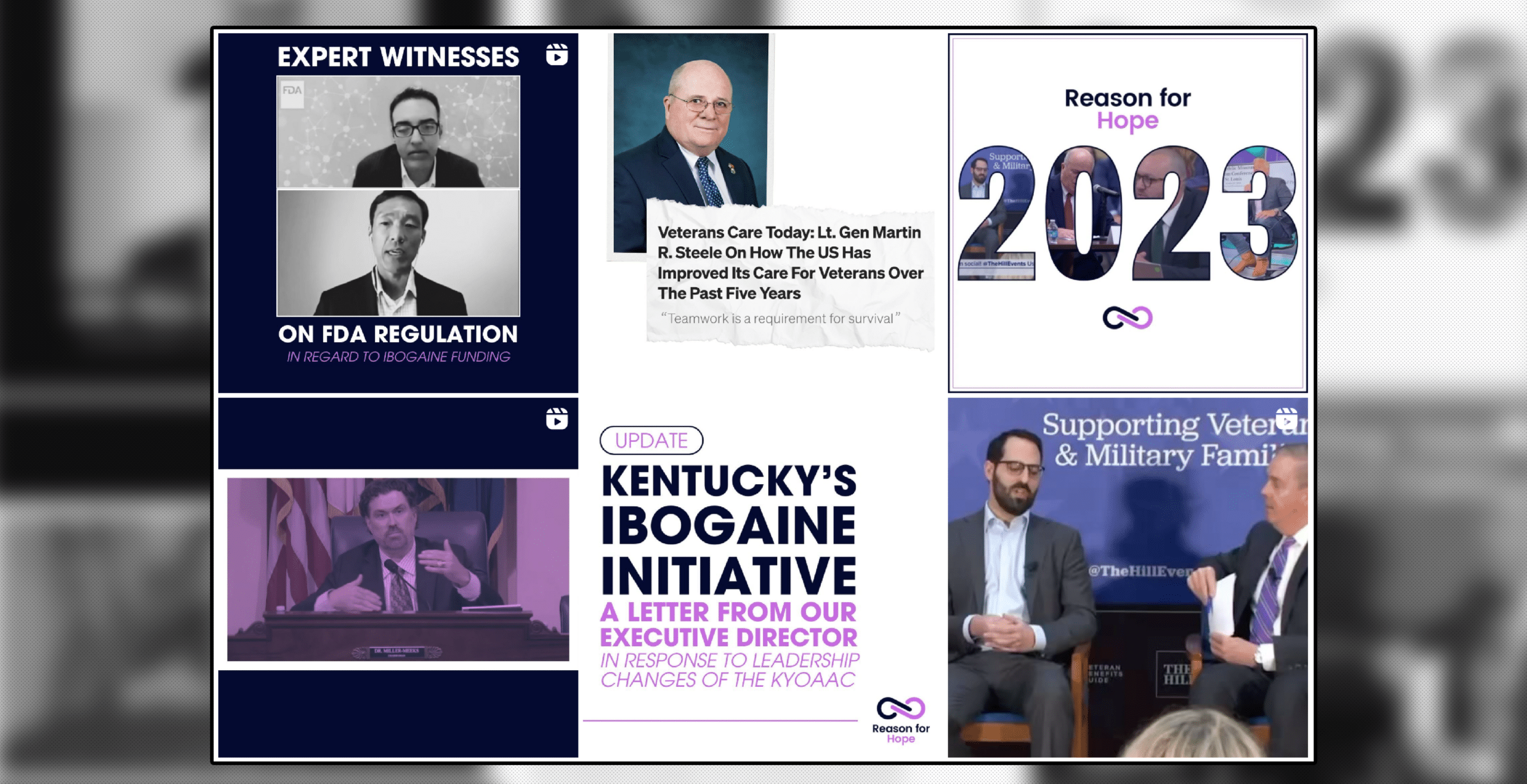 Screenshot of Reason for Hope’s Instagram page. The top left post depicts Dr. Dunn’s 2023 expert witness testimony to the Kentucky Opioid Abatement Advisory Committee (top left), Lt. Gen. Martin Steel (middle), and Brett Waters (bottom right) | Source of top left post: Reason for Hope Instagram, posted Jan 23, 2024
Dunn, was the sole advisory committee member who voted “yes” on the safety of Lykos’ application and one of only two who voted “yes” on its efficacy. Dunn — who has served on the FDA advisory committee since June 2017 — has also served as an advisory board member to VMHLC (📁 Document #19). Neither Waters nor Dunn disclosed their professional ties to one another.
While the PSFC crisis campaign was falsely accusing Psymposia of violating disclosure rules, their allies were actually circumventing the rules.
Dunn’s relationship to Waters is officially recorded in a letter of support for Senators Rand Paul and Cory Booker’s Right to Try Clarification Act of 2022, which urged Congress to amend federal legislation “to open access to MDMA- and psilocybin-assisted therapy.” (Along with Dunn, other members of the VMHLC’s advisory board who signed the letter included PSFC director Michael Cotton and MAPS PBC medical advisor Dr. Julie Holland, who participated in MAPS’ clinical trials as a medical monitor. The letter is also published on Chacruna, which is run by MAPS’s “Public Education and Culture Specialist,” Bia Labate.)
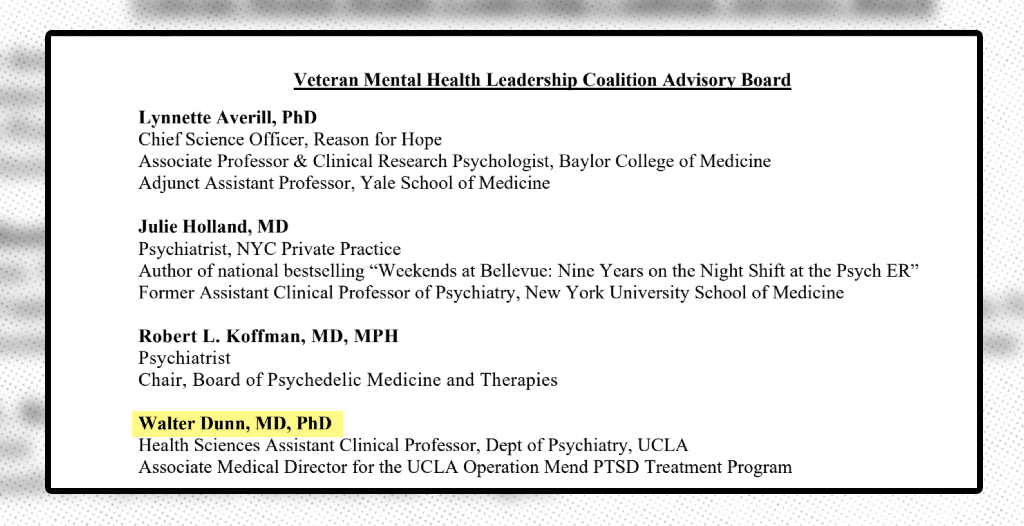 Documentation from a 2022 open letter supporting the Right to Try Clarification Act. Written by members of Reason for Hope and VMHLC, the letter identifies Dr. Walter Dunn as an advisory board member. | Source: Reason for Hope 2022 open letter supporting Right to Try Clarification Act.
Nearly two years after signing his name in support of this legislation, Dunn sat as an FDA advisory committee member tasked with the responsibility of serving as an impartial adjudicator of Lykos’ MDMA-AT New Drug Application.
As Psymposia’s investigation revealed, Lykos had been actively working to influence advisory committee members. According to records from MAPS board meetings in 2017 and 2018, leadership from MAPS, MAPS PBC, and PSFC discussed strategies to influence the FDA’s advisory committee during presentations on “Regulatory Strategy.” In a July 18, 2017 presentation, Amy Emerson (MAPS PBC Executive Director) and Berra Yazar-Klosinski (MAPS Associate Director of Clinical Research), discussed their ongoing plan to meet experts who might be included on the committee: “We are already working to meet as many experts as possible in case they are chosen for the Advisory Committee.”
The discussion that followed reveals a board that was comfortable with politicizing and manipulating the drug approval process. In response to Joe Green asking “if politicians ever get in the way of drug approval,” Doblin acknowledged that “Members of Congress and Administration could pressure the head of the FDA” to change their final decision. Green suggested a potential strategy to neutralize political opposition by “direct[ing] recruitment towards potential politicians and donors, such as congressmen who have PTSD.”
The conversation about the advisory committee continued at the subsequent board meeting on February 28, 2018, where they discussed the advisory committee’s selection process. According to the meeting minutes, Graham Boyd suggested creating a working group to identify “who might be likely to be on the advisory committee, [which can] help us shape which conferences to attend and journals to target for publications.”
FDA advisory committee members are required by law to report conflicts of interests and maintain the appearance of impartiality. Federal regulation requires the disclosure of any external relationships held by a committee member that a “reasonable person,” with “knowledge of the relevant facts,” might perceive as raising concerns about the member’s impartiality.
Dunn had previously disclosed conflicts regarding a proposed Alzheimer’s disease treatment submitted by Acadia Pharmaceuticals, for which he obtained a waiver from the FDA Commissioner to participate in the relevant advisory committee meeting. Dunn did not receive a waiver to participate in the discussion of Lykos’ NDA, however. At the start of the advisory committee meeting, FDA’s Dr. Joyce Frimpong identified that no committee members had received a waiver for disclosed relationships pertaining to the NDA:
“Based on the agenda for today’s meeting and all financial interests reported by the committee members and temporary voting members, no conflict of interest waivers have been issued in connection with this meeting. To ensure transparency, we encourage all standing committee members and temporary voting members to disclose any public statements that they have made concerning the product at issue.” (36:49 – 37:03)
→ UPDATE 10/19/2025, 8:00 PM EDT: Although Dunn did not return Psymposia’s request for comment, he subsequently confirmed his prior advisory work with VMHLC in a statement to The Microdose. Dunn stated that he did not report this role to the FDA because it did not occur within “the preceding 12 months” of the advisory committee meeting, as required by the FDA’s “Outside Positions” financial conflict of interest disclosure rules.
This response overlooks the fact that FDA advisory committee members must comply with two sets of disclosure policies. The first policy involves financial conflict of interest reporting, which Dunn referenced in his comments to The Microdose. The second policy concerns perceptions of impartiality, which covers “other interests and relationships that do not create a recusal obligation under Federal conflict of interest laws but that may create the appearance that a member lacks impartiality, known as ‘appearance issues.’”
On a website listing the “laws, regulations, and guidance documents” for advisory committee meetings, the FDA emphasizes that potential impartiality concerns supersede specific covered relationships. These recommendations are listed as current as of April 23, 2024 — less than two months before the advisory committee meeting convened to discuss Lykos’ application. This information is outlined in the attached guidance document, titled “Procedures for Evaluating Appearance Issues and Granting Authorizations for Participation in FDA Advisory Committees,” which clearly identifies “two categories of potentially disqualifying interests or relationships”:
1. “current financial interests that may create a recusal obligation under Federal conflict of interest laws; and
2. “other interests and relationships that do not create a recusal obligation under Federal conflict of interest laws but that may create the appearance that a member lacks impartiality, known as ‘appearance issues.’”
This guidance explicitly states that “although interests and relationships more than a year old do not generally give rise to appearance issues, there may be exceptions when these involvements suggest close ties to the sponsor or product.” (Dunn advised the organization VMHLC, which was funded by major investors and donors in the sponsor and its parent company.) The guidance document emphasizes that impartiality considerations should include “professional, social, or other relationships that are not technically a ‘covered relationship’…[but] could still raise concerns about the member’s impartiality.”
Discussing regulation 5 CFR § 2635.502(a)(2) and (c) in an “Ethics Fundamentals” series produced by Office of Government Ethics (OGE), Cheryl Kane-Piasecki and Patrick Shepherd further elaborated on these disclosure standards. Kane-Piasecki noted that “some employees say, ‘Well, I don’t have a covered relationship so I can do whatever I want.” However, “that’s not the way…the regulations work together”:
“[I]n essence, what (a)(2) is saying is that…the covered relationship provisions and the financial interests provisions are not the universe — that…there may be circumstances other than those that are expressly articulated in these two prongs, where…you should ask yourself whether a reasonable person with knowledge of the relevant facts would question your impartiality, or where a reasonable person might question your impartiality and the agency should, you know, advise…that the employee recuse themselves from any such matter[.]”
While 5 CFR § 2635.502 has been updated since this 2015 video was recorded, the discussed language remains in the current regulations under 5 CFR § 2635.502(a)(3).
This analysis is further supported by OGE presentation slides titled “Impartiality in Performing Official Duties / 5 CFR section 2635.502,” which contain updated 2024 language. On a page titled “Summary of 5 CFR section 2635.502,” OGE emphasizes that appearance issues extend beyond the standard relationships: “An agency may disqualify an employee from participating in matters where circumstances, other than those described above, would cause a reasonable person with knowledge of the relevant facts to question an employee’s impartiality.”
After casting the only vote of approval on the safety of Lykos’ application, Dunn explained to the committee that he was “especially sympathetic to the stories of our veterans that were here during the public commentary” — as if this was the first time that he had heard this messaging.
This included testimony from Waters — Dunn’s former advisee in his capacity as Co-Founder of the VMHLC.
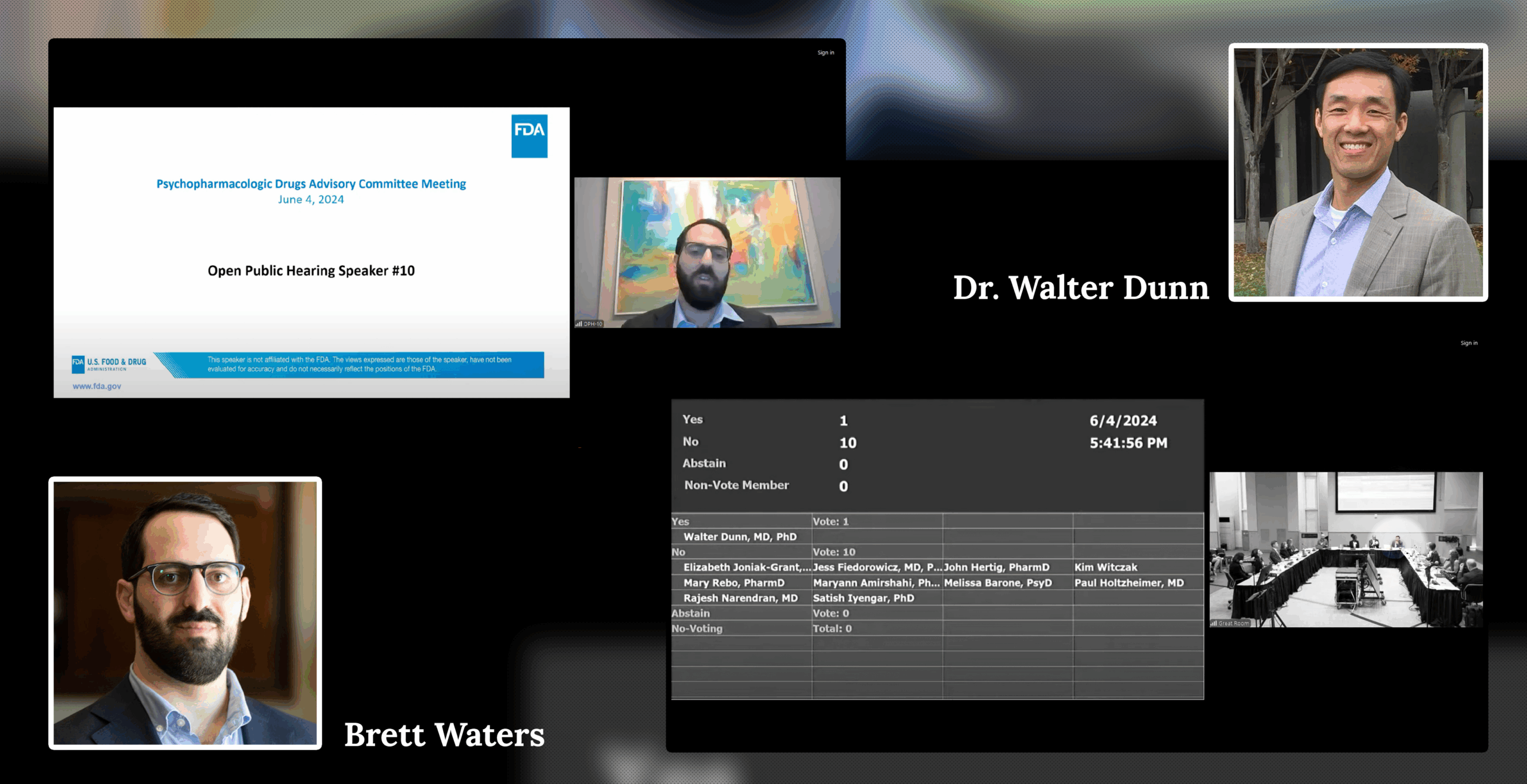 Brett Waters (left) provides comment during the FDA’s advisory committee meeting, where Dr. Walter Dunn (right) serves as a voting member. | Source: June 4, 2024 Meeting of the Psychopharmacologic Drugs Advisory Committee (PDAC)
Justifying his “yes” vote, Dunn said he believed that Lykos had brought MDMA-AT “probably 75% of the way” to where the application needed to be. He added that Lykos was “on the right track” for FDA approval: “a tweak here and there can address some of the safety concerns [FDA’s advisory committee] brought up.”
Dunn’s commentary from the advisory committee is featured in Mullick’s propaganda video, alongside the misleadingly edited instructions from FDA’s Dr. Theresa Buracchio. As discussed earlier, Mullick’s edit omitted that the advisory committee was explicitly sanctioned to consider the open public hearing in its voting deliberations: “The discussions and voting should be based on what is contained within our briefing documents, as well as what you may have heard during the open public hearings — also fair.”
In explaining his vote at the conclusion of the advisory committee meeting, Dunn was the only person to refer to Buracchio’s directive, erroneously claiming that it prevented him from considering the misconduct that was discussed during the open public hearing, which included testimony from the participant who was sexually assaulted during a Phase 2 clinical trial. Dunn claimed that “Per Dr. Buracchio’s guidance earlier, and really not taking into consideration the possibility for misconduct…I think that [this treatment] can be effective for patients with posttraumatic stress disorder.”
At that moment, like some cosmic joke, the screen fractalized into a pointed arrow.
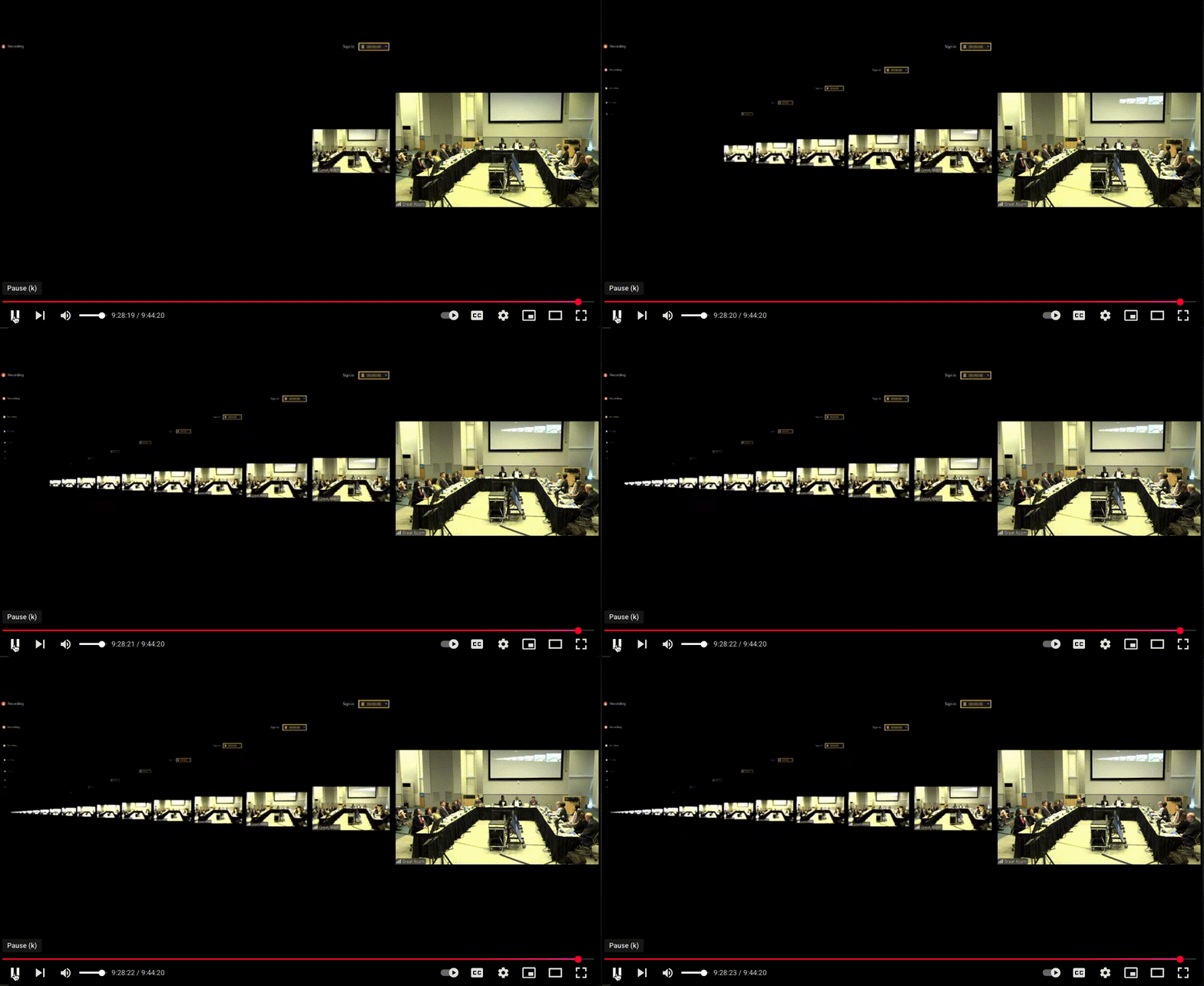 Dr. Walter Dunn explains his reasons for voting “yes” as screen fractalizes. | Source: YouTube “June 4, 2024 Meeting of the Psychopharmacologic Drugs Advisory Committee (PDAC)”
On May 9, 2024 — less than one month before the advisory committee meeting — the podcast Healing Trauma published an interview where Dunn hyped Lykos’ pharmaceutical product as the first wave of a revolution in psychiatry:
“This is the hottest area in — I won’t even say mental health, this is the hottest area in medicine right now. […] The psychedelics — this is really, I think, going to change the way we think about mental illness, and certainly how we potentially could treat mental illness. And so right now, MDMA-assisted therapy for PTSD will likely be the first quote-unquote psychedelic-based treatment that will be approved by the FDA, though actually — the promised decision date is…August 11th, 2024 — later this year. That’s when the FDA has their deadline in which to make a decision. […] On that day or before, the FDA will say yea or nay to…MDMA-assisted treatment for PTSD.”
As he spoke, Dunn did not disclose that he was a member of the advisory committee that would be voting on Lykos’ MDMA-AT application.
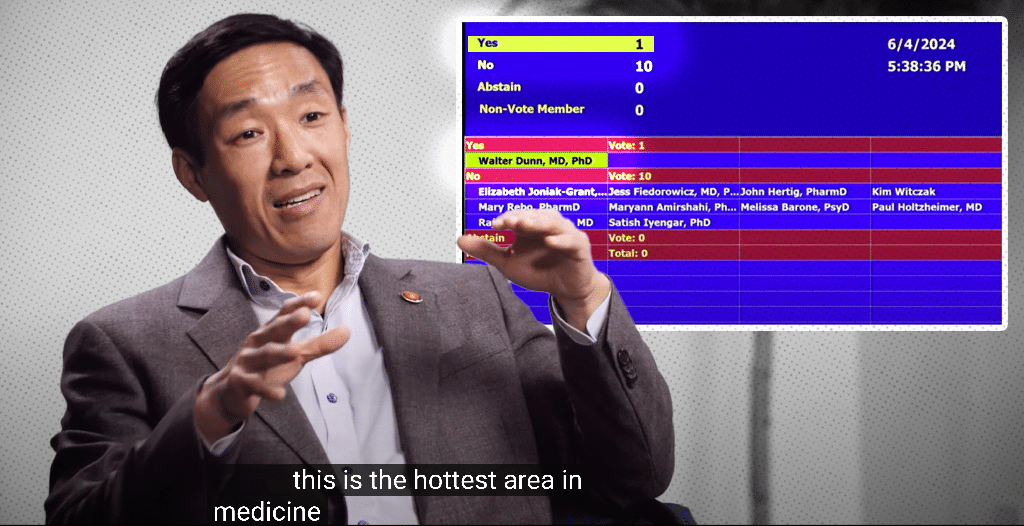 Dr. Walter Dunn describes psychedelics as “the hottest area in medicine,” collaged with the FDA Advisory Committee’s vote tally displaying Dunn as the single “Yes” vote on the safety of Lykos’ application | Source: “A Marine’s New Mission: Tackling PTSD with Prof. Walter Dunn” and FDA Advisory Committee meeting
Continue reading in Part 3.
The Psychedelic Syndicate: Part 3
Part 3 of The Psychedelic Syndicate exposes how Silicon Valley's "move fast and break things" mentality infected psychedelic therapy, creating a culture where leaders rationalized patient harm as unavoidable for progress and ultimately embraced Trump administration officials who promised regulatory shortcuts.