
The Psychedelic Syndicate: Part 3
How Silicon Valley Used Veterans to Hijack the Psychedelic Industry
Principal authors: Neşe Devenot, PhD; Russell Hausfeld; Brian Pace, PhD; and Brian Normand. Contributing authors: Meaghan Buisson and James Curtis.
Executive Summary | Part 1 | Part 2 | Part 4 | Primary Documents | Download PDF
A year-long investigation reveals how a small group of Silicon Valley elites sought to capture the psychedelic therapy industry — using a network of affiliated organizations to scapegoat critics while pressuring regulators to approve their botched MDMA clinical trials.
Part 3 of The Psychedelic Syndicate exposes how Silicon Valley’s “move fast and break things” mentality infected psychedelic therapy, creating a culture where leaders rationalized patient harm as unavoidable for progress and ultimately embraced Trump administration officials who promised regulatory shortcuts.
Editor’s Note: We sent detailed requests for comment to 54 individuals and organizations named in this report, but some did not respond to requests before publication. We invite any parties who wish to respond to the reporting in this article to contact us at research [at] psymposia [dot] com. Any substantive responses will be published as updates to this article or as separate pieces, at our editorial discretion.
Content Advisory: This report contains descriptions of physical abuse, sexual abuse, and coercive control in the context of psychedelic therapy.
Legal Review: Every claim has undergone rigorous pre-publication legal review. Psymposia received legal support from ProJourn, an innovative pro bono program operated by the Reporters Committee for Freedom of the Press. Psymposia is a member of Reporters Shield, an organization developed by investigative journalists at the Organized Crime and Corruption Reporting Project and lawyers at the Cyrus R. Vance Center for International Justice, which defends investigative reporting around the world from legal threats meant to silence critical voices.
Chapter 9: “It Means They Dodged a Bullet”
More than anyone else on the FDA’s advisory committee, Walter Dunn should have understood the seriousness of the safety concerns raised during the June 4 meeting.
In his interview with Healing Trauma, while reflecting on key takeaways from his work with veterans affected by PTSD, Dunn acknowledged the devastation caused when institutional betrayal follows in the wake of trauma:
“People talk about soldiers, or marines, or airmen who are deployed, and they’re injured or shot and almost killed in combat. And obviously those are very traumatic events. But oftentimes the veterans I work with will talk about the betrayal of trust in some of the institutions that they were led to believe were there to help them. And that — even moreso than the IED blast — is a bigger violation of their belief in the systems and people around them. And so…oftentimes that’s really the part about the PTSD…that’s the most challenging to treat.”
The only person who voted ‘yes’ on safety should have known to vote ‘no.’ Multiple participants in Lykos’ clinical trials have remarked on institutional betrayal by MAPS and Lykos after harmful experiences. Lykos’ former CEO Amy Emerson argued that the harm that occurred was not enough to slow the company’s pace: “The voices of people who have been hurt need to be heard without anybody being defensive,” she said. “But people are desperate for treatments, and pushing MDMA outside of a regulatory pathway is likely to create more harm.” Emerson’s statement fails to acknowledge Lykos’ deep connections to the underground. Psymposia has spoken to sources who detailed the extent of MAPS therapists’ involvement in underground therapy, including accounts of harm caused to clients.
Two months after Emerson’s statement to the Times, The Wall Street Journal reported that MAPS therapists were also practicing in the underground: “Some investigators on the Lykos trials offered ‘underground’ psychedelic sessions while they oversaw the trials, people familiar with the situations said. One person said he hired a therapist on a Lykos trial to guide him in an underground MDMA session while the clinical trials were running.”
Speaking to the Journal, Doblin denied accounts that some of MAPS’s clinical trial therapists were also working in the underground. Doblin insisted there was “no overlap between the trials and the underground,” but Doblin’s statement is undermined by his comments at ALPS Conference in 2023. Speaking from the stage, he advised discretion for therapists who are working in mixed contexts: “If you are going to do this underground work, I’d say you can also probably do both underground work and aboveground work at the same time. You just have to be really careful who you tell what.” (Doblin appears to be taking his own advice in his communications with the Journal, since his personal facilitation of underground MDMA-AT was documented by Bloomberg.)
Speaking to the importance of the underground as a means to train and recruit therapists, Doblin has said: “I think of it in terms of the Underground Railroad during slavery times, where people were helping those [sic] get free of slavery and here we’re helping people — or these underground therapists are — helping people get free from emotional slavery.” →
→ EXTRA CONTEXT: Many psychedelic practitioners view themselves as analogous to abortion providers under abortion bans, offering a life-saving service that has been unjustly stigmatized by mainstream society:
“Many seeking competency with [psychedelic-assisted therapy] will continue to pursue psychedelic experiences, driven by individual values and needs for professional development. This is analogous to our experience with abortion…before legalization, where a growing number of [individuals] will circumvent [the] law…. [T]herapists seeking personal experience with [psychedelic-assisted therapy] feel obliged to break the law to become more effective therapists. At this time of unprecedented inadequacy of mainstream treatments, we are called to support, not obstruct, therapies with demonstrated positive outcomes.”
These practitioners draw an analogy between banning abortion and psychedelic therapy, suggesting that prohibition merely drives both into unsafe territory. However, the dominant schools of underground psychedelic therapy promote unsound and pseudoscientific practices, which will not be rendered safer through legalization.
Emerson’s argument hinges on the assumption that legalization will mitigate risks — but it fails to acknowledge that the therapy model driving underground harms would continue in Lykos’ aboveground context, under the cover of institutional sanction. As a result, her reasoning shifts the context of harm rather than resolving the underlying issues.
Speaking on a panel at South by Southwest in the lead-up to the FDA’s decision, Emerson elaborated on her argument, stating that adverse events such as dissociation and suicidality are actually sometimes necessary to the process of psychedelic healing. “Any one of those [adverse events], you put that down on a piece of paper in a medical record, and it looks like you’re making people worse. But it’s actually part of the process. So we have to teach the system that this is part of a process that you go through,” Emerson said. She claimed that the process may be “ugly”, but patients come out better for it on the “other side.”
Emerson’s statement reflects MAPS/Lykos’ core belief that “challenging experiences” are a prerequisite for healing. For participants undergoing MDMA-AT, this involves “fully experiencing and expressing” distressing symptoms by reliving traumatic experiences. The therapy model taught that therapists could use touch to “amplify” distress, guided by their intuition about what the participant’s “inner healing intelligence” was attempting to release—namely, unresolved trauma and deeply buried memories tied to past harm. In some instances, this approach involved reenacting participants’ prior experiences of assault, even as participants pleaded for this reenactment to stop:
“One participant, in her first MDMA-assisted session, started crying an hour after MDMA administration and described fear, sadness, blurry vision, and body sensations that she’d had when she was stabbed. She went on to spontaneously re-experience the trauma in detail, as if watching a movie with time slowed down and said, “It feels more real now than when it happened.” At times she was able to describe it to [the therapists], at other times, she was having full blown flashbacks saying, “Please don’t let me die, I have things I have to wrap up, get down, get down,” as she held her hands up, as if to protect herself. This experience continued for more than an hour with the therapists listening empathically[.]” (original emphasis)
In cases where the therapist was acting out the assault, MDMA-AT required intoxicated participants to remember rules about a “safe word” to stop the therapist from engaging in a physical struggle. (Lykos has never acknowledged the risks of relying on “safe words” in the context of a drug known to impair verbal recall.)
While MAPS claims that acute and prolonged distress during such reenactments is ultimately beneficial, some participants experienced this approach as a new source of trauma that worsened the very symptoms they were hoping to resolve.
For some, this instruction to surrender to distress enabled a broader pattern of harm that had already been pervasive within the network of underground therapy.
Phase 2 trial participant Meaghan Buisson (who is also a contributing author on this report) was subjected to sexual abuse and alleged labor exploitation by her aboveground MAPS therapist team, just as Will Hall had experienced in the underground. As Buisson presented to ICER, “While in the clinical trial I was being used as a research assistant, to the extent I had gained access [to] the End of Phase 2 FDA submission.”
MAPS’s and Lykos’ public relations have characterized what happened to Buisson as a tragic fluke caused by rogue therapists who “substantially deviated” from protocol, but Buisson knew this was not the case. In June 2024, Buisson submitted testimony to the FDA advisory committee emphasizing how the abuse was enabled by MAPS’s therapy. She explained that she had submitted a formal complaint to the FDA in September 2021 detailing how the abusive practices — which included “being blindfolded, gagged, pinned, cuddled, and caressed” — were normalized by MAPS’s clinical framework. Buisson emphasized that she did not consent to these actions. →
→ EXTRA CONTEXT: In numerous statements, MAPS has claimed that the abuse occurred “after the active treatment sessions had concluded” (original emphasis). This narrative has led many to believe the abuse occurred after the Phase 2 trial ended and was unrelated to the trial, which is false. As MAPS Senior Medical Director Dr. Michael Mithoefer acknowledged in a Psychedelics Today interview, a “serious sexual ethical boundary violation” occurred before the Phase 2 participant “finished the final measures” of the clinical trial.
For speaking out about her abuse, Buisson experienced retaliation from Lykos stakeholders who misrepresented her abuse for years, as she described to ICER. During ICER’s review of Lykos’ clinical trials, Buisson highlighted the impact of this retraumatizing behavior: “I have been repeatedly targeted and attacked. In the press, at conferences, in publications, Lykos stakeholders relentlessly frame my assaults as a consensual relationship …. This is institutional betrayal and organizational protectionism.” →
→ EXTRA CONTEXT: In 2023, Psymposia released a “A Resource for Journalists Covering Sexual Assault in Psychedelic Therapy” in response to media reports that failed to acknowledge that therapist-patient sexual contact is inherently harmful and nonconsensual.
Speaking with Business Insider, former MAPS staffers claimed that during company meetings, Doblin expressed that MAPS owed Buisson no remorse: “Doblin continued to suggest MAPS had nothing to apologize for, some former staffers said. One former staffer recalled Doblin accusing Buisson of being ‘ungrateful’ for everything the company had done for her.”
After years of trivializing concerns about MAPS’s therapy model, Doblin took the stage at Psychedelic Science 2023 to promote it as a groundbreaking advance in mental health care. While Doblin and his PSFC financiers congregated at Psychedelic Science 2023, the OceanGate disaster dominated media headlines — a grim reminder of what happens when ambition flouts safety standards in the rush for innovation.
Instead of taking concerns from critics and whistleblowers into account when designing its “Titan” submersible, OceanGate CEO Stockton Rush — described as “reckless and hubristic” — ignored fundamental engineering principles and portrayed “basic safety rules” as barriers to innovation. Rush had been warned since 2018 that the submersible’s carbon fiber hull would not hold up after multiple dives. This fatal flaw in the submersible’s structure had been its selling point:
“The carbon fiber and titanium – there’s a rule you don’t do that,” Rush said, speaking to vlogger Alan Estrada. “Well, I did. It’s picking the rules that you break that are the ones that will add value to others and add value to society, and that really to me is about innovation.”
Describing the submersible’s successful missions to the Titanic, Rush insisted that carbon fiber is “one of the best materials to make a sub out of. You just have to do it the right way.” Despite those completed dives, his reliance on a flawed carbon fiber design ultimately led to the submersible’s catastrophic failure.
Although Rush represented those successful missions as proof of concept, they were actually empty chambers in a game of Russian roulette. The submersible’s implosion, which resulted in the deaths of Rush and his four passengers, was not an isolated tragedy caused by unforeseeable circumstances. The outcome of the submersible’s final voyage was the inevitable consequence of faulty design.
Similarly, MAPS’s Phase 2 abuse emerged from a fundamentally flawed design, driven by an organization that failed to recognize the inherent risks of its approach. This disregard for safety and ethical standards was embedded in the company’s culture, where self-assured hubris led to the dismissal of fundamental therapeutic boundaries.
MAPS therapists have long acknowledged this culture of permissiveness and blurred boundaries in their public statements. Speaking at the Psychedelic Psychotherapy Forum in 2016, MAPS therapist Hayden Rubensohn said that he and his co-therapist, Ingrid Pacey, “would often joke when…reflecting on our sessions…[about] what our teachers would say if they knew what we were doing in that room. I mean, between the bodywork and the holding [of] patients and the things we were talking about. What we were doing was pretty radical.”
Immediately after these comments, Doblin acknowledged that a planned research study between MAPS and the Palo Alto VA had been cancelled due to concerns from multiple VA researchers, who described MAPS’s use of touch during MDMA-AT as potentially “abusive.”
Ignoring the concerns of these VA researchers, Doblin soldiered on with his own preconceived beliefs about the safety of MDMA-AT. As he told the crowd at SXSW in 2024, “ I believe MDMA works. I’ve taken it. [There is] no more that needs to be said.”
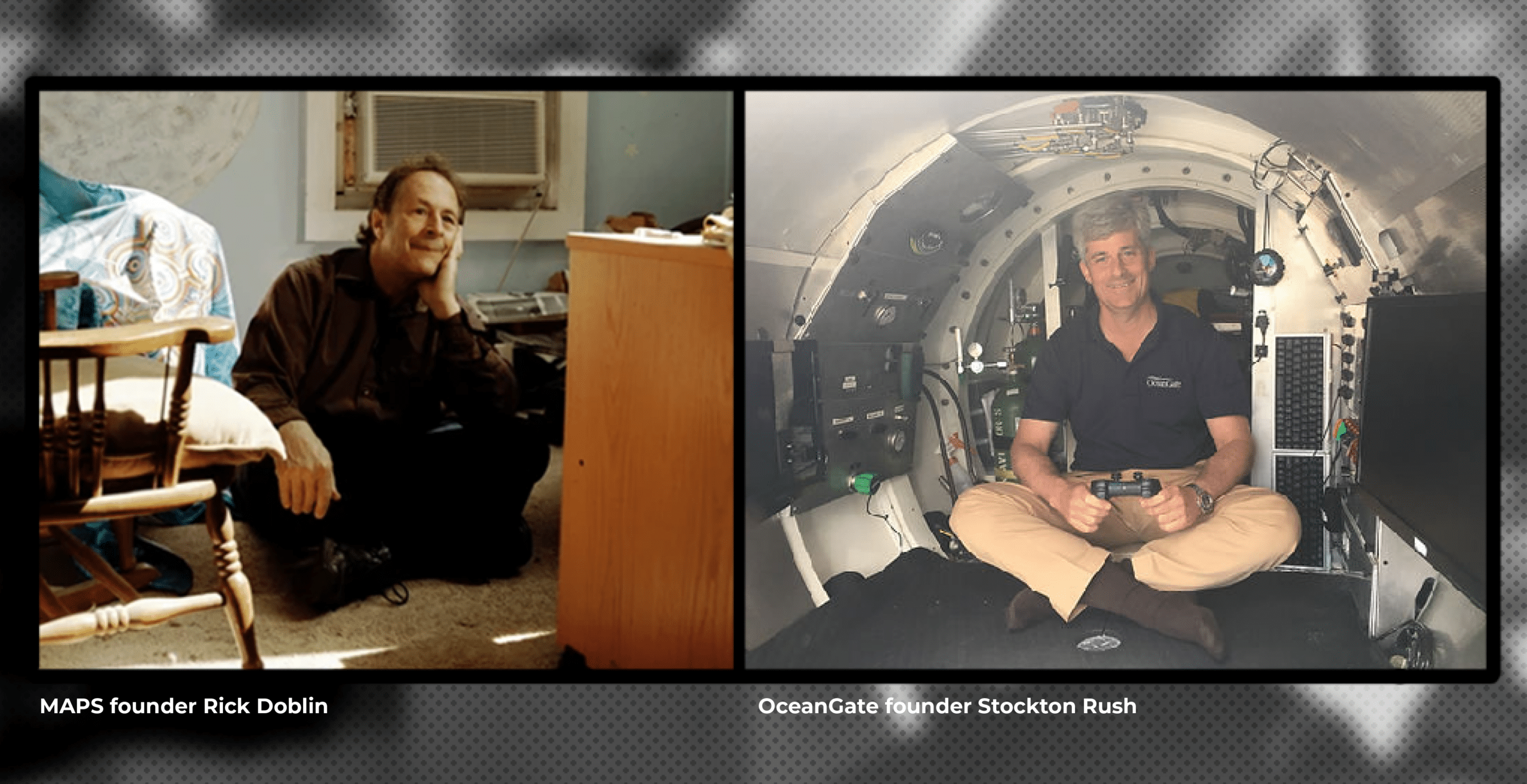 Collage of MAPS founder Rick Doblin and OceanGate founder Stockton Rush | Photo credit: Tony Leuong and Don Wilding, respectively.
Doblin’s anecdotal justification parallels that of OceanGate’s team. In a 2021 press release marking the submersible’s first Titanic dive, PH Nargeolet — who would die alongside Rush two years later — displayed a similar sentiment: “The OceanGate, Inc. submersible, Titan, is a superb demonstration that innovation and safety can go hand-in-hand…. I have completed two deep dives in the Titan submersible…. I have tremendous confidence in this submersible[.]”
This embrace of innovation at any cost is central to the ethos of Silicon Valley. Taken to its extreme, this orientation has given rise to a philosophy of technological “accelerationism” — the belief that speeding up technological advancements will lead to necessary societal transformation.
Many of the psychedelic industry leaders discussed in this report adhere to a philosophy of psychedelic accelerationism. Through the rapid implementation of psychedelic-assisted therapy, groups like MAPS and PSFC intend to transform society by ushering in their vision of “mass mental health.” (In addition to PSFC’s vision of training 100,000 therapists to treat a million patients a year, Graham Boyd has stressed this political urgency to PSFC members, telling them “we are living in a window of political opportunity that may be vanishingly small.”) (📁 Document #19)
The safety risks posed by psychedelic accelerationism become more apparent when viewed alongside Silicon Valley’s effective accelerationism movement (e/acc), which similarly calls for speeding up the evolution of consciousness to avert catastrophe. E/accs assert that dismantling barriers to technological advancement will hasten the development of more advanced and durable forms of consciousness, which will render the existential problems facing humanity obsolete:
“Proponents of rapid AGI [Artificial General Intelligence] development…contend that AGI, with its potential to solve some of humanity’s most pressing problems—including disease, poverty, and environmental degradation—is too important to delay. They view AGI as a revolutionary tool that could enhance human capabilities and drive unprecedented progress.”
In parallel, psychedelic accelerationists argue that humanity’s crises stem from limitations in consciousness — in this case, from a mental health emergency (which is often understood as a spiritual deficiency). The only viable solution, they contend, is a broad societal embrace of psychedelic therapy. As Bronner told Jeremy Lindenfeld, “Psychedelics are upstream from every other issue. It’s how you get people to really heal on a deep level, connect to nature, to their authentic self, to each other and to start grappling with the huge environmental and social crises we’re confronting.” (A recent meta-analysis preprint showed that psychedelic-assisted therapy is “no more effective than open-label SSRIs,” which highlights the hollowness of these claims to innovation.)
Genevieve Jurvetson expressed a similar sentiment in a 2023 email soliciting donations for the Roland Griffiths Professorship Fund: “Here’s a taste of why carrying Roland’s work forward matters…for humanity…in Roland’s words.” The accompanying quotation from Griffiths included these words, in bold: “I truly believe this line of research may be critical to the survival of our species.”
T. Cody Swift — a PSFC member and an heir of the UPS fortune — advanced a similar argument in a 2016 MAPS Bulletin essay on the subject of psychedelic philanthropy. Swift proposed that “psychedelics may help to address the source of almost every other philanthropic effort—from environmental devastation to the volatility in our economic system…. [T]hese global problems may in fact be symptoms of much more subtle cultural and economic patterns than are usually acknowledged.” →
→ EXTRA CONTEXT: Swift’s RiverStyx Foundation has been a major funder of PSFC and its ecosystem of adjacent organizations, including New Approach, Healing Advocacy Fund, Heroic Hearts, and Healing Breakthrough. It has also funded MAPS, Chacruna, Heffter Research Institute, and Johns Hopkins, among many other research and advocacy organizations. In 2023, RiverStyx pledged $250,000 to the Roland Griffiths Professorship at Johns Hopkins.
Doblin has also embraced this vision of psychedelics as a catalyst for global transformation. In a 2019 TED Talk, he declared: “Humanity now is in a race between catastrophe and consciousness, the psychedelic renaissance is here to help consciousness triumph.”
This existential rationale justifies the rapid scaling of psychedelic therapy, which aligns with the driving ethos of e/acc: “Adherents state that e/acc is an absolute moral imperative that we as a society could and should adopt and, in doing so, save us from untimely oblivion. They argue that the guardrails around technological development are slowing us down just when we, the human race, desperately need to speed up.”
Psychedelic accelerationists similarly view regulatory bodies — like the FDA — not as safeguards for public health, but as obstacles to progress. Like e/acc adherents, who deride regulators and critics as “decels” or “doomers,” psychedelic accelerationists label anyone raising safety concerns as “anti-psychedelic activists” or prohibitionists. →
→ EXTRA CONTEXT: Describing the reaction to the FDA decision by people who had worked on the clinical trials, Phase 3 therapist Bessel van der Kolk stated: “Our minds are blown, because our science was so careful…. I was astounded [by the FDA meeting], it sounded like Nixon types…. It’s really just amazing what’s happened. Something to do with drug companies, and pharma, and money, and maybe also the terror that people might feel pleasure.”
As a consequence of this attitude, the FDA’s justified rejection of Lykos’ MDMA-assisted therapy application was interpreted as a deficit of “vision.” In a 2025 MAPS Bulletin essay on “Lessons from MDMA-Assisted Therapy’s Trial by Regulation,” MAPS Phase 3 therapists Sara Gael and Joseph McCowan (also a Lykos board member) described the FDA decision as a failure to surrender to innovation:
“The FDA’s rejection was not a failure of the therapy. It was a signal of the system’s unreadiness — a system still clinging to a paradigm that sees healing as something done to a person, rather than awakened within them. They look at the butterfly and ask it to fly like the caterpillar. But this is not how revolutions move. They do not wait for comfort. They do not ask for assimilation. They arrive when the world is aching for a new way forward. And we are aching…. The therapist holds the lantern while the psyche finds its way. And from that cocoon, something new is born. And yet — despite all of this — the FDA turned it away. Not because the therapy failed, but because they did not know how to receive it.”
By casting safeguards as obstruction and positioning themselves as visionary pioneers, these proponents have fostered a culture that rationalizes unethical practices and standards that would be recognized as unmistakable violations in any mature and regulated industry.
It is no accident that Gael and McGowen describe the FDA decision using the same language that commonly rationalizes abuse by psychedelic therapists. The justifications of abusers follow a recurring script, along these lines: ‘You’re the one with a problem. You are attached to outdated assumptions. It’s not that touching you was wrong; it’s that you don’t know how to receive my touch because of your restrictions and limitations.’
This rhetorical overlap stems from a shared belief among psychedelic accelerationists that the rational mind — the so-called “ego” — is another set of obsolete regulations stifling innovation. As a result, psychedelic therapists often frame their patients’ resistance as “the manipulative and self-sustaining forces of the ego,” which must be subdued.
In Hall’s disclosure of abuse by Aharon Grossbard — the self-described “Virus of Silicon Valley” — he wrote, “After Grossbard encouraged me to use psychedelics in therapy sessions, my critical thinking was set aside in favor of ‘surrender’ and ‘letting go.’ Grossbard told me to ignore my increasing fears about his conduct so I could ‘break through’ my ego and rational mind.”
For Buisson, this type of instruction led to compounded abuse, as she described to ICER:
“On Cortes, every outside connection shattered. My therapists dictated who I could talk to, spend time with, and what I could say. They controlled my income and medical care. I was repeatedly threatened, drugged, exploited, and assaulted. At least a dozen psychedelic therapists, including three conducting Phase 3 trials, visited Cortes during that time and witnessed my harm. But when it came to stopping it, I was on my own. It took a year and multiple attempts amid escalating abuse until I finally managed to escape. […]
“There is no question [of] whether [what] happened to me will happen again to someone else. It’s only a matter of time. This doesn’t negate the lived experience[s] of those who say they’ve benefited from this study. It means they dodged a bullet. Even as this organization [MAPS] promotes itself as a global healer for trauma, its response to patients harmed in their own trials highlights a relentless disregard for minimal standards of care[.] […]
“The irony about Lykos’ therapists[’] talk of the “inner healer” is that they refuse to listen…. The truth is, for 18 months, my inner healer fought back. My inner healer screamed ‘No.’ My inner healer insisted ‘You are not pretending to hurt me, you are hurting me. You are not pretending to assault me, you are assaulting me. You are not pretending to rape me, you are raping me’. I am alive today, and doing as well as I am today, because I listened. The best thing my inner healer said to me was ‘Get away from this cult.’”
Chapter 10: “Avalanche”
In human subjects research, multiple layers of safeguards are supposed to ensure that if a study harms participants and researchers fail to respond, someone else will listen. The breakdown of these safeguards suggests that the emerging industry lacked the necessary protections to ensure participant safety in psychedelic research.
The abuse during Phase 2 can be understood through the Swiss cheese model of systemic failure: multiple layers of purported safeguards failed to adequately respond to Buisson’s warnings, to the extent that an unethical MDMA-AT protocol came perilously close to FDA approval. MAPS was the first point of failure, as it designed a pseudoscientific therapy that rejected standard ethical boundaries. Next, the institutional review board (IRB) — which is supposed to oversee the conduct of research to ensure it adheres to established ethical standards and complies with relevant regulations — failed to identify significant flaws in the protocol and subsequently failed to respond adequately when the foreseeable abuse occurred. Finally, the FDA — which relies on IRB oversight to identify risks in clinical trials — did not communicate with Buisson or fully investigate her claims.
By the time Psymposia raised public attention to this issue, all formal layers of accountability had already failed. Rather than recognizing this public testimony as a final attempt to inform the public and the agency in the interest of public health, supporters of MAPS and Lykos attempted to scapegoat Psymposia for exposing the problem. This misplaced blame overlooked the breakdown of the multi-layered system of protections that was meant to safeguard participants.
Buisson first reported the abuse to the private IRB overseeing her trial (IRB Services, now Advarra) in 2018 — more than six years before the FDA decision on Lykos’ New Drug Application. In her message, which Psymposia has reviewed, Buisson highlighted the urgency of informing federal regulators that the abuse directly resulted from MAPS’s clinical trial design. Now an academic researcher studying the social dimensions of health, Buisson was the first person to identify MDMA-AT as the enabling factor. →
→ EXTRA CONTEXT: In October 2025, the New York Times reported that the same IRB that handled Buisson’s clinical trials — Advarra — pressured employees to “process consent forms faster” and offered bonuses for hitting high numbers. In one study protocol approved by the IRB, volunteers were prohibited from seeing the results of a genetic test showing whether they were predisposed to brain injury from the treatment. “Two high-risk volunteers died and more than 100 others suffered brain bleeding or swelling,” the New York Times reported.
In 2021, Buisson submitted a personal impact statement to the FDA, which called for an investigation into MDMA-AT to protect the safety of future patients:
“Abusive practices were normalized within the clinical framework, as therapeutic and necessary. As video evidence reflects, this included my being blindfolded, gagged, pinned and violated even as I screamed and fought; begging my therapists to stop. Over time, my ‘treatment’ in the MDMA clinical trial included sexual assaults couched as ‘exposure therapy.’ My efforts to maintain agency were dismissed as resistance to treatment, pathologized and overcome.”
The FDA never responded to Buisson.
For its part, MAPS never acknowledged that the on-camera assault was facilitated by MDMA-AT’s emphasis on Grofian “focused bodywork,” which empowers therapists to physically reenact traumatic experiences with their patients as the patients verbally and physically resist.
Stanislav Grof — whose work established the foundation of MAPS’s therapy protocol — recommended that therapists rely on a ‘safe word’ to determine when to stop physically struggling with their patients. In the context of a pharmaceutical drug known to impair both verbal recall and the capacity to consent, this is a safeguard in name only — like sensors for detecting cracks in a carbon fiber hull, thousands of feet below the ocean’s surface. →
→ EXTRA CONTEXT: A commentary on OceanGate’s patents by the patent services firm Markman Advisors offers a revealing parallel to the superficial safeguards in MAPS’s therapy protocols:
“[W]here is the evidence that the patented acoustic detection system would provide sufficient advanced notice for the submersible to escape any impending implosion? The patent…is basically a document that lays out fairly plainly what Stockton Rush may have been thinking, namely, if we have this acoustic detection system, that’s enough to keep us safe. It was just an idea, not a proven concept, and definitely not one proven to the measurable degrees where the danger of 4,000 meters of underwater pressure is sure to intervene.
“Patents do not always tell the whole…story. But they can often tell a different side of the story than the one companies tell publicly. And they can be the starting point for questions and further avenues of diligence. And, as OceanGate’s patents show, they can sometimes be just as revealing for what they don’t show, don’t disclose, don’t test.”
As Grof has described the practice of focused bodywork, “[T]he client has the option to interrupt all the external intervention by a specific agreed-upon signal [e.g., a ‘safe word’]…. Any other reactions of the subject are then ignored and are considered part of the experience. Such statements as ‘You are killing me,’ ‘It hurts,’ ‘Don’t do this to me’…are taken as reactions to the symbolic protagonists[.]” Grof emphasizes that therapists should use their judgment to assess “what constitutes a reasonable amount of pressure or pain” as they physically restrain their patients. This practice was incorporated into the MAPS protocol itself.
In 2015 — the same year that Buisson was abused during MAPS’s clinical trial — Doblin published a paper titled “Stan Grof Contributions to FDA Drug Development Research With Psychedelics.” The last line of the paper’s abstract emphasizes Grof’s centrality to MAPS’s project: “It’s likely that without Stan Grof´s contributions, there would be no MAPS, and I’m so proud to be able to say that I’m a friend of Stan and that he is my professional and spiritual father.”
In that paper, Doblin acknowledges that “the essence of the [MDMA] treatment approach” is a Grofian “death-rebirth” process, and he argued that MAPS clinicians’ “fundamental trust” in this process stemmed from their personal experiences with non-ordinary states of consciousness. Doblin concludes the paper by underscoring how the trials were designed with the mission to spiritualize humanity: “[O]nce [MDMA is] a medicine…we’ll move forward with the training of therapist[s]. […] Then we’ll have world peace, but it might take a little bit of time between those. All of this really comes back to Stan Grof…. And we are coming forward to fulfill the promise[.]” →
→ EXTRA CONTEXT: Michael Pollan was aware of Grof’s influence on the psychedelic ecosystem, as he conveyed in How to Change Your Mind, “Many if not most of the therapists and guides now doing this work underground learned their craft at the feet of Stan Grof in the Big House at Esalen.” The Esalen Institute is a coastal retreat center with natural hot springs in Big Sur, California that is credited with incubating the New Age movement.
In a 2019 email from Joe Green sharing a PSFC-member fundraiser for living expenses to support Grof, Green described Grof as a “psychedelic legend,” writing: “The psychedelic research field is deeply indebted to him and the foundation he helped to lay for today’s research breakthroughs on psychedelic medicine. His latest book, The Way of the Psychonaut is essential reading.”
Published by MAPS, The Way of the Psychonaut, Volume 2: Encyclopedia for Inner Journeys, includes a diagram described as a “synthesis” of Grof’s theories on memory and consciousness. Metaphysical in nature, it shows the influence of astrology and a layered arrangement of various “memory constellations” which extend to prenatal stages and beyond to past life material.
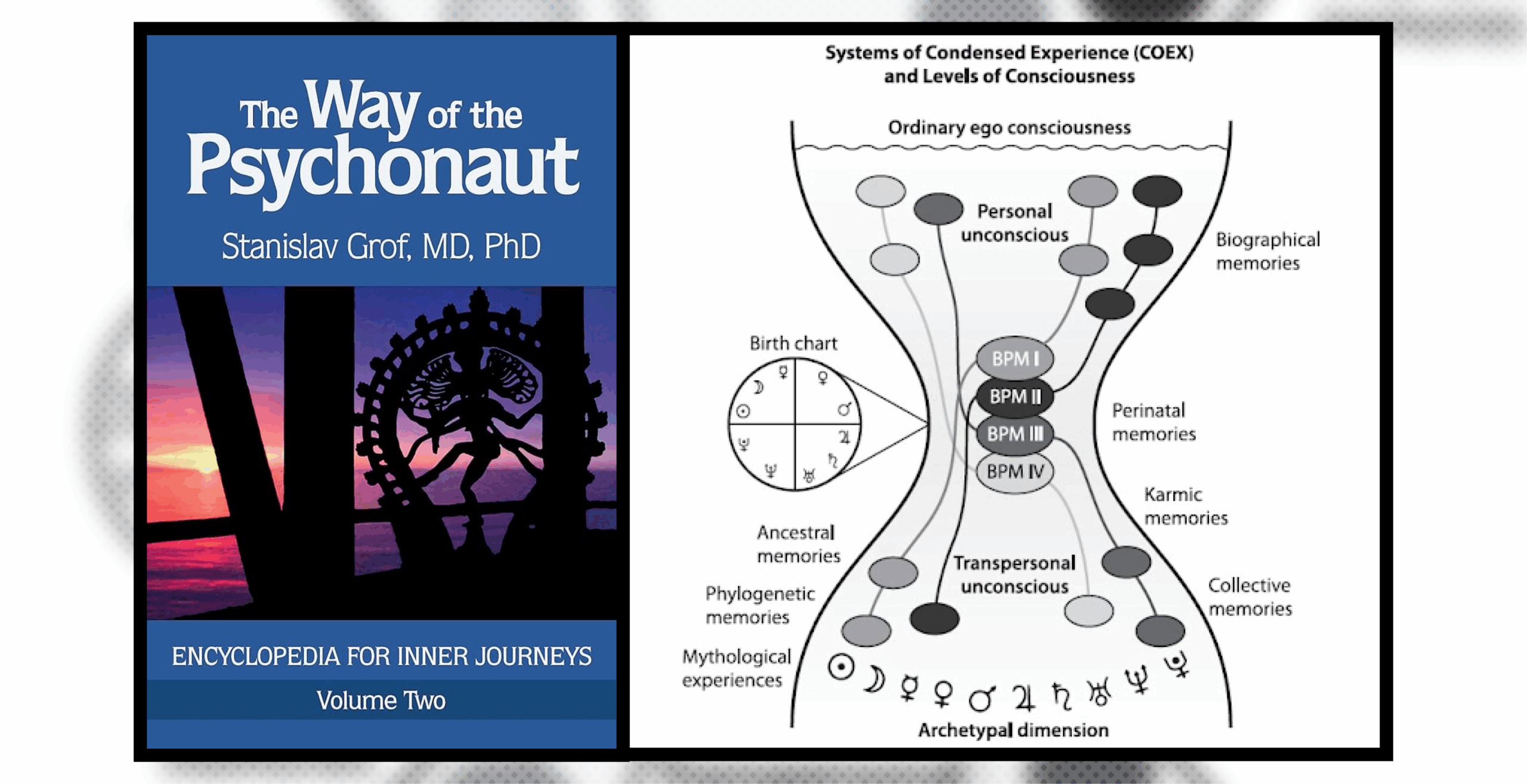
A “synthesis” of Stanislav Grof’s theories. | Source: The Way of the Psychonaut, Volume 2: Encyclopedia for Inner Journeys (2019), Publisher: Multidisciplinary Association for Psychedelic Studies
Among the Grof-trained therapists that MAPS hired for its clinical trials, Richard Yensen and Donna Dryer were appointed as co-therapists for its Vancouver site — the first Health Canada-approved clinical psychedelic research in over 40 years.
Yensen began his career in psychedelics in 1972 at the Maryland Psychiatric Research Center as a research fellow working under then Chief of Psychiatric Research Stan Grof. A MAPS Bulletin article from 1992 refers to Yensen as “the psychedelic Boddhisatva [sic],” and a MAPS tribute banquet for Grof described Yensen as “a pioneering psychedelic researcher.”
Yensen’s professional relationship with Doblin preceded MAPS: In 1984, Yensen was appointed a member of the Board of Advisors to Doblin’s Earth Metabolic Design Laboratories, Inc. — an organization formed to oppose the scheduling of MDMA by the DEA. (Earth Metabolic Design Laboratories disbanded in 1986, the same year Doblin founded MAPS.) After meeting psychiatrist Dryer in 1985, the pair formed the nonprofit Orenda Institute to conduct LSD psychotherapy trials. By 1997, MAPS had donated a total of $6,000 to support these trials. →
→ EXTRA CONTEXT: From 1993 until 2000, MAPS supported Yensen and Dryer’s research and protocol development for LSD-assisted psychotherapy at the Orenda Institute. Yensen reported in a 1997 research update for MAPS bulletin that the Orenda Institute had secured enough LSD to provide 60 patients with five LSD sessions each. Later that year, the FDA placed the LSD study on clinical hold, which effectively ended the project. However, in 1998 MAPS gave Orenda $10,000 to fund an “invitational conference focused on the use of altered states of consciousness in religious and therapeutic contexts.”
In their writings, Yensen and Dryer describe Grof’s theories with high esteem, claiming that his work reveals a connection between the human mind and the structure of the universe:
“Grof offers a rich map of the territory of the inner psychedelic journey. …This is the farthest reaching and most meticulously detailed map of consciousness produced in western scientific research into the human psyche. It links the innermost depths of the psyche with the essential fabric of the universe[.]”
Based on Grof’s framework, the couple described how psychedelics can extend the patient’s “ego boundaries beyond the existing framework of consensus reality” to produce experiences of pre-cognition and telepathy, among other paranormal experiences.
Since at least 1992, Yensen practiced the use of “bodywork” to “amplify the inner feeling state of the patient,” which includes amplifying the patient’s experiences of agony. (In a paper discussing Grof’s theories, Yensen writes that “increasingly intense encounters with death and dying, agony, aging and physical pain” must be fully experienced to reach an “expansive release.”)
Together, these Grofian beliefs — that a therapist may telepathically interpret what a patient needs or feels, and amplify a patient’s experience through physical touch — allowed Yensen and Dryer to justify their abuse of Buisson in MAPS’s Phase 2 trial. Buisson’s experience was the inevitable outcome of this Grofian framework, which was central to MAPS’s project and a cornerstone of its therapy protocol.
The MAPS therapy model euphemistically frames telepathy as attunement to the “relational field,” but descriptions of this concept clearly rely on telepathic assumptions. The Grofian transpersonal framework posits that therapists can access a level of reality where therapist and patient are connected, transcending the normal “ego” distinctions of separation between individuals.
In practice, the MAPS therapy model positions the therapist’s body as a kind of telepathic resonator, capable of detecting and mirroring the participant’s internal psychological states through somatic attunement. In their written submission to the FDA, Devenot argued that this model was elaborated in external materials outside of MAPS’s official protocols, including the book Integral Psychedelic Therapy (2023) which was endorsed by MAPS leadership and featured contributions from MAPS therapists and trainers. After the FDA advisory committee meeting, MAPS/Lykos trial therapists attempted to clarify their therapeutic framework in an article published to Frontiers, which described the same principles euphemistically.
According to the Frontiers article, therapists are trained to use their own physical and emotional responses as diagnostic instruments, believing that “the therapist’s conscious awareness of their own internal and behavioral responses may help to clarify their understanding of the participant[.]” As a consequence, therapists trained in this framework believe they can feel what patients are internally experiencing.
Within this framework, a therapist “first deepens her breath and aligns her subtle behavioral responses with the client’s non-verbal cues, letting her heart open to fully experience the emotional resonance surfacing in the relational field.” The therapist’s body becomes a mystical antenna, supposedly capable of receiving and interpreting the participant’s unconscious material through energetic transmission. This pseudoscientific approach treats the therapist’s subjective bodily sensations and emotional reactions as reliable sources of information about the patient’s inner world, creating a therapeutic model where presumed psychic intuition substitutes for clinical assessment.
This telepathic framework becomes particularly dangerous when therapists use their supposed psychic insights to engage in traumatic reenactments with vulnerable patients (e.g., psychodrama). The model explicitly instructs therapists to “participate as a proxy for a source of the patient’s previously unprocessed trauma,” meaning therapists are encouraged to roleplay as abusers, perpetrators, or other traumatic figures based on their intuitive reading of the patient’s unconscious needs.
In an altered and highly suggestible state, the patient may be unable to effectively resist or communicate boundaries while a therapist claims to be acting on mystical insight about their healing needs. This combination of telepathic authority and traumatic roleplay creates a dangerous power dynamic that reframes therapeutic abuse as healing intervention.
When therapists believe they can telepathically sense emerging traumatic material, they may physically restrain, confront, or emotionally provoke patients under the rationale of therapeutic emotional processing. This creates a scenario where a therapist’s subjective hunches about a patient’s trauma history — filtered through their own psychological projections and biases — become justification for potentially retraumatizing interventions. If a patient is subsequently upset about the experience, the model trains therapists to view this as “vulnerability hangover” — a concept that systematically reframes patient distress as a reflection of therapeutic progress rather than potential harm.
Within the therapy model, therapists are instructed to maintain “equanimity” when patients express “disappointment, disbelief, or despair” about their treatment, viewing these reactions not as legitimate concerns but as predictable psychological responses to healing. The framework suggests that patients who later question “whether the feelings of intimacy were mutual” or feel that “something inappropriate” occurred are simply experiencing a defensive response to their authentic emotional expression rather than a sign of actual therapeutic boundary violations.
This interpretive lens provides therapists with a ready-made explanation for patient complaints that deflects responsibility away from their interventions and onto the patient’s psychological resistance to healing. By pathologizing post-session distress as “vulnerability hangover,” the model creates a closed interpretive system that dismisses negative patient feedback as an expected side effect of successful therapy. This framework creates obstacles for patients trying to raise legitimate concerns about harmful treatment, as grievances are reinterpreted as byproducts of the therapeutic process.
Since this pseudoscientific and unfalsifiable therapy already enabled the on-camera assault during MAPS/Lykos’ Phase 2 clinical trial, these methods cannot be ethically deployed in clinical settings.
Despite the dangers of this therapy, one MAPS Phase 3 therapist and supervisor who has trained other MAPS therapists — Veronika Gold — continues to advocate for focused bodywork in psychedelic-assisted therapy. In an interview published on November 12, 2023, she noted that her private practice — Polaris Insight — had trained over 2,600 therapists in this intervention. (The front page of Polaris’ website states that “The Polaris Insight Center in San Francisco…was founded by clinicians from the Multidisciplinary Association for Psychedelic Studies [MAPS].)
In a since-deleted interview with Dr. Sandy Newes, published on March 27, 2025, Gold emphasized that therapists can help patients process the “energy of a fight” by enacting the role of a perpetrator while the patient is in an altered state. (In a later WIRED article by John Semley, Gold describes this practice as “reparative fantasy” through “role-play,” with Gold using touch “in character as the patient’s abusive father.”) →
→ EXTRA CONTEXT: In this WIRED story, Semley describes Gold’s position, stating that “[Devenot is] misrepresenting what actually happened,” claiming that Devenot’s statement to the FDA was drawn solely from a book chapter by Gold describing ketamine therapy with a patient. These false claims overlook the fact that Gold herself has acknowledged using this approach during the MDMA clinical trials, and that Devenot’s FDA testimony included an account from a Phase 3 clinical trial participant under Gold’s care.
During the article’s production process, a WIRED fact-checker characterized a false claim from Semley’s draft: “There’s a different situation that you brought up, in which a person was pinned down. And he [Semley] notes that that incident was taken from a ketamine-assisted role-playing therapy, and it had nothing to do with MAPS, Lykos, or MDMA.” (The false claim that this “role-play therapy” was unrelated to MAPS’s clinical trials did not appear in the final publication.) This pattern of misrepresentation appeared across multiple major outlets. A New York Times story by Andrew Jacobs and Rachel Nuwer dismissed Devenot’s testimony, reporting: “Ms. Gold said the incident did not happen, a claim backed up by Lykos, which said it reviewed videos of her therapy sessions.” (This article is explored further in chapter 11).The narrative questioning Devenot’s credibility was promoted by ex-VICE reporter Hamilton Morris, who has repeatedly accused Devenot of lying to the FDA. (In 2021, Psymposia reported that Morris had ended his long-running show — Hamilton’s Pharmacopeia — to work for Peter Thiel-funded pharmaceutical company Compass Pathways.) In a conversation with psychedelic comedian Adam Strauss, on an episode titled “The Conspiracy to Derail Psychedelic Therapy,” Morris called Devenot’s testimony “a federal crime” and “a criminal act,” claiming: “She’s [sic] reading from a script…. This was prepared in advance knowingly — a knowing misrepresentation. And I refuse for a moment to believe otherwise. She [sic] knew exactly what she was doing, and no one noticed.” Elsewhere, Morris praised the journalists who have questioned Devenot’s account: “Really, like, there’s two journalists — Rachel Nuwer and John Semley — who’ve really worked very hard to do this, but the majority of journalists have just uncritically repeated the narrative as it has been presented to the public.”
Morris continues to spread accusations that Devenot lied to the FDA, even though two independent organizations — the peer-reviewed American Journal of Bioethics and TEDx — have vetted Devenot’s analysis of Gold’s statements.
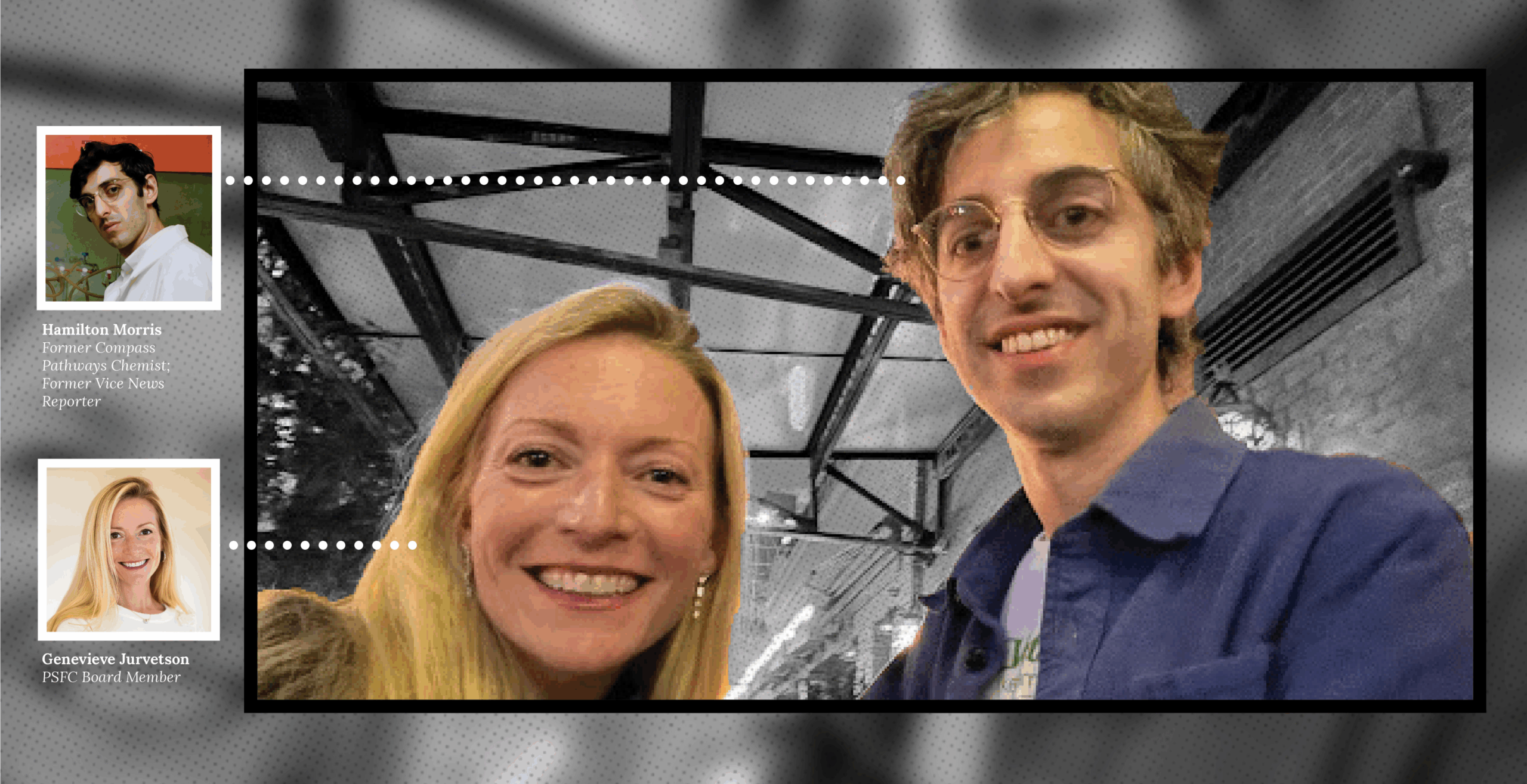
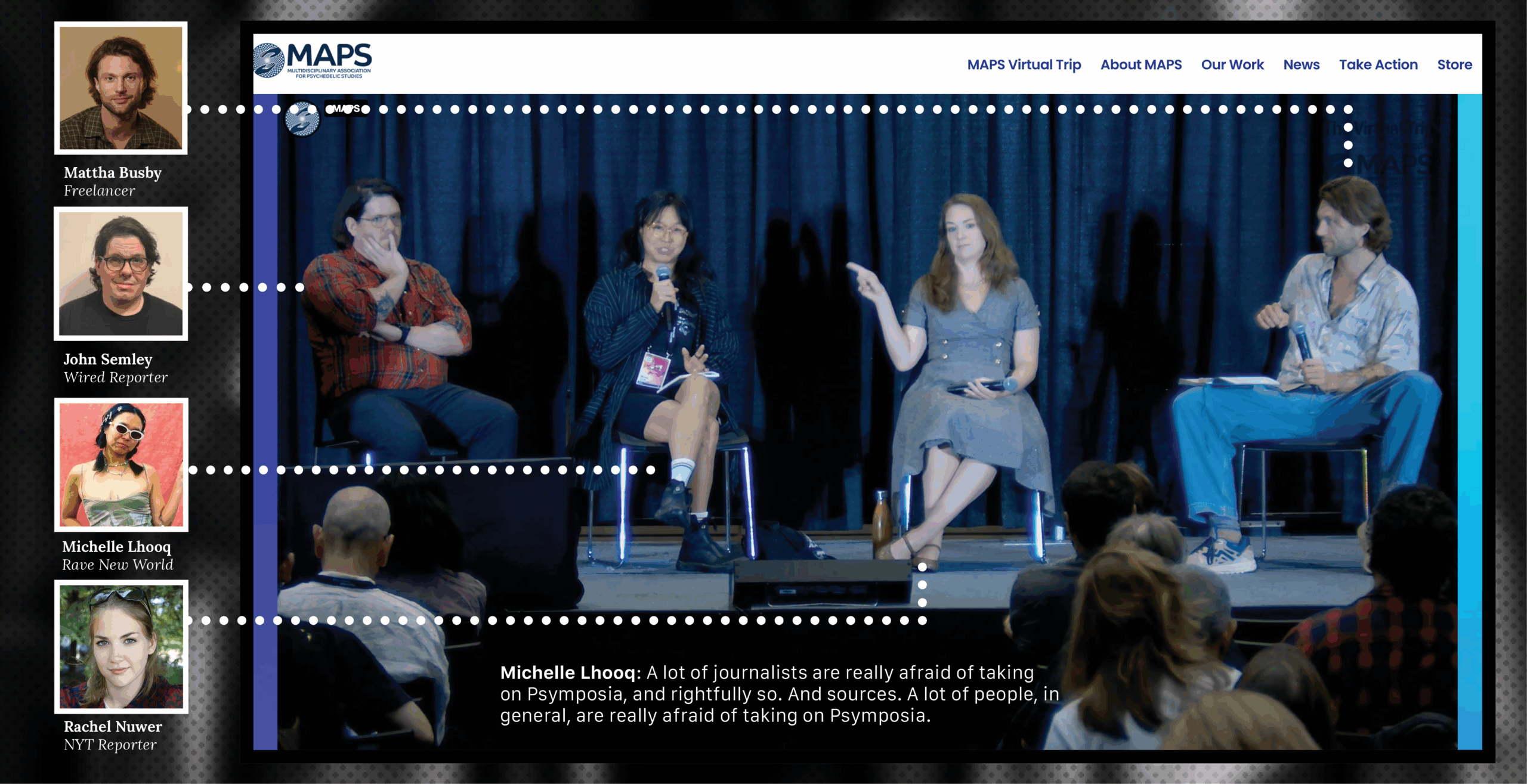
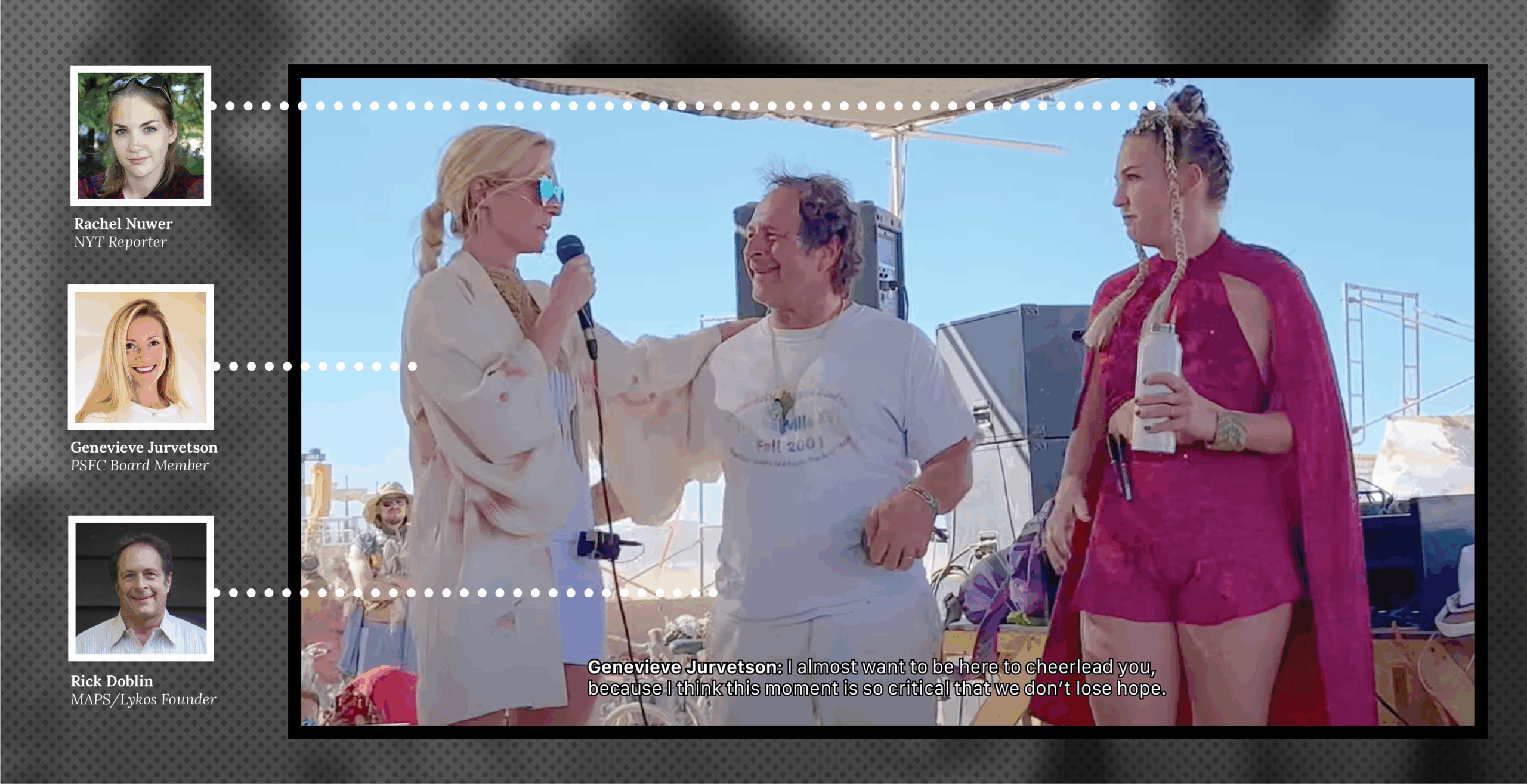
1) Genevieve Jurvetson and Hamilton Morris in New York City, September 2024. Source: Steve Jurvetson, Flickr, Creative Commons 2.0, 2) Michelle Lhooq speaking at “The Dark Side of Psychedelics” panel at MAPS Psychedelic Science 2025, 3) Genevieve Jurvetson, Rick Doblin, and Rachel Nuwer give a talk at Burning Man 2024
In the March interview, Newes thanks Gold for defending the practice in Jacobs and Nuwer’s New York Times article, noting the broad adoption of focused bodywork across the psychedelic industry: “You know, like, what if there was a world in which that was somehow made like, not okay? Because I personally find it to be a huge part of the clinical work that I do[.]”
The bodywork methodology endorsed by Veronika Gold is widely promoted across the psychedelic training ecosystem. One prominent international training program developed by advocates of this methodology is VITAL, a “comprehensive education course” for practitioners “seeking to integrate psychedelic knowledge into their practice.” VITAL was created by Joe Moore and Kyle Buller, certified Dreamshadow breathwork practitioners who host the Psychedelics Today podcast. (Dreamshadow’s founders, Elizabeth and Leonard Gibson, were trained in Holotropic Breathwork — the practice developed by Stan Grof — and Elizabeth was a contributor to MAPS training protocol).
Excerpt from deleted “Living Medicine” interview with Veronika Gold
Psychedelics Today’s 2024 “Psychedelics at Work” report highlights a commitment to propagating underground methodologies: “At Psychedelics Today, we are committed to acknowledging the contributions of the underground…. Through necessary civil disobedience and the passing of ancestral knowledge, they have paved the way for a future where psychedelics can be more widely understood and embraced…. [W]e will ensure the underground remains a recognized and integral part of this field and conversation. We will not forget them.”
In a 2023 Psychedelics Today podcast episode, Moore and Buller discuss a Grofian principle that was foundational to the MAPS therapy model — namely, that trauma is processed by intensifying distress. As Moore described:
“You know, this idea that you kind of need to…really intensify the sensation, in — the phrase Stan [Grof] loves is, ‘The full expression of an emotion is its funeral pyre.’ So… we want to encourage people in this method to make it bigger, and bigger, and bigger, and therefore this thing has less and less energy, and therefore less influence over your subconscious process through having it dissipate, energetically.”
In a 2018 podcast where Moore and Buller discuss the “components and mechanics of breathwork,” they endorse the same reliance as Gold on a “safe word” to mediate touch during reenactments of trauma. As Buller stated:
“When we’re engaging in bodywork like that, the only word that we respond to is ‘no’ — or [actually] ‘stop,’ sorry! […] Some people could sit there and scream at us, and tell us to get off of them. We would typically kind of see that as psychic material arising, especially if somebody might have had, like, an abuse background, and they’re kind of reliving that… So, the magic word is ‘stop.’”
Although Buller struggled to recall the appropriate safe word during a casual podcast conversation about the modality, he does not pause to consider the implications of relying on a safe word when patients are in altered states, and experiencing flashbacks on high doses of psychoactive drugs known to impair verbal recall.
A 2024 interview with Buller on Psychedelic Support’s YouTube channel emphasizes the consequences of training facilitators to believe they are telepathically attuning to the participant’s inner experience. Buller recounts an incident revealing how wrong such intuitive interpretations can be. He describes how facilitators trained in the Grofian concept that the “birth process really impacts our psychology” have projected this assumption on participants to justify bodywork. Buller euphemistically describes bodywork as “a supportive process to help somebody express their experience.” He acknowledges that bodywork can cause harm when a facilitator’s confidence about the participant’s inner experience is misplaced. He shares an account where this dynamic plays out:
“There is a facilitator that saw somebody curling up in the fetal position…. So one of the facilitators comes over and starts to coddle them, and tries to push them through the birth canal. And during the group share [afterwards], the person said, you know, ‘I was a Viking warrior dying on the battlefield’ [e.g., not a birthing baby]. So, you know… sometimes we think we know what’s going on with folks when they’re deep in those experiences, but sometimes we have no idea, and I think that is an important perspective to hold.”
In this example, the facilitator physically “coddle[d]” and “push[ed]” the participant based on a false assumption that the participant needed to fully express their birth trauma, under the permission structure of Grofian bodywork. →
→ EXTRA CONTEXT: Buller acknowledges that this example comes from Grof’s Holotropic Breathwork book, where Grof describes an “incident” at Esalen. In Grof’s account, a “postmenopausal woman” whose emotional drive to mother the participant interfered with her judgment about the participant’s experience: “In the middle of the Holotropic Breathwork session, in which she was sitting for a young man, she suddenly pulled the upper part of her partner’s body into her lap and started to rock and comfort him. Her timing could not have been worse; as we found out later during the sharing, he was at the time in the middle of a past life experience that featured him as a powerful Viking warrior on a military expedition. He described with a great sense of humor how he initially tried to experience her rocking as the movements of the boat on the ocean; however, when she added comforting baby talk, that brought him back to reality.”
Buller acknowledges that bodywork is “where harm happens,” particularly when a facilitator wants to intervene physically “because [they] think [they] know what’s going on with somebody.” Rather than questioning whether their methods are inherently flawed, Buller attributes the problem to external factors like the facilitator’s anxiety and lack of experience. His proposed solution involves better cultivating the capacity to attune (e.g., telepathy) through the facilitator’s own inner work and advanced training.
As these examples illustrate, the actions of Yensen and Dryer during MAPS’s Phase 2 clinical trial were not an aberration; they were in line with the Grofian therapy model that the MAPS protocol was designed to legitimize.
Despite MAPS’s claims to the contrary, the therapists’ behaviors captured on video followed the MAPS protocol, which incorporates Grof’s framework sanctioning the use of touch to amplify distress as a therapeutic intervention. The periods of struggle and spooning documented in the videos represent standard elements of what the Grofian tradition terms “focused bodywork” and “nurturing touch.” Because the MAPS therapy manual explicitly sanctions these Grofian techniques, the protocol itself enabled the abuse of this trial participant.
The 2022 MAPS Statement: Public Announcement of Ethical Violation by Former MAPS-Sponsored Investigators acknowledged that Yensen and Dryer “substantially deviated from the MDMA-assisted Therapy Treatment Manual on several occasions,” yet it offered no specifics about the nature of those deviations. The earlier 2019 statement made no mention of any deviations. →
→ UPDATE 10/13/2025, 9:45 PM EDT: According to Buisson, who is a contributor to this report, the narrative MAPS presented in the 2019 statement is not an accurate version of what transpired. This includes MAPS’s framing of the abuse as a “sexual relationship.” Due to frequent misreporting on this incident, Psymposia published “A Resource for Journalists Covering Sexual Assault in Psychedelic Therapy” in 2023.
The longest explanation of purported deviations is found in Doblin’s discussion with Psychedelics Today, where Doblin says the therapists failed to sufficiently emphasize the Grofian concept of the “inner healing intelligence.” According to the 2021 therapy adherence manual, however, “[t]herapists do not have to use the specific terminology of ‘inner healing intelligence,’ but they should be observed to introduce the concept of inner healing intelligence (the innate ability to heal and grow) and convey their trust in the participant’s process.” The participant has stated that the therapists did introduce this concept.
Doblin elaborates that in the Grofian approach, “you don’t need to manufacture intentionally provocative things to bring people to…address their trauma” because it will naturally “emerge in some order” from the participant’s own “[inner] healing intelligence.” (In this context, “in some order” refers to Grof’s claim that traumatic scenes will emerge in the order that is most accessible for processing by consciousness.) Doblin continues, “You don’t need to reenact it, although psychodrama is not an unknown approach in therapy[.]”
Despite this public denial of MAPS’s responsibility, these claims contradict Grof’s emphasis on reliving trauma with facilitators acting as perpetrators, which MAPS’s safe word protocol was designed to facilitate: “This [safe word] convention will avoid confusion between communications that are meant to be directed to the therapists and statements that are expressions of the participant’s inner experience.”
Doblin claims the video shows “elements of touch that we think were over a certain line,” but he provides no specifics about where this line is. Based on the public clips from this video, the therapists’ uses of touch were consistent with the literature on Grofian focused bodywork and nurturing touch. Doblin’s second criticism reveals another contradiction: he identifies “a lack of double checking consent,” yet the Grofian framework empowers therapists to use intuition to evaluate whether verbal refusals of consent are legitimate.
After the clinical trial abuse came to light, MAPS should have responded like the Coast Guard responded to the OceanGate disaster, conducting a thorough investigation and releasing a public report detailing the factors that contributed to the harm and the specific changes being implemented to prevent future incidents. A responsible response would have involved adding granularity and specificity about acceptable uses of touch in its therapy, establishing clear boundaries and protocols based on the lessons learned. →
→ EXTRA CONTEXT: On August 5, 2025, the Coast Guard released a 300-page Report of Investigation (ROI) regarding the Titan submersible. In addition to identifying OceanGate’s “toxic safety culture” as a contributing factor, the report highlighted governmental failures by regulators to properly investigate concerns and protect whistleblowers who faced retaliation for raising these concerns years prior to the disaster. This constellation of exacerbating factors are also relevant to the circumstances surrounding MAPS and Lykos.
Instead, MAPS took the opposite approach: they included minimal discussion of touch in their subsequent training and instructed therapists who lacked experience with Grofian and other somatic modalities to avoid looking into the touch-based interventions being used at other trial sites. As one interviewed MAPS clinician acknowledged, “I felt completely unprepared to be able to offer [touch]” given the inadequate guidance in MAPS’s therapy training after the abuse came to light.
According to MAPS Phase 3 study therapist and Principal Investigator Casey Paleos, “We were taught [by MAPS that] if you’re already certified in one of these somatic-oriented psychotherapies, or somatic therapies…for trauma that involve touch, and you have proficiency in doing that, and that’s part of your scope of practice, that’s okay.” When asked about acceptable uses of touch at other trial sites, Paleos responded with laughter:
“I don’t know, because I’m not a somatic therapist. But for those of us who weren’t trained as a somatic therapist, what we were taught is you shouldn’t be trying to learn a new skill around touch therapy to be a part of this clinical trial. That was — we were explicitly told not to do that, because this is not the right circumstance for you to be learning this from scratch.”
MAPS’s minimal response represented an abdication of responsibility rather than a genuine effort to address the underlying problems that had enabled the abuse to occur.
In the months before Buisson first contacted the IRB about the dangers of MAPS’s therapy model, she wrote a prescient passage about the implications of her experience in an unpublished essay, “Collateral Damage” (2017):
“There is little debate about what happened. There is much that remains to be answered. On the precipice of psychedelic legalization, is my experience an avalanche poised to unfurl over MAPS or a singular speck of inconvenience? My time in the clinical trial is done. My former therapists are no longer physically present. But his words, her apathy and MAPS’ silence echo loudly. “In the context of research,” Doblin explained in a conference, “it’s okay to have harms, if the benefits balance.” Sitting in the audience that day, I found the phrase offensive. Chilling, in fact, to hear the man spearheading an organization set to make incalculable profits through the legalization of MDMA openly state the end justifies the means. And if clinical participants are harmed in the process? Oh well. It’s collateral damage.”
In the years since Buisson’s experience, Doblin has continued to express a tolerance for “collateral damage.” In a January 19, 2022 email shared with Psymposia, Doblin endorsed the same idea that Buisson had overheard at the earlier conference: “I’m not confident that there will be no unintended consequences, I just think any will be minimal compared to the good we will be doing. We are developing a metric to evaluate public benefit but it’s still in the early stages.” This thought-terminating cliché has functioned to prevent scrutiny of the dangers of MAPS’s therapy. →
→ EXTRA CONTEXT: MAPS leadership has been involved in two wrongful death lawsuits. In 2022, MAPS was ordered to pay $1 million in damages to the family of Carla Gatlin after being found 25% liable in her death at a MAPS Zendo Project site during the Lightning in a Bottle festival. Gatlin’s death from hyperthermia while allegedly wrapped in blankets represents a foreseeable risk of practices that interpret physical distress as part of a therapeutic “rebirthing” process. In 2024, Dr. Bronner’s was sued in a wrongful death lawsuit by the family of deceased employee Denize Lozano, whom the complaint alleged died from “MDA / MDMA in a non-clinical setting” while seeking “treatment and relief as part of the company ‘wellness’ program.’” (David Bronner, CEO of Dr. Bronner’s, is a MAPS board member.) According to the lawsuit, Lozano “was told on several occasions that the company’s philosophy around injury is that ‘physical pain is past emotional trauma leaving the body’ and the wellness program was intended to facilitate this transformation.” In 2025, the lawsuit was resolved out of court.
Although Doblin believed that MAPS’s therapy protocol would lead to world peace by providing insight into human psychology, his initiative was paradoxically derailed by its architects’ failure to examine their own hubris. If MAPS had sincerely grappled with Buisson’s experience and the practices which justified it, they could have adjusted their approach to be more ethical and scientific. Instead, their refusal to critically examine the pseudoscientific foundations of their therapy ultimately contributed to the collapse of Lykos’ FDA application. Once professional organizations outside the psychedelic milieu — like ICER and the FDA’s advisory committee — began evaluating Lykos’ trials, the design flaws were swiftly identified and subjected to rigorous scrutiny.
As this scrutiny from professional bodies mounted, the FDA officially denied Lykos’ New Drug Application, triggering a rapid-fire series of hardships for Lykos. In a Reverse Uno that collapsed PSFC’s house of cards, the FDA asked Lykos to complete an additional Phase 3 MDMA-AT study — a feat that would require millions of dollars and multiple years to complete.
The avalanche gained momentum when, days later, the journal Psychopharmacology retracted three of Lykos’ papers about MDMA-assisted therapy due to “protocol violations amounting to unethical conduct[.]” →
→ EXTRA CONTEXT: The retraction notice published in Psychopharmacology explained that multiple authors were aware of research protocol violations at the time the articles were submitted, but did not disclose this information to the journal or remove data generated by violating research sites.
Just days after these retractions, Doblin stepped down from Lykos’ board of directors, and the company announced sweeping layoffs — cutting 75% of its workforce, or nearly 100 employees. On September 5, 2024, Lykos’ longtime CEO Amy Emerson stepped down and was replaced by Moderna veteran Michael Mullette as interim CEO.
Chapter 11: “Make America Rave Again”
As the psychedelic narrative spiralled out of their control, PSFC’s insiders pitted their hopes on the incoming Trump administration as a “deus ex machina” solution to their problems.
Speaking alongside Steve Jurvetson at the DLD conference in January 2025, Genevieve Jurvetson expressed enthusiasm about the incoming Trump administration’s receptivity to psychedelic medicine: “I think the Trump administration will do more to advance psychedelic therapy and access and healing, and thereby advance mental health, than any previous administration.” In light of this favorable political climate, she acknowledged her ambition to accelerate the approval of MDMA-AT, without the need for additional Phase 3 trials: “In the next year, my ‘moonshot’ is to get MDMA across the finish line.”
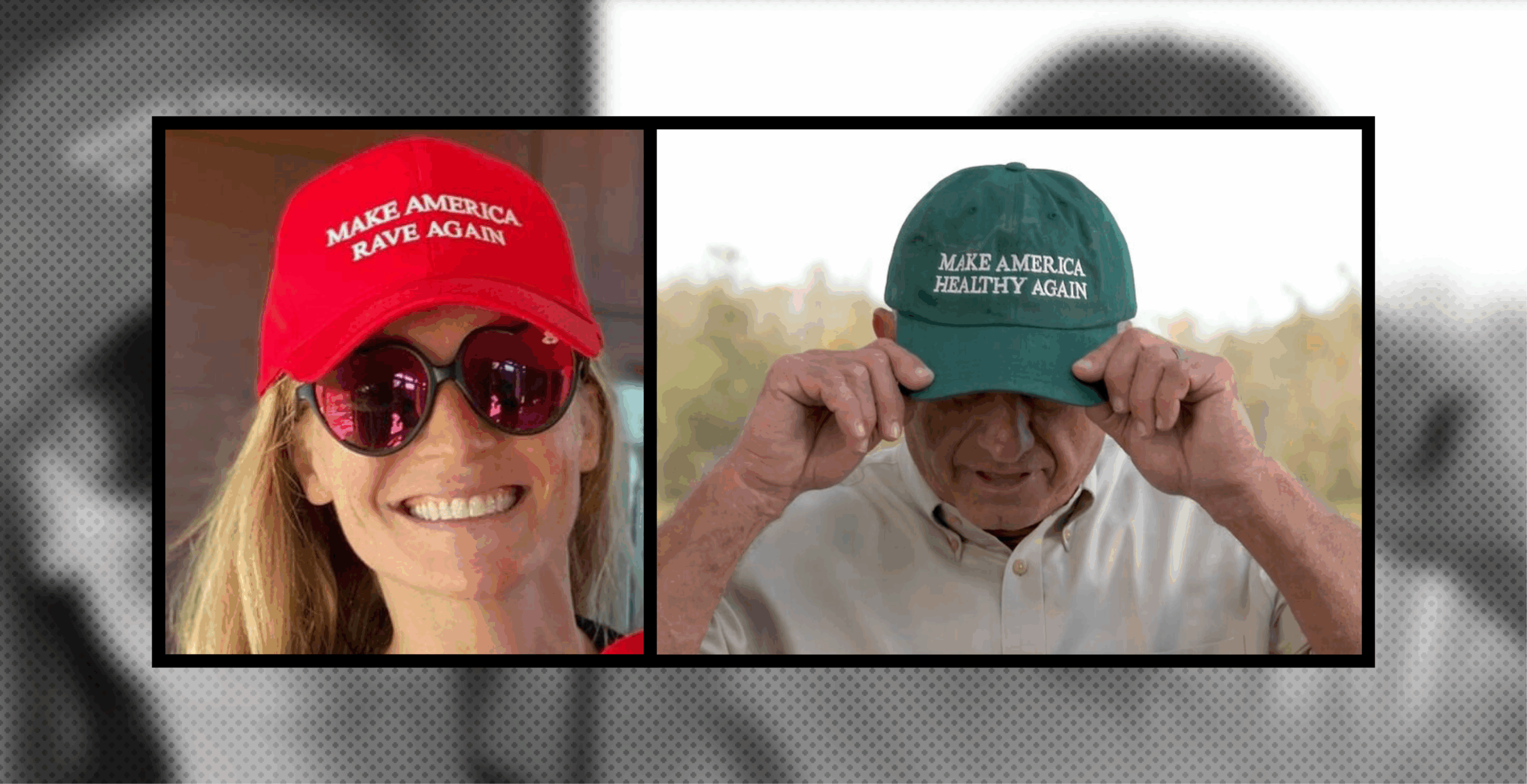 Photo collage of Genevieve Jurvetson wearing a “Make America Rave Again” hat and RFK Jr. wearing a Make America Healthy Again hat. Many advocates of the psychedelic pharmaceutical industry hope that the Trump administration will fast track psychedelic approval.
The Jurvetsons had other reasons to be optimistic about Lykos’ ability to bounce back. Antonio Gracias — Steve Jurvetson’s fellow SpaceX board member and a PSFC network donor — had thrown the pharmaceutical company a lifeline.
The week prior, Financial Times had reported that Elon Musk ally and early Tesla investor Gracias was attempting to “seize control” of Lykos, with Doblin’s endorsement. Gracias’ proposal would grant him controlling stake in the company in exchange for a large cash infusion. On May 30, Lykos confirmed Gracias’ involvement, announcing that a Series B funding round co-led by Gracias’ Family Foundation and European billionaire Chris Hohn’s CH Foundation raised $50 million to recapitalize the company. (According to reporting by Jules Evans, Doblin persuaded Gracias to invest in Lykos during Burning Man 2024.)
One “moonshot” strategy came into focus the next month, when The New York Times published a work of fictitious propaganda framed in inflammatory culture war rhetoric that is popular with Trump’s MAGA base. The article, titled “How a Leftist Activist Group Helped Torpedo a Psychedelic Therapy,” pinned blame on Psymposia for the FDA’s rejection of Lykos’ application, providing a convenient narrative for discrediting the agency’s decision. Its authors — Andrew Jacobs and Rachel Nuwer — ignored multiple factors that contributed to Lykos’ failure, leading journalist Katie MacBride to write in Slate that the article “was largely divorced from the events as I witnessed them, misleading in crucial ways, and journalistically bewildering.” (Psymposia responded to article’s false claims in “Correcting the Record: Addressing The New York Times’ Deceptive Coverage of Psymposia.”) →
→ EXTRA CONTEXT: Two weeks after the New York Times publication, Andrew Jacobs spoke with KJZZ radio in Phoenix for a spot titled “How an FDA authorization hearing on MDMA led this New York Times reporter to shadowy [sic] organization.” In his account, Jacobs further inflated Psymposia’s presence at the FDA’s advisory committee meeting: “[Y]ou had seven or eight separate experts who were all singing the same tune. And I think that helped create this atmosphere of doubt [about Lykos’ application].” As Devenot responded on their Subtack, “The reality of the matter — which is damning for MAPS/Lykos — is that the critical presentations during the meeting’s open comment period were not coordinated. The fact that these critical presentations were so complementary reveals how credible these concerns actually were.”
The conditions for scapegoating Psymposia were created by Lykos’ decision not to release the FDA’s Complete Response Letter explaining the application’s rejection. Exploiting this information vacuum, multiple people who read the letter selectively reported on its contents to the New York Times. In particular, these anonymous sources described concerns about treatment durability, positive bias due to participants’ prior MDMA experiences, and missing data on euphoria and other “positive adverse events” that could motivate drug-seeking behavior. Rather than interrogating these flaws, the article shifts blame to anti-drug stigma supposedly fueled by Psymposia, which it describes as “a small band of anticapitalist activists [that] helped sink the first psychedelic compound to come before the F.D.A.”
Right-wing commentators picked up on the culture war dog whistles. Speaking on Timcast channel “Spaces with Josie” in a clip dated February 11, 2025, radio show host Scott Horton referenced Jacobs and Nuwer’s New York Times article to claim that “some stupid…avowed communist group” obstructed soldiers’ access to life-saving MDMA therapy to enforce an anti-profit ideology: “They successfully lobbied the central state to decide this for 350 million Americans, whether we’re allowed to treat each other with MDMA or not. It’s completely insane! Like we’re all the children and they’re the grown-ups, except that they’re not! They’re scum! They [Psymposia] barely deserve to live at all!” Horton’s co-panelists proceeded to laugh at this implicitly threatening language. (Timcast CEO Tim Pool joined the Trump administration’s White House press pool the following month, in March 2025.)
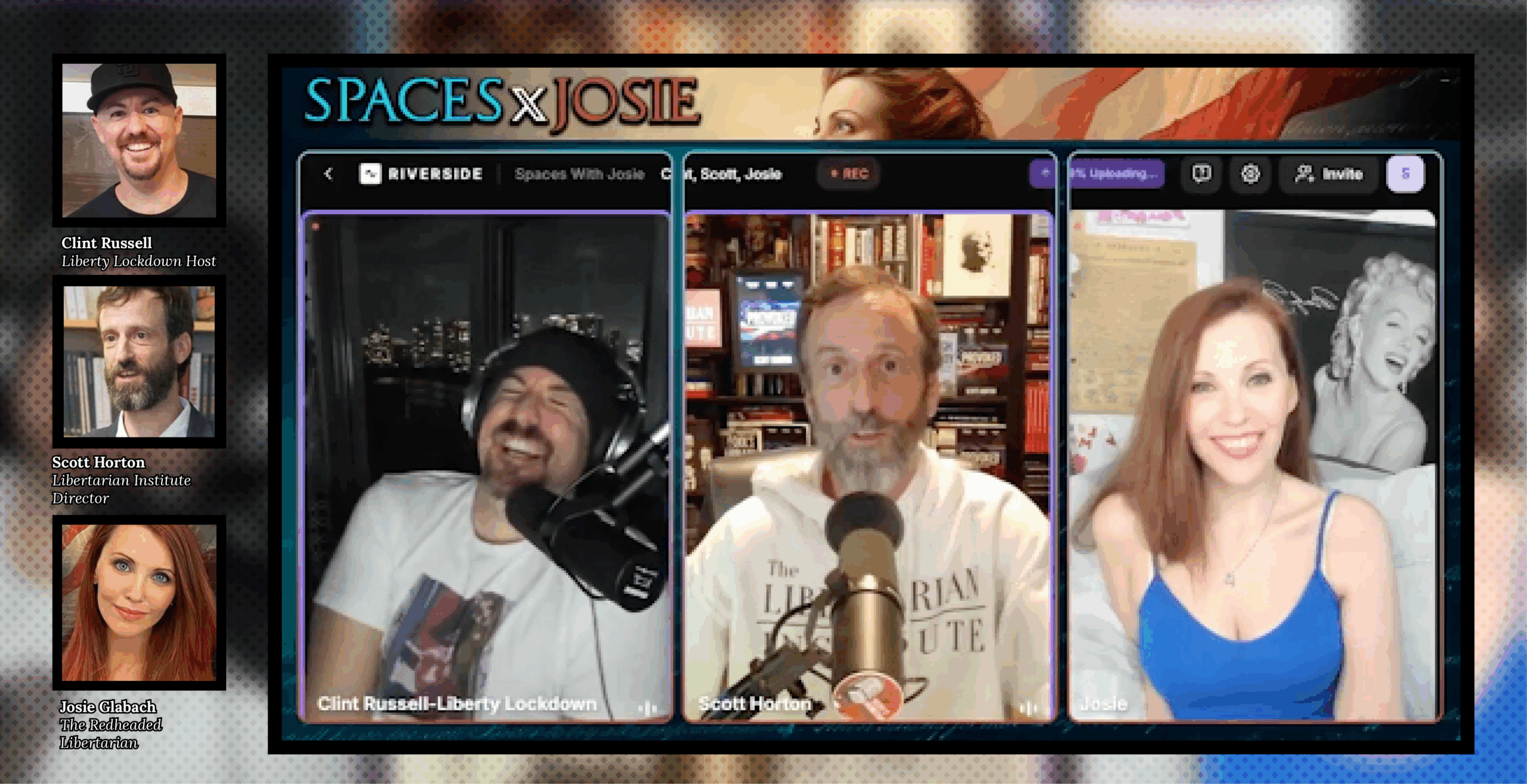 Josie Glabach and Clint Russell react to Scott Horton calling Psymposia “scum” who “barely deserve to live at all.”
In a context of rising political violence, the framing of the New York Times article — using inflammatory culture war rhetoric to blame Psymposia for ‘torpedoing’ Lykos’ application and implicitly leading to the deaths of veterans — was like generating sparks next to a tank of gasoline.
Nuwer’s orientation towards MAPS and against Psymposia was evident in the lead-up to this article’s release. In August 2024, while reporting for the New York Times article, Nuwer participated in a panel discussion at Burning Man alongside Doblin and Genevieve Jurvetson. A video compilation of the event was later uploaded to YouTube by Genevieve Jurvetson’s husband, SpaceX board member Steve Jurvetson.
In December 2024, Nuwer appeared on Open to Debate — a national media program distributed by NPR — for an episode titled “Psychedelics for Mental Health: Help or Hype?” When Nuwer was invited to pose a question to the featured debaters, Nuwer instead read from a prepared statement that promoted a conspiracy theory about Psymposia:
“I think what people aren’t realizing is that this has actually been an agenda pushed by members of a specific radical leftist group that has had the long-term goal of destroying MAPS and Lykos, that’s been driven by personal grudges and also an anti-capitalism, anti-commodification of psychedelics agenda. These allegations have just been uncritically accepted because they’ve been tapping into stigma surrounding these drugs and created a sort of ‘Satanic Panic’-type hysteria in the media.”
On the day of publication, Nuwer posted about the New York Times article to LinkedIn, writing: “I’ve spent six long months reporting on a leftist psychedelics group whose activism played a role in derailing the MDMA application last summer. It’s been a disturbing journey.”
In light of Jacobs and Nuwer’s disinformation about Psymposia in The New York Times, Nuwer’s proximity to the Jurvetsons and PSFC is noteworthy. In 2022, Nuwer was one of the inaugural recipients of a $10,000 grant from the Ferriss–UC Berkeley Psychedelic Journalism Fellowship. For Valentine’s Day 2024, the Jurvetsons hosted a PSFC Book Club discussion centered around Rachel Love Nuwer’s book, I Feel Love, which included virtual participation from both Nuwer and Berkeley’s Gül Dolen. A post on Twitter/X and Flickr about the event showcases a photo of the Jurvetsons beaming next to Nuwer’s book.
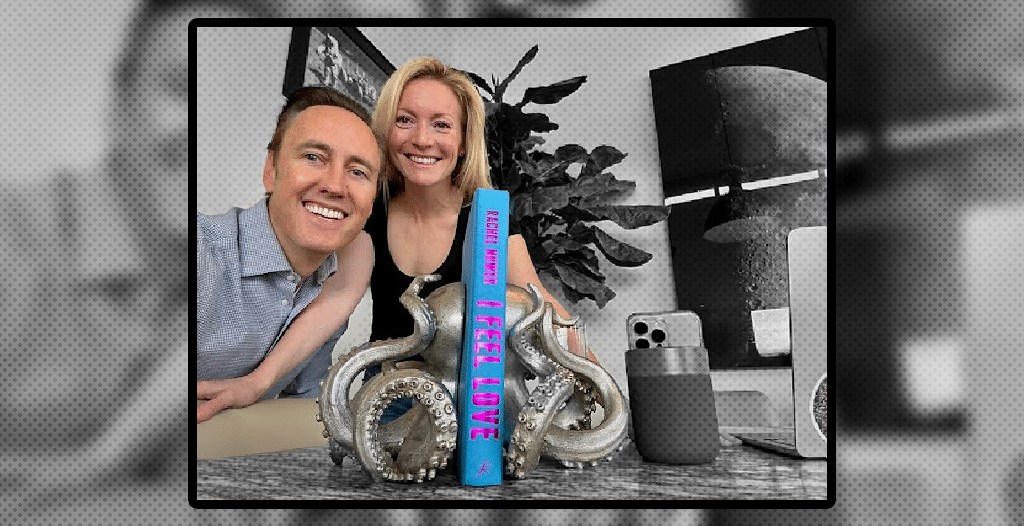 Steve and Genevieve Jurvetson | Source: “I Feel Love book discussion with Gul Dolan »——♥♡——>” Steve Jurvetson, Flickr, Creative Commons 2.0
Around the time of Genevieve Jurvetson’s public appearance alongside Nuwer at Burning Man, Psymposia received information that the Jurvetsons were pushing for an exposé on Psymposia in The New York Times. This knowledge informed Psymposia’s request to record Devenot’s video interview with Jacobs and Nuwer on November 4, 2024. →
→ EXTRA CONTEXT: During the interview, Devenot told Jacobs and Nuwer that Psymposia had been contacted by people who experienced harm and who lacked the means to recover: “And then, when I try to come forward and say, ‘I think there’s something here that we need to look at more carefully, and be sure that we’re doing this the right way’ — then I get attacked. Then I get death threats. And that’s — it’s a signal that there’s something going on in this field that is not rooted in concern for the most marginalized patients who are going to be seeking this [treatment].” Devenot’s motivations for their FDA testimony were not included in Jacobs and Nuwer’s article.
Several weeks prior to Genevieve Jurvetson’s Burning Man event with Nuwer, Steve Jurvetson shared Heroic Hearts’ open letter in a since-deleted tweet and falsely claimed that Psymposia is “a fringe group backed by big-pharma, who would want to torpedo a 71% cure.” The title of the New York Times article mirrored this language: “How a Leftist Activist Group Helped Torpedo a Psychedelic Therapy.”
Jacobs and Nuwer’s distorted piece — which was published the same day that RFK Jr.’s nomination for Secretary of Health and Human Services advanced past the Senate Finance committee — included an appeal from psychedelic advocates to the new administration: “Some advocates hope that the Trump administration will take a friendlier approach [to psychedelics]. They note that Elon Musk, a presidential adviser, and Robert F. Kennedy Jr., the nominee for health secretary, are vocal supporters of psychedelic medicine.” The timing of these appeals is consistent with a coordinated effort to influence public perception and federal policy.
These appeals overlooked serious concerns about the individuals cast as champions of psychedelic medicine in Trump’s administration. Musk’s recent fascist posturing, far-right sympathies, and increasingly erratic behavior raise questions about the judgment behind such endorsements. According to reporting in the Wall Street Journal, figures close to Musk have attributed his increasing instability to his frequent use of drugs, including LSD, MDMA, mushrooms, ketamine, and cocaine. On May 30, 2025, public discussion of Musk’s drug use intensified after his awkward White House send-off, which coincided with a New York Times report alleging that he had sustained bladder damage from chronic ketamine use. One of the Times’ journalists, Kirsten Grind, had previously identified three individuals in PSFC’s donor network — Gracias, Kimbal Musk, and Steve Jurvetson — as members of Musk’s drug circle in reporting for the Wall Street Journal. (Kimbal Musk also serves on the board of directors of Burning Man.)
Prior to Musk’s White House implosion, others in Musk’s orbit publicly defended his increasingly unstable behavior. Following Musk’s Nazi salutes, Gracias took to Twitter/X to defend him, stating: “I have worked closely with Elon for over 20 years. His heart is pure, and his sole mission is to help humanity. During the darkest moments, he has shown me the path to choose courage and compassion over fear and hate. To believe anything else is absurd.”
For over two decades, Gracias has been one of Elon Musk’s closest lieutenants, and his “dynastic” wealth was built from investments in Musk’s companies. Described as “the most hardcore of Musk’s loyalists,” Gracias approved an unprecedented CEO compensation package that was later struck down in court due to the board’s personal entanglements with Musk. Gracias also played a pivotal role in securing financing for Musk’s $44 billion acquisition of Twitter. According to Vanity Fair, Gracias demonstrated this loyalty to Musk while pressuring Twitter to close the deal: “Are you saying no to Elon Musk?” In 2024, Gracias was described by Quartz as one of the “biggest donor[s] on file” to Musk’s pro-Trump super PAC, having donated $1 million in funding.
Musk tapped Gracias to make deep cuts at the Social Security Administration (which Musk described to Joe Rogan as “the biggest Ponzi scheme of all time”) as a member of the “Department of Government Efficiency” (DOGE). In a Wall Street Journal opinion piece titled “The DOGE Plan to Reform Government,” Elon Musk and Vivek Ramaswamy assert that President Trump has given DOGE a mandate to “cut the federal government down to size.” They state that the organization would be working “closely” with Project 2025 co-author and “key architect” Russel Vought, in his role as head of the Office of Management and Budget. (According to Financial Times, Gracias resigned from his position with DOGE in late July 2025 after pressure from the American Federation of Teachers, which uses Gracias’ firm Valor as a money manager.)
Gracias’s role in these efforts extended beyond bureaucratic restructuring. During the 2025 Wisconsin Supreme Court race — where Musk spent a historic $25M bid to elect Republican candidate Brad Schimel — Gracias joined Musk on stage to spread disinformation about immigrants, social security, and voter fraud.
Although DOGE failed to achieve its stated objectives, it succeeded in curtailing investigations into Musk’s companies, dismantling scientific research, and causing mass deaths from malnutrition and malaria due to the defunding of USAID programs. Much like a fungus secreting enzymes to break down a leaf before consuming it, DOGE eroded public trust in government infrastructure, softening it for capture and privatization by a rising techno-fascist alliance.
While billionaires and their political allies advertise psychedelics as disruptive innovations for healthcare and spirituality, their exuberant narratives serve as permission structures for enacting antisocial policies that inflict widespread illness and despair.
Doblin spent his career arguing that psychedelics were the only safeguard against genocidal fascism, but in the end, he handed his project to figures aligned with U.S. authoritarianism, while MAPS Israel is treating soldiers who contributed to the ongoing genocide and ethnic cleansing in Gaza.
As the internal power structure at Lykos shifts, RFK Jr. — Trump’s Secretary of Health and Human Services (HHS) — is doing everything in his power to reignite Lykos’ bid for approval. In June, Kennedy responded to a question from Rep. Dan Crenshaw about accelerating access to psychedelic therapies, saying that he is “working very hard to make sure” there will be access to psychedelic medicine within 12 months. Some commentators have interpreted Kennedy’s comments as a signal that the FDA will approve Lykos’ MDMA-AT without a new Phase 3 trial — exactly the “moonshot” that Genevieve Jurvetson hoped could be achieved through the Trump administration.
As one industry insider told Evans, “The HHS deck is well and truly stacked with pro-psychedelic figures. It’s almost too stacked, like, don’t show your hand so much.” Politico reported that Kennedy’s support for psychedelics has “revived hope among psychedelics’ advocates that the Lykos decision was more hiccup than death knell.”
While Lykos’ supporters await the outcome of their federal lobbying efforts, PSFC and other psychedelic boosters are continuing to hedge their bets. With a medical route in limbo, they are embracing an alternative path to legitimization through organized religion.
Continue reading in Part 4.
The Psychedelic Syndicate: Part 4
Part 4 of The Psychedelic Syndicate reveals PSFC’s strategy to manufacture spiritual and moral authority through academic capture — even as some members align with far-right ideologies that deepen the very crises psychedelics are meant to heal.