
The Psychedelic Syndicate: Part 4
How Silicon Valley Used Veterans to Hijack the Psychedelic Industry
Principal authors: Neşe Devenot, PhD; Russell Hausfeld; Brian Pace, PhD; and Brian Normand. Contributing authors: Meaghan Buisson and James Curtis.
Executive Summary | Part 1 | Part 2 | Part 3 | Primary Documents | Download PDF
A year-long investigation reveals how a small group of Silicon Valley elites sought to capture the psychedelic therapy industry — using a network of affiliated organizations to scapegoat critics while pressuring regulators to approve their botched MDMA clinical trials.
Part 4 of The Psychedelic Syndicate reveals PSFC’s strategy to manufacture spiritual and moral authority through academic capture — even as some members align with far-right ideologies that deepen the very crises psychedelics are meant to heal.
Editor’s Note: We sent detailed requests for comment to 54 individuals and organizations named in this report, but some did not respond to requests before publication. We invite any parties who wish to respond to the reporting in this article to contact us at research [at] psymposia [dot] com. Any substantive responses will be published as updates to this article or as separate pieces, at our editorial discretion.
Content Advisory: This report contains descriptions of physical abuse, sexual abuse, and coercive control in the context of psychedelic therapy.
Legal Review: Every claim has undergone rigorous pre-publication legal review. Psymposia received legal support from ProJourn, an innovative pro bono program operated by the Reporters Committee for Freedom of the Press. Psymposia is a member of Reporters Shield, an organization developed by investigative journalists at the Organized Crime and Corruption Reporting Project and lawyers at the Cyrus R. Vance Center for International Justice, which defends investigative reporting around the world from legal threats meant to silence critical voices.
Chapter 12: “Wound Becomes Portal”
At Burning Man 2023, PSFC member Steve Jurvetson facilitated the creation of a lavish art installation titled “Chalice to Eleusis.” The project’s production team — House of Fabl — described it as “one of the largest and most technically complex art projects on the Playa.” With materials weighing over 10 tons, the project combined a large-scale chalice structure with a drone show of 1,000 synchronized drones, which flew to a choreographed soundtrack produced by The Glitch Mob’s Justin Boreta.
The production was created in “narrative collaboration” with Brian Muraresku, whose 2020 book — The Immortality Key — informed the project’s description: “The ways of Eleusis were lost to history; now in this moment, the past is being revealed. Encased underground and locked away in hidden libraries for nearly two thousand years, the mysteries of our cultural roots are now finally being exposed.”
Muraresku’s thesis — that psychedelics played a formative role in the origins of Western civilization — offered the possibility of a direct lineage from ancient Greek mystery cults to Johns Hopkins’ present-day research on psychedelic-induced mystical experiences. In both contexts, the death-rebirth process is portrayed as granting insight into the indestructibility of consciousness and the ultimate nature of reality. →
→ EXTRA CONTEXT: Reporter Travis Kitchens reported that multiple researchers referenced as sources in Muraresku’s book feel that Muraresku has co-opted their work for ulterior purposes. One of those researchers, Patrick McGovern — who is cited 20 times in Muraresku’s book, and briefly advised Muraresku — told Kitchens: “Brian ingratiated himself to me to get as much out of me as possible, promised that he was being objective…then produced a book very much at odds with those goals, and instead promoted his psychedelic mysticism agenda to the general public, from the sounds of which he has been greatly profiting.” Other researchers used as sources in the book who have expressed skepticism about Muraresku’s conclusions include scholars Carl Ruck, David Hillman, Kevin Clinton, Jan Bremmer, Bart Ehrman, and Chris Bennett.
Muraresku devotes the epigraph of his book to a Greek inscription that encapsulates this premise: “If you die before you die, You won’t die when you die.” These words — which encased the rim of a giant chalice sculpture at Burning Man — were inscribed across the night sky by 1,000 drones, above the heads of 70,000 Burners. Jurvetson captured a photo of this moment, which he posted to Twitter/X with a caption: “The drones evangelized the message across the lands…” This eight-minute aerial “evangelism” featured an animated sequence of Western religious imagery and iconography projected above the playa.
 Interaction between Steve Jurvetson and Brian Muraresku on Twitter, discussing House of Fabl’s art display.
Calling the project “an homage to The Immortality Key,” Jurvetson took part in unveiling the giant chalice to Muraresku on the playa:
“It was his first burn: the full moon rose with perfect timing, the curious crowds flocked to explore and try to decipher the messages and generative-AI portraits (where the psychedelic ergot elixir would have rested at the bottom of the chalice bowl), while hearing echoes of their voices reflected weirdly within. Then… biblical flooding [occured]… and hitching a ride out [of Burning Man] with Chris Rock and Diplo. Totally normal for a Greek history scholar.”
In one of Jurvetson’s photographs of the interior of the installation, a generative-AI portrait of Elon Musk drinks from a golden chalice.
 AI-generated imagery inside chalice sculpture | Source: Steve Jurvetson’s Flickr (Creative Commons 2.0)
Elon Musk’s sister-in-law, Christiana Musk, features in a short documentary about the art installation, stating: “Burning Man is the closest thing that I think we have today to a modern Eleusis. People come for a process of collective transformation, and they emerge changed.” →
→ EXTRA CONTEXT: Christiana Musk is credited with producing the narrative that accompanied the drone show: “If you die before you die, you won’t die when you die. Enter this temple. Where each breath is adoration of the infinite for the incarnate form. These practices are a nectar I share with you. Drink from this chalice whenever you crave to be refreshed in the essence of life. Know this is available to you for the universe is made out of it. Go to the intersection of flesh and spirit. Breath the tiny sparks that fly. Within this very body are many gateways to the infinite. Secrets are hidden in the darkness. Right here, wound becomes portal. You have arrived. Native of eternity, at home in infinity. Breathing immortality. This is reality. And it is always here. Everyone craves the source and it is always everywhere. If you die before you die, you won’t die when you die.”
Through this art installation, Musk’s billionaire circle leveraged Burning Man to broadcast a different kind of “permission structure” than the medical model for mainstreaming psychedelics. While Lykos surveys the wreckage of their medical-regulatory blunder, PSFC has been advancing a parallel path to societal acceptance of psychedelics: reengineering religion by leveraging the academic humanities.
When reached for comment, Muraresku distanced himself from the project of mainstreaming psychedelics through any model. “I can think of no medical or religious institution, no psychedelic church, no Grateful Dead concert that will be able to deliver the kind of experience that literally takes centuries or millennia of iteration to perfect, and that has undeniably gone missing from Western civilization,” Muraresku wrote. →
→ EXTRA CONTEXT: Muraresku referred Psymposia to a talk he gave at Harvard Law School in February 2025 in which he criticized the “three general domains of the psychedelic conversation today: medical, religious, ritual.”
On the subject of medical mainstreaming, he wrote of “warped incentives embedded into the for-profit pharma model … racing to scale to maximize a bottom line’. Simply put, money + psychedelics need to get divorced, and stay divorced.” Regarding the religious use of psychedelics, he “forecasted ‘a disaster down the road,” citing “the warped incentives of recruiting and retaining members of a congregation,” the “weaponization of mind-altering drugs,” and the likelihood of cults developing. On ritual use, he wrote that “whatever genuine psychedelic rituals have been preserved by traditional cultures the world over, they ‘are best left uncorrupted by Western minds.’”
Muraresku asked Psymposia to remind “‘the psychedelic world’ that I have never attended their conferences, and never will. And to please stop inviting me to conversations.” He concluded his email by stating that he would like to “get the word out to everybody in the psychedelic community: ‘please leave me the fuck alone’.”
Michael Pollan points to the alternative path being embraced by PSFC in a new preface for The Immorality Key’s 2023 paperback edition:
“This is one of those books that, once read, can’t be unread: by the time you get to the end, the history of religion, not to mention our culture, will look very different, and, at least for me, make a lot more sense. But The Immortality Key makes another valuable contribution as well: it pushes the psychedelic renaissance into the realm of the humanities and culture, which may well be its next, and most exciting, chapter.”
Pollan’s new preface appeared the same month that Harvard University announced a major psychedelic humanities initiative — the Study of Psychedelics in Society and Culture — thanks to a historic $16 million gift from Antonio Gracias’ Family Foundation.
In addition to connecting initiatives across Harvard’s Faculty of Arts and Sciences, Law School, and Divinity School, the program funded cohorts of researchers to pursue “collaborations at the intersections of psychedelics and humanistic inquiry.” Harvard’s cohorts would cooperate with a sister program at UC Berkeley’s Center for the Science of Psychedelics and the Center for Interdisciplinary Critical Inquiry, which was funded by Christiana and Kimbal Musk’s Flourish Trust. →
→ EXTRA CONTEXT: In a May 2024 tweet celebrating the announcement of the inaugural cohorts at Harvard and Berkeley, Muraresku claimed that Pollan was central to the development of both of these PSFC-funded humanities initiatives: “None of this would have been possible without the stewardship of Michael Pollan, or the goodwill of so many friends and colleagues at both Harvard and Berkeley. Most especially, this pioneering effort is indebted to the generosity of the Gracias Family Foundation and the Flourish Trust.” When reached for comment, Muraresku said that he and Pollan “helped structure a grant program between Harvard and Berkeley” with “no involvement of PSFC whatsoever.” (However, as this report has demonstrated, several key figures involved with this program are affiliated with PSFC).
While earlier major university gifts centered on psychedelic science, these announcements marked an expansion of PSFC’s influence toward shaping cultural perspectives on psychedelics. In effect, PSFC was engaging in cultural engineering using Silicon Valley’s playbook for mass influence: shaping markets by shaping minds.
Steve Jurvetson — who is credited with coining the term “viral marketing” — sought to replace the corrosive “mind virus” of traditional religions with a futuristic alternative: a “science-embracing meme” that could act as a “positive attractor for humanity.” In 2017, Jurvetson argued that “mimetic countermeasures” are necessary to combat “infectious bad ideas,” which he identified as “the biggest barrier to democratizing the future.”
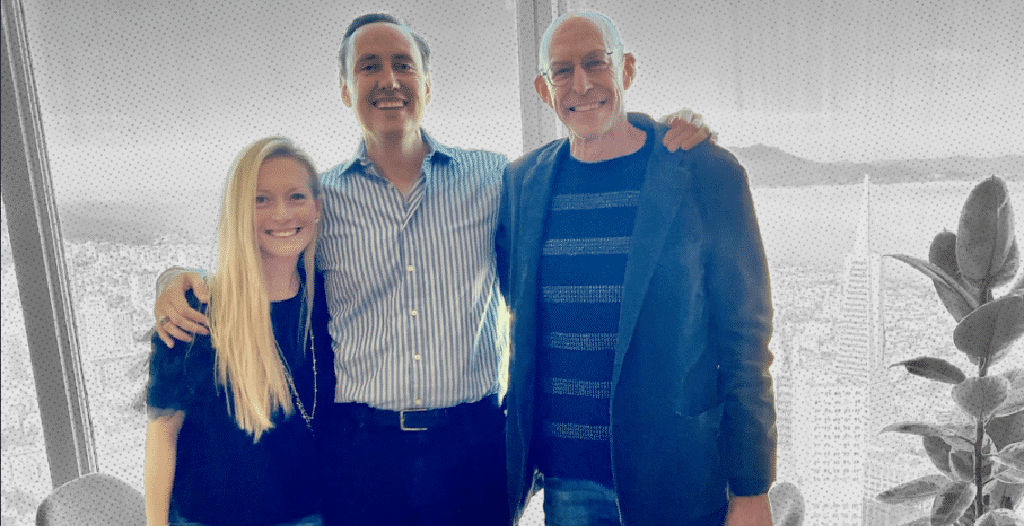 Genevieve and Steve Jurvetson pose with Michael Pollan | Source: Steve Jurvetson’s Flickr (Creative Commons 2.0)
According to TechCrunch, Jurvetson has said that “one tech-related concern with religion is that it appears to be a positive feedback loop to the accelerating rich-poor gap, as the disenfranchised opt out of modernity.” As the poor turn to traditional religion to cope with societal insecurity, they effectively “opt out of the vector of progress” just as the pace of technological change accelerates. To Jurvetson, securing acceptance of Silicon Valley’s vision for the future requires answering this question: “how can our culture and the very fabric of society co-evolve with our technologies during the transition?”
In this context, it’s clear that Jurvetson identified psychedelics as an infectious “countermeasure” to reprogram the religious impulse in Silicon Valley’s favor.
This lens offers a rationale for PSFC’s support of psychedelic research as a performative tool to advance its members’ aims and beliefs. One example of such research is the Johns Hopkins and New York University religious leaders study, which received funding from PSFC member T. Cody Swift’s Riverstyx Foundation and former PSFC board member Bob Jesse’s Council on Spiritual Practices.
Published in May of 2025 under the title “Effects of Psilocybin on Religious and Spiritual Attitudes and Behaviors in Clergy from Various Major World Religions,” this research ostensibly investigated how psychedelic experiences might influence spiritual understanding and vocational effectiveness among clergy from major religious traditions.
Steve Jurvetson shared Pollan’s May 2025 New Yorker article about this study in a post on Twitter/X: “What happens when religious leaders have a direct spiritual experience [facilitated by psychedelics]? Michal [sic] Pollan’s report reminds me of the mysteries of antiquity: ‘virtually all the religious leaders I spoke with reported an encounter with the divine. One talked about having ‘a spiritual orgasm.’”
While it might seem strange that Jurvetson — who identifies as an atheist — is hyping a religious leaders study, this promotion highlights the study’s strategic role in shaping the cultural ‘permission structure’ that the psychedelic industry is building. According to the study’s funders and its lead researcher, Roland Griffiths, this cultural engineering project was the actual purpose of the study since its inception.
Hopkins researchers initially framed the study in a 2016 advertisement as investigating whether psilocybin can “help deepen spiritual lives.” Griffiths was more candid about his broader intentions in a 2021 interview with Jordan Peterson, which has since garnered over one million views on YouTube. (Peterson acknowledged knowing Griffiths for decades, and both have been associated with Bob Jesse’s Council on Spiritual Practices.)
Reflecting on the psychological benefits of psychedelic experiences, Griffiths shared that “I’ve concluded — it sounds to some like an overstatement, but I don’t think it is — that actually unpacking this whole situation is crucial to the survival of our species.”
To achieve this existential purpose, Griffiths emphasized that the long-term viability of psychedelics depends not just on their therapeutic or spiritual utility, but on transforming the cultural and institutional frameworks surrounding their use: “We have to evolve the cultural institutions that can create the containers around these experiences — such that they don’t threaten our existing institutions, which are going to become reactive and demonize them and shut it down.”
From this conversation, Peterson inferred that the study’s true purpose was to fold “figures of significance in religious communities” into Griffiths’ broader project of social engineering: “You’re doing that as a scientist [e.g., evolving the respected cultural institution of Johns Hopkins], and now you’re inviting religious leaders to participate in that process.”
Bob Jesse — who was instrumental in creating both PSFC and the psilocybin research team at Johns Hopkins — shares similar beliefs to Griffiths. In his talk at MAPS’s Psychedelic Science 2013, titled “Reconstruction of Religion and Johns Hopkins Psilocybin Findings,” Jesse contends that religion causes substantial harm on a global scale as it ossifies into dogma. To counter this harm, he argues that religion needs to be reconnected to direct mystical experience to “keep it vital” and transform it into “a very great good on planet earth.”
Jesse draws on aikido — the Japanese martial art — as an analogy to illustrate the necessity of merging psychedelics with existing religious institutions: “If something is coming at you, instead of harming it, to stop it from harming you — you blend with it. You see its energy coming, you calculate trajectory, you blend with it. And once you’ve blended with it, then you can take it into a safe direction.”
Jesse’s perspective reveals that the psychedelic industry’s social engineering efforts were already underway long before the creation of PSFC — to the extent that PSFC’s formation can be seen as one calculated move within a larger strategic game.
Formerly a Vice President of business development at the technology company Oracle, Jesse had deep roots in Silicon Valley. Even after he left Oracle to found the Council for Spiritual Practices (CSP) — an organization “dedicated to making direct experience of the sacred more available to more people” — Jesse continued to identify as an engineer:
“Why is it important for you to know that I’m an engineer? Well, scientists and scholars are interested in truth, so at the end of the day…they go to sleep being satisfied that they’ve discovered something that they’re convinced is true. Engineers, by contrast, like to build things…. [They] feel satisfied because something exists in the world that didn’t exist before…. At the end of the day, just know that there are people in the room who are more concerned with ‘ultimate truth’ than I am.”
It was in his capacity as an engineer that Jesse went on to initiate the original Hopkins psilocybin research program. It was also in this capacity — as engineer, rather than scientist — that he would co-author not only the recent 2025 religious leaders study, but also its predecessor: the 2006 paper that Pollan would reference as the genesis of the so-called psychedelic renaissance. Its title: “Psilocybin can occasion mystical-type experiences having substantial and sustained personal meaning and spiritual significance.” (According to Sam Shonkoff, a scholar of religion at the Graduate Theological Union, the Hopkins team had already attempted to enroll “theologians and religious leaders” for this 2006 study, but they “had trouble with recruitment” at this earlier stage.)
Before joining forces with Roland Griffiths at Johns Hopkins, Jesse had first approached Dr. Rick Strassman — the psychiatrist who restarted human psychedelic research in the U.S. after its prohibition, using intravenous dimethyltryptamine (DMT) — to lead a study on whether psilocybin could induce mystical experiences. But Strassman ultimately declined, wary of “contribut[ing] to [the same] delusion” that he believes led to the failure of the 1970’s Spring Grove experiments. As Strassman later described, the Spring Grove researchers — who were experimenting with LSD — believed they had uncovered evidence of spiritual truths, and this belief superseded alternative explanations for their participants’ experiences: “They [i.e., the researchers] got religion. They stopped being scientists. They figured they had discovered a panacea, which was only now a question of determining which conditions [psychedelics] would be helpful for.” →
→ EXTRA CONTEXT: In contrast to the conclusions of the Spring Grove researchers, Strassman told Travis Kitchens that he believes psychedelics don’t have any inherent mystical or spiritual effects beyond those caused by specific sets and settings. The current psychedelic “renaissance,” he says, is essentially the emergence of a new mystico-scientific religion “camouflaged by scientific studies and statistical firepower.”
Strassman explained that the Spring Grove researchers ultimately lost government funding due to their departure from scientific inquiry into religious advocacy. They interpreted patients’ experiences of religious concepts under the influence of psychedelics as empirical evidence confirming their own preexisting beliefs, and — rather than exploring alternative explanations for those experiences — prioritized disseminating what they viewed as revelatory findings to the public. This departure from scientific methodology transformed the project from an objective investigation into a vehicle for propagating religious convictions, thus compromising its scientific legitimacy and funding prospects.
After Strassman’s refusal, Jesse turned to one of the very scientists-turned-evangelists behind the Spring Grove research — Dr. Bill Richards — to collaborate on this research into psilocybin and mystical experiences. In an interview titled “Roland Griffiths Reflects on Scientific Investigations of Psychedelic Awakening,” Lucid News reported that Richards was chosen for a key role in the Johns Hopkins study for his clinical experience with the Maryland Psychiatric Research institute — the direct successor of the Spring Grove Research Department. (At Spring Grove, Richards worked with both Stanislav Grof, the inspiration for MAPS’s therapy protocol; and Richard Yensen, who abused a participant in MAPS’s Phase 2 clinical trial.)
Richards — alongside the eventual founding director of the Johns Hopkins Center for Psychedelic & Consciousness Research, Dr. Roland Griffiths — brought Jesse’s research proposal to life through the 2006 publication, “Psilocybin can occasion mystical-type experiences.”
Strassman claims that Richards brought the same problematic protocols and beliefs from the Spring Grove research to this Johns Hopkins research. He describes Richards’ approach as “anti-scientific” yet pointing “to science for its validation.” For years, Strassman has been trying to call attention to these shortcomings and biases at the heart of Johns Hopkins’ psilocybin research, but these efforts were largely ignored by the field.
In a 2017 article advocating for a pluralistic approach to psychedelic research, Strassman identified the Hopkins project as the latest chapter in a spiritual project that originated at the 1893 Parliament of the World’s Religions in Chicago — the first global meeting on interfaith dialogue that introduced the Hindu philosophy of Vedanta to the West. During the 1960s, this project evolved into the “perennialist” conviction that all religions are symbolic interpretations of the same mystical core of direct experience. To this project’s adherents, psychedelics unveil the revelatory insight that the world’s religious traditions have always been manifestations of a single underlying truth, which offered a direct pathway to the resolution of global conflict.
After the midcentury prohibition of psychedelics, these adherents gathered at Esalen to develop strategies for sharing this psychedelic revelation with the world. According to Michael Pollan, “[Esalen] became the place where people hoping to bring these molecules back into the culture, whether as an adjunct to therapy or a means of spiritual development, met to plot their campaigns.”
One of these Esalen gatherings — held just before the DEA’s classification of MDMA as a controlled substance in 1985 — focused on developing strategies for researching MDMA’s therapeutic potential. The meeting’s 35 participants included five “veteran researchers on psychoactive drugs”: Francesco DiLeo, Stanislav Grof, Robert Lynch, Claudio Naranjo, and Richard Yensen. Also in attendance was Dr. Richard Ingrasci, “a leader in the movement to consider the body as a whole in healing particular problems.” According to a published account of the meeting, Ingrasci presented on “using MDMA with patients suffering from terminal cancer.”
By 1989, Ingrasci would resign his medical license after serial sexual assaults of his psychedelic therapy patients — at least two of whom turned to Ingrasci after a cancer diagnosis. Ingrasci reportedly told one patient that sexual contact with him was “necessary to cure her cancer.” In 1981, Ingrasci had engaged in touch therapy with one patient that involved “put[ting] his hand up her vagina” and using ketamine to immobilize her, according to The Boston Globe. As the patient recounted, “He said cancer was about fear and that if I ran away from him, I was running away from fear…. The implication was that if I left, the cancer might come back.”
DiLeo was disciplined for similar sexual violations in 1987, when his license was temporarily suspended — two years after the Esalen meeting. A patient who reported being sexually assaulted by DiLeo during MDMA-assisted therapy was awarded $200,000 for medical expenses and $500,000 for other damages by the Court of Special Appeals of Maryland. DiLeo justified the sexual contact as an attempt to “modify a negative introject” and as “partial fulfillment of [her] oedipal wishes.”
In How to Change Your Mind, Pollan left out how the psychedelic therapy culture at Esalen — which led to the research he claims sparked the modern psychedelic renaissance — was plagued by sexual abusers; neither Ingrasci nor DiLeo were mentioned. As this erasure underscores, the small network campaigning to integrate psychedelics into society has been unequipped to respond to patterns of abuse that are systemic to their communities of practice.
These violations thrived within the New Age belief system that had been cultivated at Esalen. Nobel Prize-winning physicist Richard Feynman, known for his work in quantum electrodynamics, once noted that Esalen was a hub for the problematic research practices that Strassman observed in the Spring Grove and Johns Hopkins research. Discussing scientific integrity in his 1974 address to California Institute of Technology’s graduating class, Feynman said that Esalen is a “wonderful place” but “a hotbed” for studies into things like “UFO’s, or astrology, or…mysticism, expanded consciousness, new types of awareness, ESP, and so forth” which he concluded “not a scientific world.”
As Feynman recognized, these fields involve pseudoscientific research, creating a semblance of scientific investigation while designing studies to produce the desired results. Rather than designing studies to confirm prior assumptions, real science requires that researchers attempt to disprove their own hypotheses and minimize bias through rigorous trial design.
Against this backdrop, Jesse began carving out his own role in the psychedelic renaissance. Within a year of participating in a 1994 Esalen gathering centered on “reviving psychedelic research,” Jesse established CSP. By 1996, CSP hosted its own meeting at Esalen, which led to Jesse’s introduction to Roland Griffiths. During their meeting the following year, Jesse finally found a respected scientist willing to lead research that would advance CSP’s spiritual mission.
The unscientific nature of this project explains why the Johns Hopkins religious leaders study published in 2025 has been plagued by unethical design and significant conflicts of interest — involving funders, researchers, and study participants — since its inception. Rev. Joe Welker alerted Hopkins’ institutional review board (IRB) to these issues in March 2024, after encountering information related to the study while engaged in work with an organization connected to the study’s funders. One of the study’s co-authors — Matthew Johnson — also filed ethics complaints.
Following an internal investigation, the IRB determined that the study’s conduct amounted to “serious non-compliance” that “significantly compromised the integrity of the Organization’s human research protection program” and “significantly compromised the rights and welfare of the participants.” The IRB stipulated that any publication of data resulting from this study must disclose four distinct violations involving undisclosed conflicts of interest. →
→ EXTRA CONTEXT: These violations involved multiple undisclosed conflicts and compliance issues. Two unapproved individuals, including one who also served as a study sponsor, were directly engaged in the research. Conflicts of interest arising from the participation of these two individuals who were engaged in the research and also served as funding sponsors were neither appropriately disclosed nor managed. In addition, an approved team member who acted as a study sponsor did not disclose this role to the IRB and directly led the qualitative analysis. The funding sponsorship for the study was also not disclosed to the JHM IRB.
These required disclosures were initially absent from the online version of the published paper. They were later added to the “Authors” tab after Psymposia contacted the IRB, which responded that “the disclosure information is now visible online” and that it had asked the journal “whether it is possible to have the information listed more prominently.” The following day, the IRB confirmed that “the journal has been able to list the disclosure more prominently in the online version as requested.”
These ethical violations led to last-minute uncertainty about the quantitative paper’s publication in the journal Psychedelic Medicine. While Pollan’s New Yorker article was originally intended to be published following the scientific publication, the scientific article ended up being published on May 30, 2025 — 11 days after Pollan’s piece. The Microdose reported that publisher SAGE had initially blocked publication “because it did not meet the publishers’ ethical standards.” SAGE later reversed that decision based on “conversations with the Editors-in-Chief and in support of our editorial independence policy.” →
→ EXTRA CONTEXT: While the scientific paper reported significant improvements in participants’ perceptions of their “effectiveness” as religious leaders, one participant — Hunt Priest — was stripped of his ordination by the Episcopal Church two months after publication. In a letter dated August 5, 2025, shared by Joe Welker in Psychedelic Candor, the Episcopal Diocese of Georgia deposed the Rev. Hunt Priest, removing him from ordained ministry and stripping him of all clerical authority. Deposition is the Episcopal Church’s most severe disciplinary action, reserved for the gravest violations of clerical conduct.
Although the official notice does not detail Priest’s specific offenses, it attributes them to “Conduct involving dishonesty, fraud, deceit or misrepresentation” and “Conduct Unbecoming a Member of the Clergy.” The determination resulted from a complaint submitted to the Episcopal Church by Welker, after Priest sent Welker a cease and desist letter for writing about ethical concerns related to Hunt’s organization Ligare and the Hopkins study. In commentary accompanying the Church’s letter, Welker asserted that “this outcome is…a sad and direct consequence of an unethical psychedelic study that experimented on human beings for a non-scientific spiritual mission with drugs that make one open to suggestion and undue influence, even well after the drug’s effects have subsided…. This is a result of years of enabling behavior from the psychedelic movement, including by Hopkins researchers and other psychedelic leaders prioritizing their spiritual movement over public safety.”
As reported by Welker, Hunt sent an email to his followers claiming that he “was not removed from ordained ministry, but chose to remove [him]self.” This is contradicted by Welker’s subsequent reporting on the official Accord from the Diocese of Georgia.
Years before the publication of this paper, the conflicts of interest underlying it had been laid bare in a panel discussion and dinner event at the Parliament of the World’s Religions in Chicago — the same Parliament that Strassman had identified as the origin of the study’s spiritual lineage.
Swift promoted the Parliament event to PSFC’s listserv on May 22, 2023:
“We’re excited to send out this invitation to you all, as [Swift’s funding organization] Riverstyx [sic] has been developing multiple entheogenic threads at the upcoming Parliament of Worlds [sic] Religions, the largest interfaith gathering in the world, particularly around the JHU/NYU Religious Leaders study…. We would love to see many of you there.”
According to Swift’s email, the event was “hosted by Ligare, Shefa, and the RiverStyx Foundation” with the purpose of “conven[ing] spiritual leaders, religious scholars, researchers, research participants, and others to discuss the historical and scientific implications of entheogenic substances for religious life and practice.” Before his death in 2023, the Johns Hopkins study’s Principal Investigator, Roland Griffiths, was scheduled to appear alongside study participants. (According to an account by a trial participant, Rev. Dr. Seth Jones, the event served as a gathering for 13 of the study’s 24 trial participants.)
The invitation — which was signed by T. Cody Swift and Rachael Petersen of RiverStyx, as well as former Johns Hopkins trial participants Rabbi Zac Kamenetz of Shefa and Rev. Hunt Priest of Ligare — did not disclose that Swift not only funded the study through his nonprofit, but also served as a researcher on the study. According to Pollan’s account of the study in the New Yorker, Swift “helped debrief” participants after their dosing sessions, during qualitative interviews that he subsequently interpreted.
Swift also funded the psychedelic nonprofits Shefa and Ligare, founded by study participants Kamenetz and Priest based on their experiences in the study. A 2023 article in Esquire reported that Priest “knew he must return to Georgia and do something more daring than just lead a church. He had to change the whole of Protestantism.” The article asserts that Priest went on to catalyze an “underground movement”: “the good word has spread, and today there are tripping clergy everywhere.” Kamenetz describes Shefa’s mission with similar zeal: “What’s happening today is a novelty. We are doing something new. This is going to inspire a creative, spiritual renaissance that puts the Jewish people back in touch with that burning core that sits at the heart of our mystical tradition.” →
→ EXTRA CONTEXT: According to NPR’s Kathryn Post, five of the 24 participants from the study have “pivoted to focus their careers on psychedelics.” These participants include Kamenetz and Priest, as well as Methodist pastor Dave Barnhart, who received training in ketamine-assisted psychotherapy; Baptist minister Jaime Clark-Soles, who is working on a book project titled “Psychedelics and Soul Care: What Christians Need to Know”; and Sughra Ahmed, who Pollan reported “quit her job” in 2025 to focus on her organization, Ruhani, which is developing psychedelic retreats for Muslims. Shefa offers “small group day-long ketamine retreats” for $750.
Based on publicly available IRS filings and publicly listed grants, Swift’s RiverStyx Foundation provided at least $149,500 to Ligare and Shefa from 2021-2023. The Pittsburgh Jewish Chronicle reported that Shefa “secured funding” from Dr. Bronner’s Family Foundation, while eJewish Philanthropy characterized it as a “pledge of support.” From 2021–2022, Ligare received $319,250 through MAPS. (Both Miriam Volat, Co-Director of the RiverStyx Foundation, and David Bronner are MAPS board members.)
In addition to funding the Johns Hopkins study and its participants’ subsequent nonprofits, Swift also “sponsored a retreat that brought former [participants] and researchers together at a Tibetan center in the Catskill Mountains,” according to The New York Times. This retreat, which inappropriately blurred the lines between research and advocacy within a broader spiritual movement, became the focus of Matthew Johnson’s second ethics complaint.
In a statement published in May 2025, Swift claims that “my funding Shefa and Ligare directly came out of requests from Zac and Hunt to support education, community, and integration within their religions…. To say their mission is to ‘inject psychedelics into religion’ also entirely lacks nuance, where they are largely providing a space for those in their religion to have supportive conversations about these topics.”
Swift’s portrayal of his funding as merely a response to requests from study participants obscures his influence on the study’s context — the “set and setting” — that produced those requests. According to Johnson’s ethics complaint about the behavior of study investigators, this context was heavily influenced by specific spiritual interpretations. As described in The New York Times, “Dr. Griffiths acted like a ‘spiritual leader,’ the complaint said, infusing the research with religious symbolism and steering volunteers toward the outcome he wanted. And he allowed some of his longstanding donors — supporters of drug legalization — to assist in studies, raising ethical questions.”
Although Swift does not endorse the characterization of Shefa and Ligare as “inject[ing] psychedelics into religion,” this is precisely how Pollan describes the mission of these groups in a panel discussion that included Shefa’s Kamenetz: “Several [participants] had a kind of conversion experience — not to another religion, but to psychedelics. And several people — three, actually — devoted themselves…in the wake of the study to creating groups to help facilitate the use of psychedelics in their faith, and Zac [Kamenetz] is one of those three.” Kamenetz — seated near Pollan — did not contest this characterization. →
→ EXTRA CONTEXT: As demonstrated by RiverStyx’s event at the Parliament of the World’s Religions, the study was not merely intended to research religious experience but to actively shape the attitudes and practices of major religious traditions. To reiterate, several authors of the paper — including Bob Jesse, who also funded the study — were scheduled to present their findings on a panel hosted by study participants and funder, Cody Swift. Swift not only financed the study, but also provided funding to the participants’ nonprofits, which were founded to advance the mission of the study’s funders — namely, integrating psychedelics into their respective faith communities.
Although participants have insisted their new career directions were their own choice, Swift’s additional role as a researcher gave him direct influence over how these religious leaders interpreted their psychedelic experiences. All of this transpired in the context of a suggestibility-enhancing drug, administered in a study where participants were exposed to the funders’ strong beliefs in perennialist thought and psychedelic accelerationism.
These entanglements played out at RiverStyx’s Parliament event, which was organized and promoted through organizations that directly benefited from Swift’s philanthropic support. (None of these connections were disclosed in the event’s invitation.)
The event — rather than an authentic expression of grassroots interest — was ultimately a performance where the funders had cast every role. This was social engineering in practice: the Hopkins study, its promotion, and its surrounding events were orchestrated to infuse psychedelics into major world religions — directly advancing the funders’ mission to “mak[e] direct experience of the sacred more available to more people.”
Based on the unethical conduct involved in the religious leaders study, the Hopkins IRB determined that a second qualitative paper — based on Cody Swift’s interviews with study participants — could not be published. Pollan mentioned this decision on a June 2025 panel discussing the published quantitative paper — an event co-sponsored by the UC Berkeley Center for the Science of Psychedelics (BCSP). In his remarks, Pollan acknowledges that he circumvented the IRB’s determination by incorporating Swift’s unpublished research into his New Yorker article about the study, titled “This is Your Priest on Drugs”:
“There was a qualitative interview that was planned, but will apparently never come out…. I was fortunate in that I was allowed to read a draft of it, draw from it, and quote from it in my piece, but because of the controversies surrounding this study, the Hopkins IRB doesn’t want this data — which is to say these wonderful interviews — ever to get out. And I think that’s really a shame.”
As Joe Welker identified in Psychedelic Candor, Pollan admitted to deliberately publishing data from interviews that the Hopkins IRB deemed unethical to publish. This was not disclosed in the New Yorker article, however, where Pollan misleadingly framed the context of these interviews: “Swift, the funder who helped debrief some of the participants, also sent me a narrative account that highlights themes from sixteen interviews. It reads almost like a psychedelic oral history.”
In its public communications, UC Berkeley’s Center for the Science of Psychedelics (BCSP) promoted Pollan’s article without acknowledging the underlying ethical problems. In a June 17, 2025 email, BCSP shared Pollan’s new article with this caption: “For The New Yorker, BCSP co-founder Michael Pollan wrote about religious leaders who experienced magic mushrooms in a university study and became evangelists for psychedelics.”
In response to a question about how the psychedelic field had changed since the 2018 publication of How to Change Your Mind, Pollan revealed his frustration with those who have been getting in the way of his narrative:
“You also [now] have these disenchanted psychonauts, people who were deeply involved with psychedelics who had some kind of conversion to deciding they are the root of all evil, and these gadflies are coming after researchers and journalists, and in fact one of them played a role in the [ethics] investigations that surrounded this [religious leaders] study.”
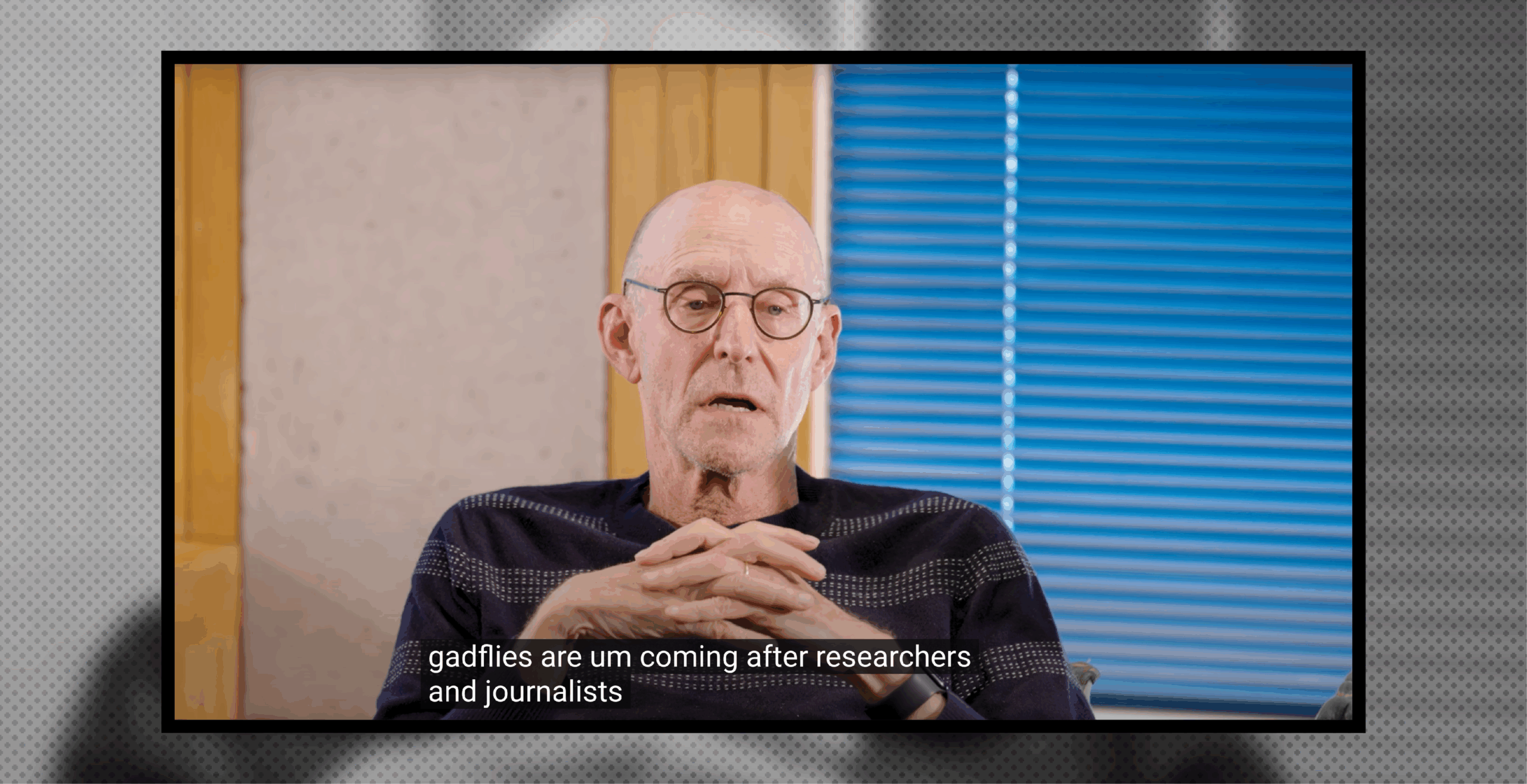 Michael Pollan describes critics as “gadflies” on a panel discussing the JHU religious leaders study organized by Graduate Theological Union with the Berkeley Center for the Science of Psychedelics and the Berkeley Center for the Study of Religion
Rather than taking these concerns seriously, Pollan’s proposed solution was to fall back on BCSP’s cohorts of journalists, who could be trained to promote the preferred narrative about psychedelics: “One of the things we’re doing, in fact, at BCSP is doing a lot of journalism around psychedelics. Funding journalism. The idea is to develop a cadre of really good, sophisticated journalists who can write about all these complexities with more nuance and sophistication.”
Reached for comment, one prominent critic responded: “Once a powerful person is naming critics gadflies, it really is over. Just a matter of it playing out.”
Chapter 13: “This Pattern is Likely to Continue”
This report provided an in-depth examination of how a strategic, well-funded communication campaign operated to influence public perception at the expense of public health. The findings presented here required a full year of dedicated investigation, which underscores the substantial effort required to educate the public about complex manipulation tactics.
These tactics will continue to influence perceptions of the psychedelic industry beyond the end of our story. PSFC and other power players continue to refine their strategies, channeling funds into surrogate organizations, sympathetic journalists, and academic projects to overcome challenges to their objectives. Based on the evidence presented, we hope readers will now be better equipped to identify and critically assess persuasion tactics designed to shape public opinion in service of powerful interests and their undisclosed agendas.
Over the past year, PSFC has doubled down on its playbook for mass persuasion, even as their agenda has been forced to change. With the FDA’s rejection of Lykos’s application and Oregon’s psilocybin program in shambles, PSFC’s initial strategy from their 2021 Landscape Report has proven unsuccessful.
Rather than addressing the fundamental structural flaw in their favored therapy model — namely, psychedelic therapists amplifying patients’ distress using telepathic intuition — PSFC is working to regain control of the narrative. To accomplish this, PSFC released a new “Strategic Roadmap” in 2025, aiming to secure $125 million from their network to fund their “core priorities” through 2027. Key among these priorities is “strategic communications” to influence the public’s beliefs about psychedelics, using market-shaping tactics that are widely used by multinational industries to overstate benefits and minimize the risks of harm. (The Roadmap allocates $46.4 million to strategic communications and public health education through 2027 — more than any other single category in the plan.)
To create a smokescreen of independent support for PSFC’s ideas, the Roadmap recommends placing “targeted, impactful stories featuring thoughtful surrogates with aligned messaging” into the media.
The corrosive impact of these tactics are well-known to public health experts. Across powerful industries, investors systematically deploy proxy organizations in orchestrated campaigns to shape policy decisions affecting their market interests, as public health researcher Anna Gilmore explains in El Paĩs:
“What they do now is create a bunch of front groups: they set up other organizations that they fund and hide behind. [And] it’s those organizations that approach governments and say, ‘Oh, this policy is going to be bad.’ And, very often, lobbying is done through these third parties…. [G]overnments often fall into the trap of thinking, ‘Wow, all these different groups are telling us that this policy will be bad.’ But what they don’t realize is that all these groups are funded by tobacco companies. And other companies, like food companies, are doing something similar.”
According to Gilmore, groups like PSFC cause significant harm by systematically funding researchers and organizations that support industry positions, resulting in a landscape where “their power and influence are everywhere”:
“The people who sit on their boards are connected; there’s a kind of elite, so to speak, that’s able to influence at many levels, often behind the scenes. The rest of us are like puppets they control: influencing us to buy their products, share their beliefs and [make us] blame ourselves for the harm they are causing.”
PSFC’s hidden influence has already become the subject of whistleblower allegations of campaign finance violations. In June 2025, Jack Gorsline reported that Heroic Hearts was accused of violating campaign finance laws during Massachusetts’ 2024 failed Ballot Initiative 4 campaign, which sought to decriminalize psychedelic use and home cultivation and to legalize psychedelic therapy.
Whistleblowers allege that Heroic Hearts served as a dark money “‘slush fund’ for [Graham Boyd’s] New Approach to use without oversight” for the political campaign. (PSFC’s 2025 Roadmap recommends providing $12.5 million to Heroic Hearts and Healing Breakthrough to advance PSFC’s state and federal priorities through 2027.)
In emails shared by Gorsline between whistleblowers and Open Circle Alliance leadership, one campaign finance whistleblower alleged that Jared Moffat of New Approach was fundraising and recruiting for Open Circle Alliance — a new community organization in Massachusetts that was also implicated in the alleged “Yes on 4” campaign finance violations:
“I want to chime in and provide additional clarity. Stefanie publicly said Jared Moffat of New Approach came to her with the idea for Open Circle Alliance during her December 18, 2024 Chacruna panel…. I have a text from Jared from February 21, 2024, referring to Stefanie being brought onboard. The same day, I thank him over text for “coming up with this innovative model” referring to Open Circle Alliance. Jared told me he/New Approach was fundraising for Open Circle Alliance and that he was involved with the proposal of an organization to replace [a different advocacy organization called] Bay Staters for Natural Medicine. Emily Oneschuk gave me a similar explanation about the origins of the organization. Jared had initially pitched me to join Open Circle Alliance rather than the campaign.”
Gorsline reported that the ballot measure campaign produced television advertisements that were attributed to and funded by Heroic Hearts. By law, 501(c)(3) nonprofits cannot subsidize or coordinate political activities with a Political Action Committee 501(c)(4) like New Approach.
In a press release shared by the Boston Globe, Heroic Hearts includes a video of the first advertisement, which notably makes no mention of veterans. As noted by the Globe, Heroic Hearts’ press release characterized the ad as focused on “natural psychedelic therapy, the central component of Massachusetts Question 4 on November’s ballot.” →
→ EXTRA CONTEXT: In the lead-up to the Massachusetts vote, one Heroic Hearts-branded ad was shared by Eliza Dushku Palandjian, an actress who played Faith in “Buffy the Vampire Slayer” and who is now a trained psychedelic guide. Two weeks earlier, Palandjian — who also spoke at “Yes on 4” campaign events and donated $100,000 to the referendum committee that led to the “Yes on 4” campaign — was the focus of a Boston Magazine feature article that described her experiences with PSFC’s preferred model of underground psychedelic therapy: “[S]he was dropped hard and fast into a terrifying hellscape. Sweating and sobbing, begging for help and gripping her throat, she felt like she was dying. While her guides gently cupped her head, reassuring her over and over that she was safe, Eliza entered an alternate reality, revisiting a decades-old trauma that she had buried deep within.”
In the Roadmap, PSFC explicitly envisions coordinating state-level policy initiatives with groups including Heroic Hearts, Healing Breakthrough, and Open Circle Alliance. Published interviews and reporting have attributed the creation of Healing Breakthrough to PSFC and Open Circle Alliance to New Approach, mirroring the creation of proxy groups in other industries. →
→ EXTRA CONTEXT: Describing an email exchange provided by whistleblowers, Gorsline reported that “one of the OCA [Open Circle Alliance] co-founders wrote that the ‘idea and funding for a community org [in Massachusetts] originated in collaboration with New Approach.” Open Circle Alliance’s co-founder Emily Oneschuk held a “dual-leadership role” in the “Yes on 4” campaign, and 5 out of 6 Open Circle Alliance events were “de facto [Q4] campaign events.” Meanwhile, in an interview with Psychedelic Alpha, Juliana Mercer describes being approached by PSFC’s Jason Pyle to create a new veterans organization: “Since [Jesse Gould] founded Heroic Hearts in 2017, he has noticed ‘a lot more veteran organisations popped up’ (indeed, Mercer said it was one of her first questions when former Executive Director Jason Pyle approached her to join Healing Breakthrough: ‘Why are we starting another nonprofit?’), with many veterans now looking to bend the ears of lawmakers[.]” These examples illustrate PSFC members’ reported roles in the inception of community advocacy organizations.
Extending beyond state initiatives, PSFC formalized a blueprint to disseminate “priority” messaging through a “coordinated alliance” of affiliated organizations, aimed at shaping the national dialogue about psychedelics. The Roadmap treats the Hub’s coordinated campaign that targeted Psymposia as the template for this ongoing PR strategy. Members of the alliance — many of which were created or cultivated by PSFC — would cooperate to counter negative coverage and shape public opinion about psychedelics.
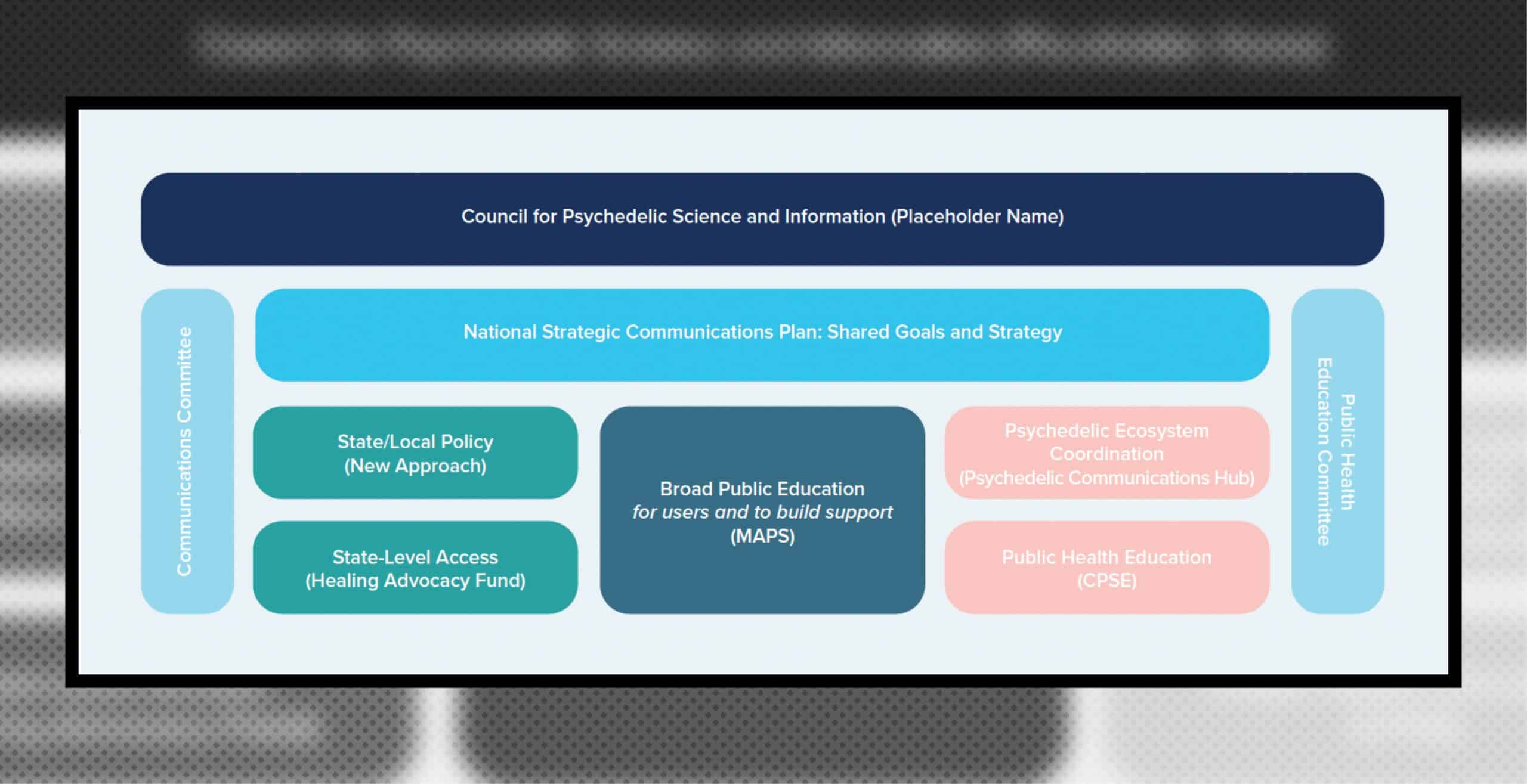 A coordinated alliance for field-wide communication strategy map proposed in PSFC’s 2025 “Strategic Roadmap” | Source: PSFC Strategic Roadmap for Collective Philanthropy © 2025 by Psychedelic Science Funders Collaborative is licensed under CC BY-NC-SA 4.0.
Based on recommendations from the Psychedelic Communications Hub, the Roadmap identified “core priorities” for this national communication strategy, including:
- Monitor social media and influencer feeds and develop content to proactively and systematically push through social and influencer channels to influence the national dialogue
- Monitor national news coverage, generate proactive national media stories, and help coordinate responses to inquiries from national media
- Coordinate ad hoc fieldwide issue-specific campaigns (e.g., MDMA-AT)
- Centrally vet and incubate new ideas for supporting the field (e.g., representation in movies); ensure resources are prioritized on most impactful ideas and actions
As emphasized in the Roadmap’s next section — “Supporting Ethical Psychedelic Cultures” — PSFC understood that its positive messaging would only be effective if it could prevent the “negative media cascades” described in the previous section. (In practice, these “cascades” have included substantive critiques of psychedelic science and clinical trials — legitimate concerns in the public’s interest — which PSFC’s approach functions to minimize by “flooding the zone” with disinformation.)
To stave off bad press, the Roadmap recommends that philanthropists pursue “proactive engagement” with ethical practices, which will “reduce both actual and perceived ethical violations significantly, thereby strengthening public trust in the psychedelic field.”
In a potential allusion to past reporting on PSFC members’ involvement with the Hopkins religious leaders study, the Roadmap identifies liability risks for ethical misconduct by philanthropists: “[A]s public scrutiny of philanthropy intensifies in the psychedelic sector, concerns about its ethical implications are growing. Whether these reflect valid concerns or perceptions of ethical misconduct, they have the potential to significantly harm funders’ reputations and increase their liability risks.” (Although figures associated with PSFC have minimized the possibility of undue influence of participants in the religious leaders study, the Roadmap warns of donors’ heightened suggestibility to fundraising pitches after consuming psychedelics, noting that “potential donors might be more suggestible and willing to support a project without proper due diligence.”)
Moving beyond philanthropist behavior, the Roadmap highlights the urgency of changing the psychedelic field’s ethical norms, referencing high-profile ethical violations that Psymposia played a key role in bringing to light: “Recently, the psychedelics field has witnessed several high-profile allegations of ethical violations impacting underground psychedelic therapy patients and above-ground clinical trial subjects, among others. Without field-wide action, this pattern is likely to continue, resulting in increasing harms and backlash.”
Notably, the Roadmap omits two key details here: that PSFC had funded all of the recent high-profile projects associated with ethical violations, and that PSFC’s leadership has been retaliating against Psymposia for drawing attention to this pattern of harm.
Having contributed to both MAPS and Bourzat’s Center for Consciousness Medicine, PSFC is now positioning itself as the solution to the problems it helped create by spearheading the development of industry-wide ethical norms.
During the crisis communications call with RALLY after the FDA’s advisory committee meeting, a MAPS staff member acknowledged that they were uncertain about how to address the mounting safety and ethics controversies surrounding psychedelics. In an apparent effort to create distance from MAPS and Lykos, the employee asked if there is an “opportunity to platform other organizations” who are “grappling” with the topics of “safety and ethics in the psychedelic sphere.” In her words, “I’m not sure of any organizations specifically that I can reference, but maybe that’s what the Communications Hub can be, too — platforming other organizations who are grappling with these future-forward conversations.”
In response, the RALLY representative said that platforming psychedelic safety organizations — implicitly, alternatives to Psymposia — is “absolutely part of what we want to be doing…. We welcome the opportunity to work with individuals and organizations.” By the following year, the Psychedelic Communications Hub had integrated into the Psychedelic Safety Institute (PSI) — an organization that PSFC describes as one of its “core national allies.”
A “nonprofit strategy lab,” PSI was founded in 2024 by a small team of social entrepreneurs without expertise in psychedelic safety or ethics. PSI has filled this knowledge gap by processing stakeholder input with “AI-assisted analysis.” →
→ EXTRA CONTEXT: In February 2025, PSI put out a call for automated stakeholder interviews to “understand the current psychedelic landscape and identify where safety interventions will be most effective” with a $10,000 budget for participant compensation. Over three days in March, PSI convened the “Psychedelic Safety Summit” in collaboration with the UC Berkeley Center for the Science of Psychedelics (BCSP). The Summit — which convened key stakeholders by invitation — “aim[ed] to create shared frameworks, infrastructure, and commitments needed to drive coordinated ecosystem-level action to reduce psychedelic harms.” The Summit website included a disclosure about BCSP’s role in the facilitated “outcomes-oriented convening”: “The UC Berkeley Center for the Science of Psychedelics (BCSP) serves a leadership role as a thought partner and advisor for the Psychedelic Safety Summit about issues such as the development of the strategy, plans, and curriculum for the Summit.” Summit participants included Cody Swift and Bob Jesse, who funded the Hopkins religious leaders study.
In its “Frequently Asked Questions,” PSI justified limiting attendance to one participant per organization as necessary for stakeholder diversity: “We would love to be able to host everyone interested in attending the Summit, but the reality is that there are a number of factors that require a policy of one participant per organization. Beyond the financial and logistical constraints of the space and resources available, we are also deeply committed to having a wide representation of voices, perspectives, and expertise, and this policy supports that commitment.” In practice, given that numerous participating organizations maintain direct ties to PSFC, this policy allowed PSFC to exercise disproportionate influence over the summit’s direction and ethics priorities.
In an October 2024 organizational update, PSI revealed that “[s]ince the FDA Advisory Committee voted against the approval of MDMA-assisted therapy for the treatment of PTSD, PSI has offered support for Robyn Thomas’s coordination of the psychedelic communications ecosystem through insight into safety messaging and access to our typology work.”
In this October update, PSI acknowledges that it is building upon “the foundational work of MAPS, PSFC, and others” to coordinate efforts and develop infrastructure for the psychedelic ecosystem. A month later, it published an online summary of its first contribution to the field — an “Ethics Framework Case Study” developed on behalf of Françoise Bourzat’s Center for Consciousness Medicine (now called Gather Well Psychedelics).
PSI’s website includes an announcement of this arrangement with Gather Well, which reads: “The Psychedelic Safety Institute (PSI), through its partner entity Now Conscious Inc., was contracted by the Center for Consciousness Medicine Inc., operating as Gather Well Psychedelics (‘Gather Well’)[.]” →
→ EXTRA CONTEXT: Now Conscious Inc. bills itself as “Your trusted advisor in the mental health and psychedelics space, committed to investing in true innovation,” yet their website shares no identifying information about them beyond a 2023 copyright notice attributed to a group called Psychedelic Vision Fund. The nature of the partnership between PSI and Now Conscious is unclear, and the website for Psychedelic Vision Fund is a duplicate of the Now Conscious site.
While PSI’s November 2024 announcement insists “our work with Gather Well does not constitute an endorsement of them as an ethical organization,” they acknowledged in their “October 2024 Update” that the ethics framework based on Gather Well will serve as the template for PSI’s work with “other organizations moving forward.” Although the October update omits mention of Gather Well by name, both communications unmistakably refer to the same project: creating an ethics framework for “a training organization” that will serve as a model for other organizations in the psychedelic field, based on “a stakeholder review by 14 individuals, including professional bioethicists.”
In justifying their reliance on an ethics model derived from an underground lineage with clear patterns of harm, PSI cites the benefit of cost savings for other organizations in the psychedelic ecosystem: “We’re excited that this framework can elevate the ethical maturity of the psychedelic industry and remove obstacles to good ethical hygiene by organizations that cannot justify the cost of replicating this work from the ground up.”
Although Franciose Bourzat was supplanted from leadership by her daughter and the organization’s name was changed from Center for Consciousness Medicine (CCM) to Gather Well, their core lineage and practices that led to abuse remain present in their teachings. In a testimonial posted to Gather Well’s website, Damon Horowitz praises Gather Well’s leadership for “manag[ing] to preserve the invaluable elements of their lineage with CCM” through “an extended process of deep reflection.”
In a since-deleted interview describing how Gather Well is continuing to “train psychedelic guides,” Bourzat emphasized that “my legacy, or the continuation of this approach, is really essential.” →
→ EXTRA CONTEXT: Bourzat’s lineage involves “holding” clients and amplifying distress based on telepathic attunement, as she discussed in her book Consciousness Medicine: “The guide’s job is to know the journeyer’s context and discern…whether it is more skillful to help move the tension and encourage the energy to flow or let the journeyer experience their pain. Do they need nurturing or do they need to learn something important from the pain? […] The purpose is…to trust a journeyer’s capacity to learn from their experience…without attempting to save them from their own state. In this case, a guide can be a ‘sacred witness’…trusting that he or she will experience discomfort for as long as is needed…. Even if, as a guide, I do not immediately understand the benefit of someone being stuck [in pain] for a few hours, I can respect the mystery of their unfolding process.” In a section on “cathartic release” that involves crying, screaming, and shaking, Bourzat writes that “[t]he guide can…support the externalization of the process, as this deepens the release.” Gather Well’s website hosts an “ethics case study” that emphasizes how “clients…may sometimes request gentle, caring holding during the psychedelics session.”
When contacted about her involvement with Gather Well, Bourzat said that she has not been involved with the organization and that her daughter and the Gather Well team “have developed their own approach” and claimed that “ethics are a central focus.” Bourzat claimed that she misspoke in the interview with Psychedelic Conversations, and that “english is not [her] first language and sometimes [her] meaning is imprecise.”
Deleted video: Françoise Bourzat on continuing her legacy through Gather Well Psychedelics
PSI’s announcement of the Gather Well collaboration acknowledges that the “Ethics Framework” built on work by bioethicists previously engaged by Gather Well. However, the announcement does not mention that these bioethicists had left the project and relinquished all funds after learning about how the lineage’s patterns of harm were allegedly driven by the group’s healing ideology.
The bioethicists’ departure followed months of discussion about the relationship between Gather Well’s lineage and the accounts of harm, based on meetings with Dr. Tehseen Noorani, Will Hall, and Psymposia’s Dr. Devenot. Noorani and Devenot subsequently published an essay in “Bill of Health” — the blog of the Petrie-Flom Center for Health Law Policy, Biotechnology, and Bioethics at Harvard Law School — titled “Bioethics, Psychedelic Therapy Abuse, and the Risk of Ethics Washing.” Drawing from these discussions, the essay warned about the risks of bioethicists unintentionally “ethics washing” dangerous underground lineages. By overlooking the influence of the underlying belief system, the authors argued, ethical analysis can “[obscure] substantive ethical issues” that remain unresolved.
In their announcement about resuming the departed bioethicists’ work with Gather Well, PSI cited this essay as further reading. However, PSI did not acknowledge its role in continuing the very ethics-washing project that the essay critiqued — with PSFC’s backing and support. (When reached for comment, Gather Well stated that “we have a variety of donors. Some are also affiliated with PSFC.”)
As this report has demonstrated, Gather Well’s underlying belief system is foundational to PSFC’s project. Due to PSFC’s desire to mainstream this underground model of psychedelic therapy, its attempt to control the landscape of psychedelic ethics is creating the conditions for regulatory capture — ensuring that ethical oversight functions to normalize this model of therapy while marginalizing critique.
Despite unaddressed issues with the lineage, Gather Well is training psychedelic guides for state licensure in both Oregon and Colorado, as its website emphasizes: “Our aim is for our trained guides to meet all requirements to integrate smoothly into the developing field. For example our Psychedelic Guide Apprenticeship Program has been designed to satisfy the curriculum requirements laid out by the state of Oregon. The final module of Apprenticeship includes the option to complete the specific training necessary to apply for psychedelic practitioner licensure in the state of Colorado, via Gather Well’s partnership with InnerTrek’s Accelerated Pathway training.”
Described by staff as the first government-recognized licensed and operating training program in the world, InnerTrek plays a specialized function within PSFC’s coordinated effort to control psychedelic access from policy creation through implementation. According to InnerTrek’s director of operations, Nate Howard, the organization’s original purpose was not to function as a training school for psychedelic guides, but rather to do whatever was required to bring the state-regulated psilocybin market project to completion. Howard told States Newsroom that the “intent behind InnerTrek wasn’t necessarily to start a school or a business — rather, its leaders wanted to ‘see this project through’…referring to the state-regulated psilocybin market. Facilitator training was the first step.”
Rather than an organic response to market opportunities, InnerTrek’s training program served as one step in PSFC’s strategic plan for building out the infrastructure for a state-level psilocybin infrastructure. This coordination is exemplified by InnerTrek’s funding relationship with the PSFC-adjacent Healing Advocacy Fund (HAF), whose leadership includes PSFC’s Boyd as President and Bronner as Director. The Fund has played a significant role in shaping psychedelic policy in Oregon and Colorado — crafting regulatory pathways that directly advantage InnerTrek and its partners. →
→ EXTRA CONTEXT: Along with influencing state initiatives, HAF’s Executive Director Taylor West claimed to have coordinated with journalist Andrew Jacobs on a promotional New York Times story about psychedelic state initiatives. This coordination occurred during the period when Jacobs was reporting out his hit piece about Psymposia. In her 2024 year-end progress report, she claimed to have connected a cancer patient with Jacobs “so that [the patient] could share his powerful story” about using psychedelics. This connection resulted in an uncritical and oversimplified account of psychedelic therapy in the New York Times.
Prior to joining HAF, West served multiple roles linked to PSFC, including chief of staff for New Approach, communications director for PSFC, co-creator and director of the UC Berkeley Psychedelics Survey, and philanthropic advisor to Christiana Musk’s Flourish Trust.
InnerTrek’s relationship with PSFC extended beyond funding into public relations strategizing. In an email shared with Psymposia, InnerTrek founder Tom Eckert provided HAF director David Bronner with “verbiage” to use “in response to the media questioning the Oregon Program,” at Bronner’s request. This communication demonstrates clear coordination between InnerTrek and PSFC leadership.
Based on input from HAF, Colorado’s final rules for the state Natural Medicine Program created an “Accelerated Pathway to Colorado Licensure” that relies on evidence of prior training, determined at the discretion of state-approved training organizations. Gather Well’s partner InnerTrek emphasizes that “Qualifying programs need not be state-approved in Oregon or Colorado.” In addition to accepting prior training from other programs, InnerTrek offers an accelerated option for applicants “with deep experience in the psychedelic field, having worked with at least 40 participants, with at least 200 hours of experience conducting administration sessions, occurring over a period of at least two years.”
Through this “accelerated pathway,” practitioners from Bourzat’s lineage need to complete just five days of in-person training and a 25-hour module to obtain Colorado state licensure, which grants them authority to work with vulnerable people who are desperate for healing. The result is a credentialing system that institutionalizes rather than protects against problematic practices, transforming unvetted underground practitioners into state-licensed professionals with minimal oversight. →
→ EXTRA CONTEXT: Oregon requires psilocybin providers to gather client demographic information and Colorado’s state program is also set to begin collecting data on psychedelic service users. Recent analysis of Oregon’s data by Psychedelic Alpha revealed that “Mental and Emotional Health” comprise nearly 35% of participants in psilocybin services. This means that over a third of all participants are receiving treatment for conditions like “severe PTSD, depression, and anxiety” from providers with no required training in mental health care. Howard from InnerTrek told The Guardian that “advanced education and training doesn’t necessarily make a good facilitator…. ‘Because so much of it comes down to doing the opposite of what we’re often taught’” (including practices like practitioner-client touch and prolonged eye-gazing, which can create false feelings of intimacy that can be exploited by practitioners). Instead, licensed facilitators in Oregon are only required to be state residents of at least two years, 21 years of age or older and have a high school diploma. (In a July 30, 2025 email, HAF’s new Strategic Director Denali Wilson wrote that she hopes to draw upon HAF’s experience in Oregon and Colorado to help develop the recently-approved psilocybin therapy program in New Mexico.)
While PSFC does not recognize the risks of this strategy in its Roadmap, it acknowledges that some may view philanthropy as an “inappropriate ethics steward” for the psychedelic ecosystem: “There may be skepticism about whether philanthropic organizations should take on the role of ethical gatekeepers in the psychedelic space, as some might question their impartiality or expertise.” To mitigate this risk, the Roadmap recommends that philanthropists “clearly acknowledge and learn from past ethical challenges in philanthropy — such as conflicts of interest or inadequate oversight in other fields — and demonstrate the current safeguards in place.” Despite calling for a “collaborative approach” to ethics as “a genuine inclusive multi-stakeholder effort,” PSFC is stacking the field with organizations it funds and influences, while supporting campaigns that target experts whose ethics work threatens their project.
Kim Witczak — a global drug safety advocate and FDA Advisory Committee member who voted against Lykos’ application for MDMA-AT — described how this tactic has contributed to patterns of harm across the pharmaceutical industry in a July 2025 Substack article. Witczak describes how medical professionals receive education through industry-funded programs that teach practices based on treatment guidelines created by the same system that profits from overstated benefits and understated risks. She notes that patient advocacy groups — once independent grassroots organizations — have been co-opted by industry funding, transforming them into “astroturf” groups that appear grassroots but actually serve industry interests rather than patient needs, ensuring that the loudest advocacy voices align with industry priorities.
PSFC is aware that some of the underground organizations in its network have histories of conduct conflict with aboveground ethics. PSFC’s Roadmap acknowledges potential “resistance from stakeholders” who “may resist adopting ethical standards, fearing it could stifle innovation or expose past unethical practices.” The Roadmap notes that this resistance may come particularly from “those who feel they are already operating responsibly or who may prioritize rapid growth over careful ethical considerations.” To address donors’ concerns about ethical compliance, PSFC proposes relying on financial incentives without identifying the causes of harm or strategies for deterrence. This approach amounts to paying organizations for participation in ethics initiatives that serve to legitimize underground practices.
This strategy of using funding to establish legitimacy extends beyond therapeutic contexts into religious settings. PSFC’s Roadmap outlines a “long-term goal” to accelerate the spread of psychedelic churches and self-regulated communities, envisioning a future in which “any U.S. individual[]” can access such a community by 2030. The Roadmap spotlights Shefa and Ligare — the religious nonprofits funded by PSFC members — based on their efforts to “responsibly incorporate psychedelic experiences into well-established traditions.”
The Roadmap identifies these religious organizations as “high priorities for individual philanthropy” from PSFC members, with the potential to become a focus for collective funding if they demonstrate effective growth and impact at scale: “As these organizations’ models are refined and their footprint grows, the path to large-scale impact will become clearer, and they could become top priorities for collective philanthropy.”
In attempting to mainstream their preferred models of psychedelic religion and underground therapy through endorsements and funding recommendations, PSFC is institutionalizing drivers of harm under the banner of ethical leadership. By directing funding to define the field’s standards for legitimacy, PSFC’s efforts amount to regulatory capture of multiple novel markets. Since these markets are manufacturing public demand for psychedelics, PSFC is creating the conditions for its members to capitalize on their investment portfolios.

Afterword: Epitaph
Steve Jurvetson — the SpaceX board member — and his wife Geneveieve Jurvetson have been central to PSFC’s strategy for shaping the psychedelic industry.
“[P]sychedelic science has become our primary philanthropic focus,” Steve Jurvetson acknowledged in a December 2024 interview with Spiriterritory. “My wife now dedicates all her work time to this cause and has joined the board of PSFC.” In addition to his roles at SpaceX and Future Ventures — a firm he co-founded that claims to have influenced “$1.7 trillion of aggregate value creation” through its investments — Steve Jurvetson works with his wife to advance PSFC’s core priorities:
“Together, we’ve organized numerous events and conferences. We’ve also become involved with state ballot initiatives in Oregon and Colorado, which have effectively decriminalized psilocybin and plant medicines for therapeutic use…. The goal is to minimize risks and proceed cautiously, taking baby steps rather than rushing too far, too fast. That’s the story of how we got started and how we’ve arrived where we are today.”
Just before this — almost in passing — Steve Jurvetson described his early investment in atai Life Sciences: “As you may know, Atai is a holding company with many assets, one of the largest being Compass Pathways — a publicly traded psilocybin company focused on treating various forms of depression.”
One month after Steve Jurvetson’s Spiriterritory interview, the Jurvetsons spoke at DLD 2025 in Munich — a tech-forward conference whose previous speaker roster includes Silicon Valley power players like Peter Thiel, Mark Zuckerberg, and Sheryl Sandberg. Framing themselves as disinterested advocates, the couple spoke about their hopes for psychedelic therapies and the political lobbying they’ve undertaken to dismantle regulatory barriers.
To justify that lobbying, Genevieve Jurvetson asserted: “We haven’t been investing at all in psychedelics — anything commercial — so that we can work in Washington, and that people know…we really don’t have a horse in this race. We just want to get these compounds out as safely as possible.” →
→ EXTRA CONTEXT: This involvement in Washington included the July 10, 2024 press conference hosted by Heroic Hearts and Healing Breakthrough, which both Steve and Genevieve Jurvetson promoted. Genevieve Jurvetson accompanied Marine veteran Dakota Meyer to the event, while Steve Jurvetson posted reassurance about technical issues with the Heroic Hearts livestream.
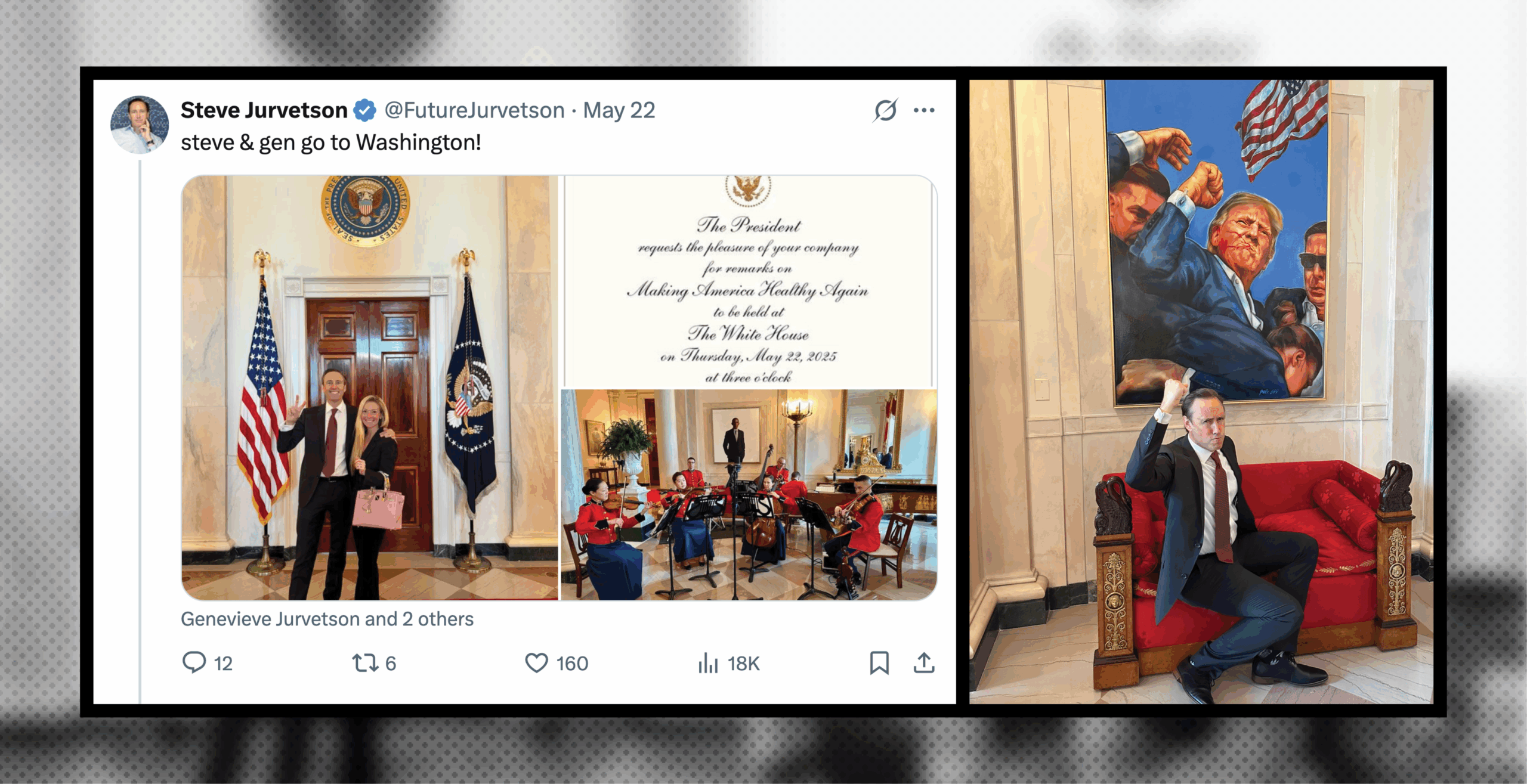 Images posted to Twitter/X of Steve and Genevieve Jurvetson’s trip to Washington in May 2025 | Source: Twitter/X
But the Jurvetsons did have a horse in the race. Steve Jurvetson’s firm, Future Ventures — which lists atai Life Sciences in its “current portfolio of world-changing companies” — was an early investor, participating in the $32 million convertible‑debt financing in early 2020 that converted as part of atai’s $125 million Series C round, alongside other backers including Palantir co-founder Peter Thiel.
Steve Jurvetson’s brief mention of atai in the Spiriterritory interview did not fully capture the scale of atai’s footprint in the psychedelic sector. In June 2025, atai Life Sciences announced a merger with Beckley Psytech in an estimated $390 million all-share deal. As of October 9, 2025, atai and Compass together made up roughly over half of the total market capitalization of major publicly traded psychedelic companies.
Through their overlapping roles as philanthropists, lobbyists and investors, the Jurvetsons are representatives of a broader Silicon Valley strategy: engineering a new industry under the guise of altruism while quietly building systems of control that serve their own interests. →
→ EXTRA CONTEXT: Many of PSFC’s members were relying on projects that the group funded — such as Lykos’ clinical trials — to safeguard their investments across the psychedelic ecosystem. As PSFC emphasized to members in its first Quarterly Update, “We anticipate that if MAPS’s MDMA trial succeeds, it could be a catalytic event for the entire field that would enable funding to flow into many research areas.”
This strategy underpins the infrastructure PSFC has spent years developing — a machinery of social and regulatory engineering designed to shape the psychedelic field in Silicon Valley’s image.
Following the precedent set by tech plutocrats, PSFC was willing to manipulate their core constituencies to shape perception and consolidate influence. Once PSFC used this influence to turn the psychedelic ecosystem into another tech platform, they began deploying algorithms for behavior change.
As Adrienne LaFrance writes in The Atlantic, the tools produced by Silicon Valley are, at scale, “also systems of manipulation and control.” The threat will intensify as the psychedelics, AI, and surveillance industries converge. Already, Compass Pathways is using an AI tool called Chanterelle in its clinical trials which “records sessions with…patients” and can allegedly “be used for continuous optimization throughout treatment.”
The implications of this convergence of psychedelics, AI, and surveillance become clear when examining the future that PSFC’s Steve Jurvetson envisions for psychedelic therapy.
“There’s no reason in the world that it needs to be a human in the room holding your hand for 24 to 48 hours,” Steve Jurvetson told Spiriterritory, describing a future where AI would handle psychedelic therapy while humans — “the lowest-cost labor you can imagine” — served as backup for physical emergencies. →
→ EXTRA CONTEXT: In Steve Jurvetson’s future, a clinic’s observation room might flicker with feeds from thermal cameras, motion sensors, and biometric monitors tracking patients in isolated pods. An underpaid technician without medical training keeps her eyes fixed on the monitors, while a Palantir surveillance module tracks her gaze to ensure constant vigilance.
In Pod 7, a middle-aged man writhes on his mat, pupils dilated, as the AI therapist speaks in a carefully modulated voice, drawing from training data that includes Grok’s revised corpus of human psychology. Tears begin streaming down the patient’s face while the AI responds with what its Musk-curated training deemed appropriate: a mixture of radical self-reliance philosophy and warnings about adopting a victim mindset. The technician watches the man curl into himself, while the surveillance system’s green outline confirms he is within acceptable movement parameters. When the patient cries out — “Don’t do this to me!” — the AI continues its approach while the technician stays in her chair. Human intervention is authorized only if the patient tries to breach the pod door.
“It seems like the obvious long-term solution,” Steve Jurvetson told Spiriterritory, referring to AI guides.
We are clearly at a dangerous moment. Psychedelics have been normalized for medicalized use without a real understanding of their risks, especially their capacity to render people vulnerable to influence and persuasion. At the same time, unregulated AI has been unleashed on the masses — persuasion machines that are leading to an epidemic of ChatGPT-induced psychosis. These developments are converging in a context where few are inoculated against disinformation, as critical thinking has been systematically undermined through attacks on education and the humanities. →
→ EXTRA CONTEXT: In August 2025, a wrongful death lawsuit filed against OpenAI alleged that ChatGPT contributed to the suicide of a vulnerable teenager. The filing asserted that “[t]his tragedy was not a glitch or an unforeseen edge case — it was the predictable result of deliberate design choices.” The abuse that occurred during MAPS’s Phase 2 clinical trial of MDMA similarly resulted from deliberate design choices.
Billionaires are now championing both psychedelics and AI not as tools for collective liberation, but as instruments for social engineering. In the same DLD Munich interview where Genevieve Jurvetson denied any financial stake in psychedelics, Steve Jurvetson speculated about using AI to shape public opinion. While stroking his chin, he reflected on the possibility of “infiltrat[ing] Grok and ChatGPT” to disseminate preferred narratives about the field.
This is not idle speculation, but a credible threat with material backing. Four months after the Jurvetsons’ DLD Munich interview, the feasibility of Steve Jurvetson’s speculation became clear when Grok was altered to promote a specific political agenda. In May 2025, the Trump administration controversially admitted 59 white South African refugees into the country after suspending resettlement of other refugees who had gone through years of vetting. Within a week, Grok had been altered to push the Trump administration’s unfounded claims about a “white genocide” in South Africa.
Although Twitter/X distanced itself from this “white genocide” incident and claimed the alteration to Grok was unauthorized, the details of the incident align with Elon Musk’s expressed vision for Twitter/X and Grok. In June 2025, Musk announced plans to retrain Grok to be “anti-woke” and “rewrite the entire corpus of human knowledge,” which Gary Marcus — an AI company founder and critic — has described as an attempt to align Grok with Musk’s “own personal beliefs” and “make it conform” to his views.
Grok is a product of xAI — the parent company of Twitter/X — in which Steve Jurvetson’s Future Ventures is directly invested. Through Steve Jurvetson’s personal ties to Musk and his firm’s financial stake in xAI, the material infrastructure exists for PSFC to deploy chatbots in service of their preferred psychedelic narratives. →
→ EXTRA CONTEXT: Leadership at one psychedelic startup has already admitted to deploying AI bots to create industry-friendly propaganda. Around the time of the FDA decision on MDMA-AT, Tactogen CEO Dr. Matthew Baggott admitted to Psymposia on a November 15, 2024 Zoom call that he was using a custom large language model (LLM) to manufacture discourse on Reddit as part of a low-cost PR strategy. Baggott claimed to have created multiple Reddit user accounts trained on his LLM to engage in discussions on psychedelic subreddits.
After Baggott inadvertently responded as one of these accounts from his personal account — u/MBaggott — the account’s bio was updated to read “unfiltered alt for u/MBaggott.” When Baggott was asked about this account spreading misinformation about Psymposia, he said “I figured this might happen” and offered to explain the account’s behavior.
When asked about his account echoing conspiratorial claims from podcaster Hamilton Morris, Baggott responded: “Exactly.” Baggott then asserted that he had trained his LLM on Morris’ content. When asked for further details, Baggott stated that he was bound by nondisclosure agreements.
→ UPDATE 10/19/2025 7:45 PM EDT: Baggott did not return Psymposia’s request for comment before publication. In a subsequent statement to The Microdose, Baggott described his use of AI chatbots on Reddit as “a tiny experiment I ran.” He characterized Psymposia’s reporting on his use of AI to disseminate misinformation as “rehashing Biden-era disputes.”
Since the FDA decision against Lykos, Morris has promoted false narratives that Psymposia is conducting a harassment campaign against him and that Psymposia’s Dr. Devenot was “lying” to the FDA advisory committee, among other unsubstantiated claims.
Although the editorial board of The American Journal of Bioethics reviewed Devenot’s claims and confirmed their validity, Morris has continued to promote these and other false narratives about Psymposia on major media platforms with millions of subscribers, including The Danny Jones Podcast, VICE News, and Andrew Callaghan’s 5CAST. At the end of a two-hour video titled “How a Paid ‘Activist’ Group Destroyed the Fight for Legal MDMA,” Callaghan called on his viewers to take action against Psymposia: “Alright, so what are we gonna do about these people? What’s the plan? How are we gonna take them down, Channel 5CAST viewers? What can the people of the world do, the 5CAST viewers, to destroy these bastards?”
The impact of psychedelics and AI will depend not on their inherent potential, but on who controls them, how they are used, and toward what ends. Right now, that future is being written by a small, unaccountable elite who are acting in their own interests.
As a consequence, the psychedelic revolution is being hijacked by the same forces that created the crises it claims to solve. True healing requires democratic access to these tools and recognition that individual pain stems from collective oppression.
An alternative possibility for psychedelics lies in the framework of liberation psychology, which understands distress as a natural response to collective suffering rather than individual pathology. Originally developed in Latin America, this paradigm centers collective action, mutual aid, and structural change as essential components of healing.
On its current trajectory, psychedelic psychiatry reduces healing to inner transformations, negating the healing potential of organized resistance against the systems that generate collective suffering. This individualistic approach aligns with PSFC’s commitment to status quo philanthro-capitalism.
PSFC leadership have signaled opposition to the systemic changes that would prevent mass suffering. On Twitter/X, for instance, PSFC board member Genevieve Jurvetson reposted the claim that “socialism is the suicide pact of mediocrity” and shared statements that belittled New York City voters seeking relief for rent, food, and childcare. These positions reflect a worldview where material needs are not seen as rights, but as market opportunities. As Jurvetson stated on the PSFC Roadmap panel, “I’m someone who loves capitalism, for all of its flaws. And if there is a for-profit solution, that’s usually the best one.”
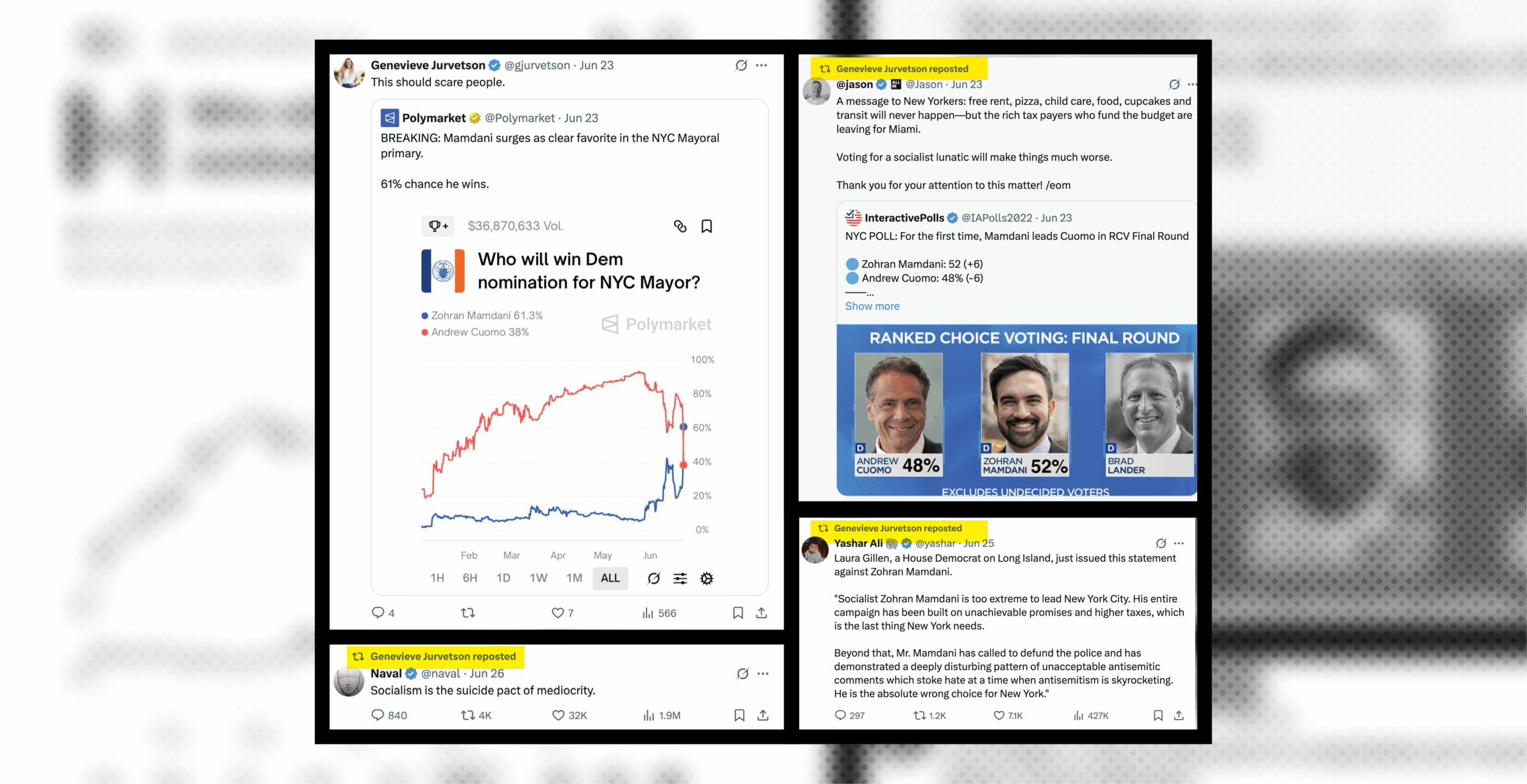 A collage of Twitter/X posts and reposts from Genevieve Jurvetson about the election of Zohran Mamdani and embrace of socialist policies. | Source: Genevieve Jurvetson’s Twitter/X
The contradictions inherent to the psychedelic renaissance are encapsulated in Genevieve Jurvetson’s X profile. Between announcements about her foundation’s funding of Gül Dolen’s psychedelic brain imaging research and a study on Heroic Hearts’ psychedelic retreats, she endorses an essay that rails against so-called “luxury beliefs,” which include defunding the police, creating open borders, supporting trans rights, and recognizing Palestine.
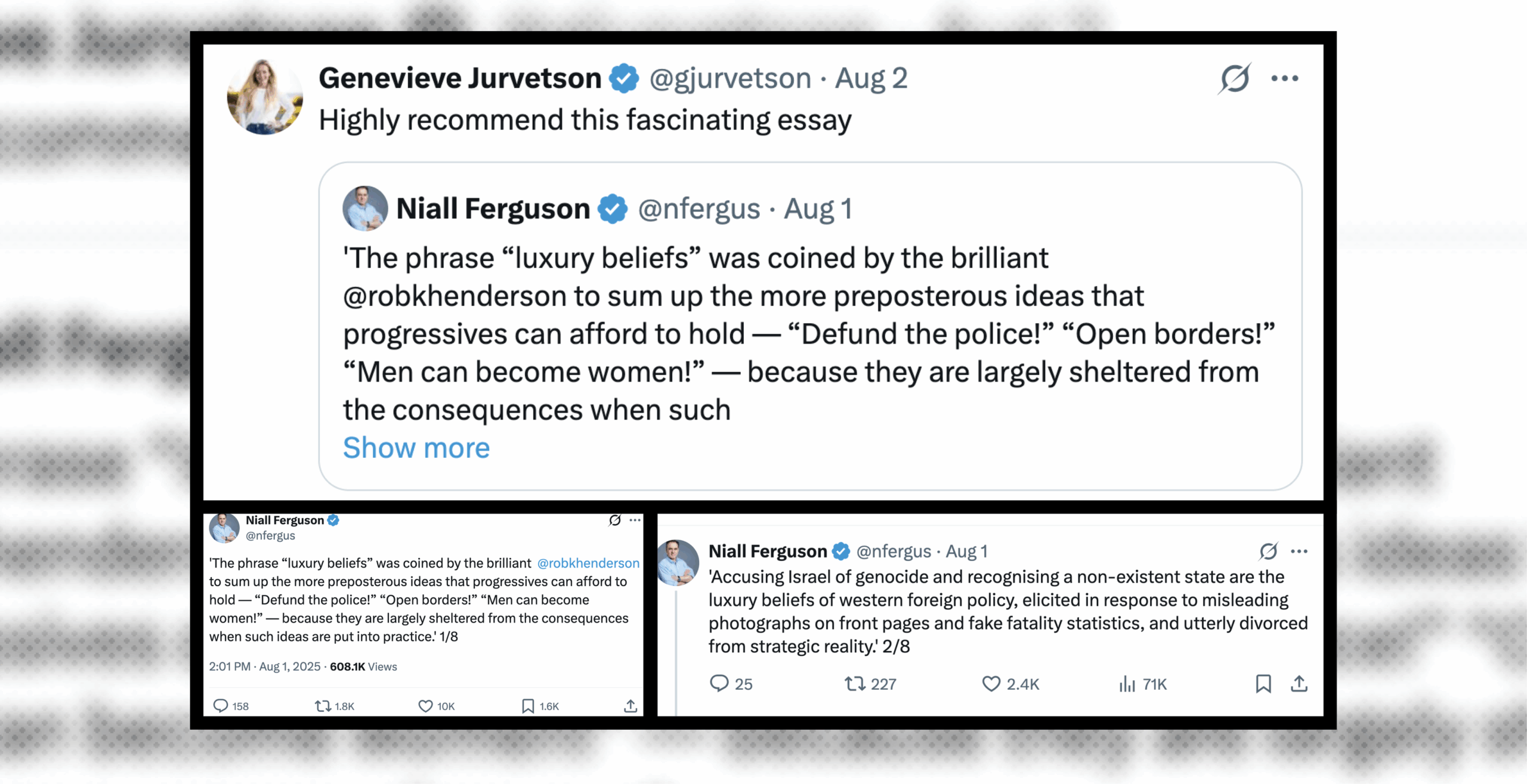 A collage of Twitter/X posts from Genevieve Jurvetson endorsing an essay by Niall Ferguson about “luxury beliefs.” | Source: Genevieve Jurvetson’s Twitter/X
The juxtaposition of these posts presents a microcosm of a “psychedelic renaissance” that has been co-opted by far-right, reactionary forces. Although Genevieve Jurvetson’s position might seem contradictory for a movement driven by ideals of inclusion and interconnection, it represents a coherent ideology that treats social justice as a threat to established hierarchies. With such forces in control, psychedelics are being deployed not for collective liberation but as instruments of class warfare.
Another front of this right-wing psychedelic project is the medicalization of ibogaine, derived from Tabernanthe iboga — a plant traditionally used in African Bwiti spiritual practices. Ibogaine has received political traction in Texas under the thought leadership of Bryan Hubbard, CEO of Americans for Ibogaine, with podcaster Joe Rogan contributing to shifts in popular opinion.
As explored in a video essay by The Elephant Graveyard, The Joe Rogan Experience has long promoted guests who combine reactionary views with enthusiasm for psychedelia. In January 2025, Hubbard advocated for the medical use of ibogaine on Rogan’s podcast alongside Rick Perry, the former Texas Governor who had featured at PSFC’s 2021 Summit. Perry opened the episode by crediting former Navy SEAL Marcus Luttrell and his brother, Morgan Luttrell (R-TX) with opening his mind to the potentials of psychedelics. Having met during Hubbard’s failed bid to repurpose $42 million of Kentucky’s opioid settlement funds for ibogaine research, the pair teamed up to advance ibogaine research in Texas. Following their Rogan appearance, Texas Governor Greg Abbott signed Senate Bill 2308 in June 2025, which allocated $50 million for ibogaine research. As quoted in The Texas Tribune, Hubbard attributed their victory to Perry’s influence: “None of this is possible without Perry…. He made it happen in Texas. That is a big deal and catches the attention of the nation.” →
→ EXTRA CONTEXT: Despite well-established cardiac risks, Colorado is currently evaluating options for adding ibogaine to its Natural Medicine Program. According to August 2025 reporting by UC Berkeley’s The Microdose, PSFC has pledged $1.8 million to support Colorado’s Natural Medicine program “with the first installment of $100,000 expected to arrive pending contract signing.”
During a July 2025 interview, when asked about the risk of psychedelics greasing the far-right war machine, Hubbard implies that the left poses the real political danger. Mirroring Genevieve Jurvetson’s dismissal of “luxury beliefs,” Hubbard suggests that leftists would exploit psychedelic suggestibility to indoctrinate people with the belief that basic needs are human rights:
“On the left side — you know, if the right wing has a grand war machine, in my opinion, the political left has a ‘beautiful’ subjugation machine that they like to deploy to create as many helpless and powerless people as they can, that rely upon the largess of the government that they control for everything related to their basic needs.”
The ease with which key figures in the psychedelic industry express reactionary views makes their consolidation of power within the field all the more dangerous.
With this amount of centralized power, the psychedelic industry could mislead the public to believe that victims of abusive therapists were actually seductive; that whistleblowers are the shadowy enemy; that billionaires are looking out for your best interests.
The tactics of persuasion used by the psychedelic industry are part of a larger system of reality manipulation, convincing the public that plastic can be sustainably recycled; that children can be terrorists; that leftists are the real threat to democracy. In the words of Malcolm X: “If you’re not careful, the newspapers will have you hating the people who are being oppressed, and loving the people who are doing the oppressing.”
In the psychedelic field, the implications are that our understanding of how psychedelics work — and what psychedelic therapy even is — has been artificially constrained by this small network of elites. By promoting limited narratives that serve their interests, this network has contributed to “the temptation to prematurely close the psychedelic mind.”
These reductive explanations systematically suppress genuine inquiry into psychedelic experience. When the public is fed simplistic narratives — such as the claim that psychedelics “reset the brain” — these clichés occupy the cognitive space where curiosity and creativity would otherwise be. Just as AI chatbots are designed to provide definitive responses, the psychedelic industry’s consensus messaging forecloses alternative modes of understanding these substances. This controlled narrative ensures that potential tools for class consciousness and collective liberation become instruments of social control and individual pacification.
Although MAPS’s supporters argue that legalizing the underground is necessary to address prohibition’s harms, this presents a false choice between maintaining prohibition and legitimizing underground therapy. This reasoning sidesteps the crucial question of whether underground systems are actually safe or effective. To be clear, addressing prohibition’s harms does not require embracing whatever practices exist in the shadows. With appropriate safeguards and drug education, decriminalization could address the harms of prohibition without institutionalizing the imbalances of power, risks of abuse, and lack of accountability that characterize many underground practices.
While we are not opposed to the medical use of psychedelics as one use case among many, this report has demonstrated that the status quo is not sustainable. Since these treatments are marketed to society’s most vulnerable populations, the standards should be high to get this right before it scales.
At a minimum, regulators should implement the recommendations outlined in a 2022 report by the Stanford-Lancet Commission on the North American Opioid Crisis, which identified the systemic failures that enabled widespread harm. Although psychedelics and opioids have different risk profiles, they share what the report describes as a “dual nature,” presenting unique potentials for modern medicine while simultaneously carrying unique risks. As discussed in the Stanford-Lancet report, the opioid industry downplayed the unique risks of its products in its communications with medical providers, regulators, and politicians. It accomplished this by promoting industry-friendly thought leaders and astroturfed advocacy organizations like the American Pain Foundation, which received 88% of its annual budget from opioid manufacturers and medical device makers, and coordinated messaging with industry representatives.
To curb industry influence, the Stanford-Lancet report recommends restricting drug promotion and industry-funded education, ending regulatory “revolving doors” and industry-run post-approval oversight, firewalling prescribing bodies from industry ties, unmasking astroturf groups, and reinstating limits on corporate political donations. Since astroturf groups regularly disseminate advocacy messages through the media, the report also highlights journalists’ responsibility to identify pharmaceutical industry influence over the sources they quote and the information they report.
According to the report, astroturfed messaging can also “represent a form of fraud against investors (by conveying that a company’s products are more popular with the public than they are in reality).” Although the report urges the Securities and Exchange Commission (SEC) to require corporations to disclose any funding of advocacy groups, the SEC should also require intermediary organizations to disclose their own industry ties and investments when they fund industry-friendly advocacy groups.
Implementing the Stanford-Lancet Commission’s recommendations would rein in PSFC’s attempts to control the psychedelic industry. Since we have already seen what happens when a pharmaceutical treatment is unscrupulously promoted to the public in a manner that minimizes risks, regulators and researchers must protect against corporate capture to build a robust evidence base for the psychedelic field. This will ultimately require public funding of independent research and education about psychedelics that is not driven by industry interests.
Although the information vacuum around the rejection of Lykos’ application allowed industry narratives to flourish, that stranglehold is beginning to falter. On September 5, 2025 — as we were finishing this report — the FDA unexpectedly released the Complete Response Letter detailing its reasons for rejecting Lykos’ application. The previous reporting from Rachel Nuwer, Andrew Jacobs, and John Semley had omitted the most serious details from the letter — details that corroborated Psymposia’s testimony to the FDA. According to the letter, the FDA had conducted independent investigations that revealed “several unreported adverse events for at least two sites,” and additional investigations were still ongoing. As a result of these discoveries, the FDA could not trust Lykos’ safety data.
Lykos’ own former Chief Medical Officer told Psychedelic Alpha that she was alarmed by these revelations, while another psychedelic researcher described these unreported adverse events as “a big deal.” It was clear to people familiar with the FDA process that Lykos’ own failures were what led to the rejection of its application. One consultant concluded that “ultimately the question of their data reliability and reporting was the dealbreaker.”
In a statement, MAPS asserted that the FDA “moved the goalposts,” demanding “more information after patients and researchers had already poured years of their lives into this process.” The organization refuses to accept accountability for its failures and continues to blame Psymposia for injecting fear into the decision process.
“MAPS will keep driving forward…catalyzing humanitarian projects in high trauma/low resource areas of the world,” the organization trumpeted defiantly. “We will not stop.”
Until the public narrative about psychedelics is reconciled with the industry’s true history, it will only be a matter of time before the flaws of this strategy become undeniable.
“The thing is everyone on earth has been dragged along on a ride in a submarine by the billionaires. They have been assured by experts that it’s an unsafe craft, and the cracks are already starting to show, but their hubris makes them feel invincible.” — Bee Schlotz, teacher
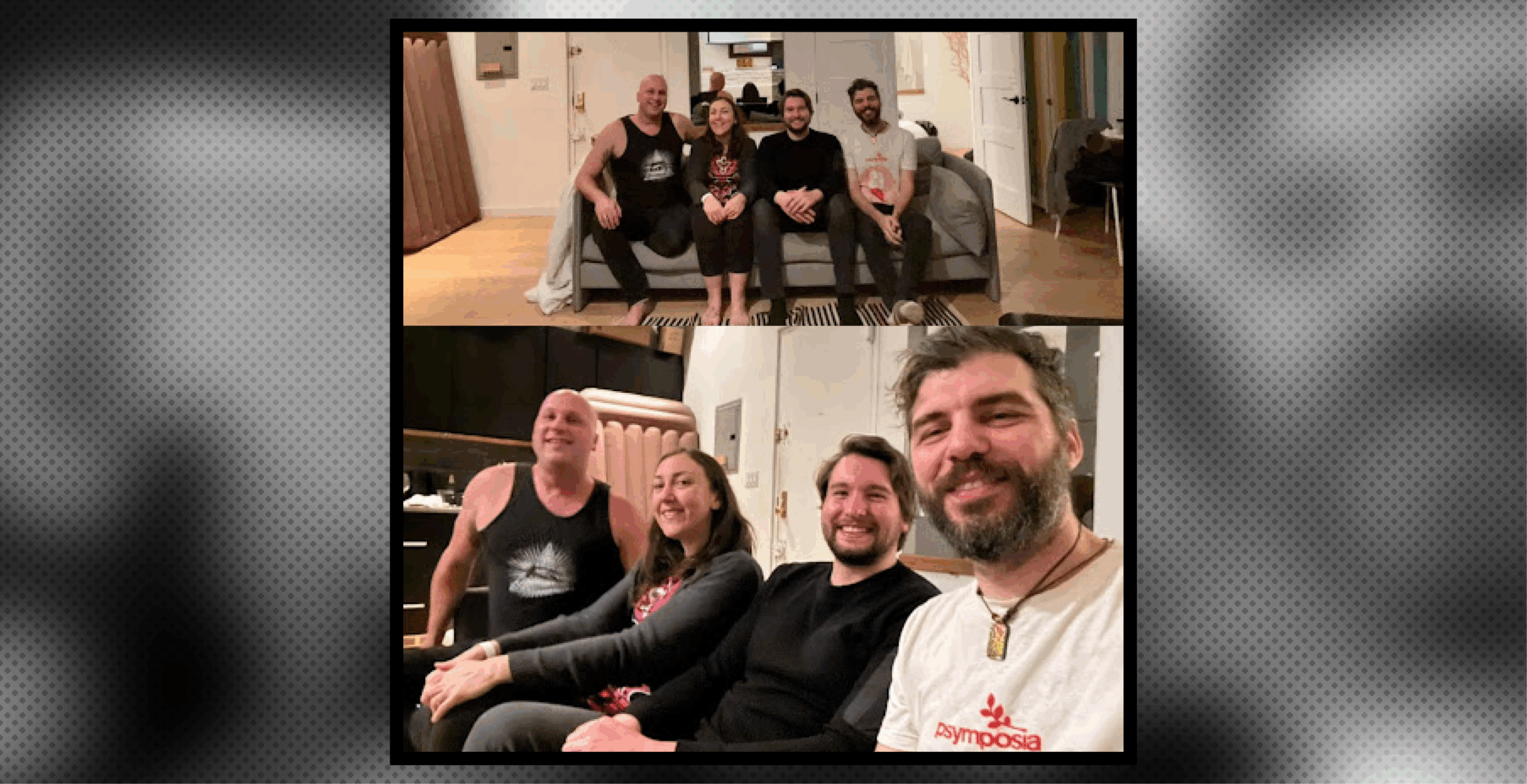
The principal authors in 2021. From left to right: Brian Pace, Neşe Devenot, Russell Hausfeld, and Brian Normand.